
Last updated November 14, 2026
 Wrought iron
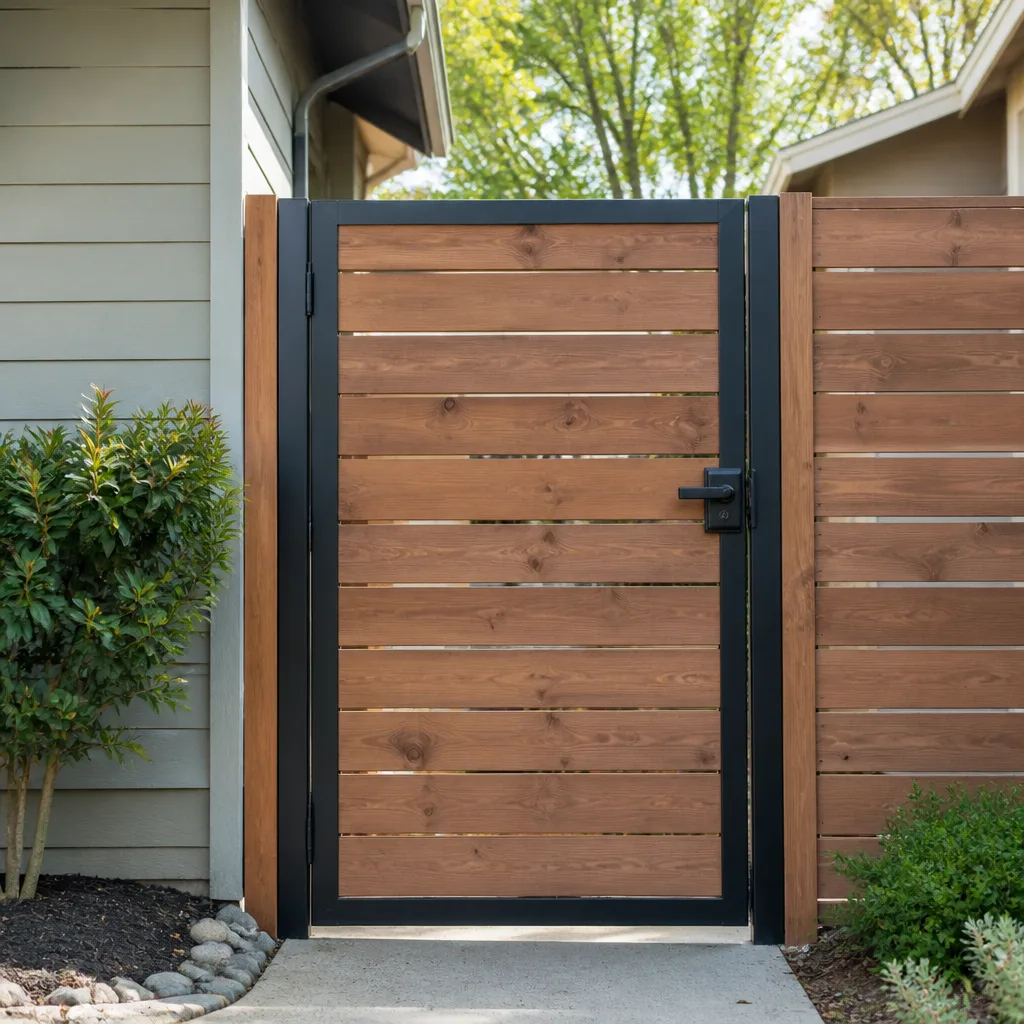 Wood & steel frame
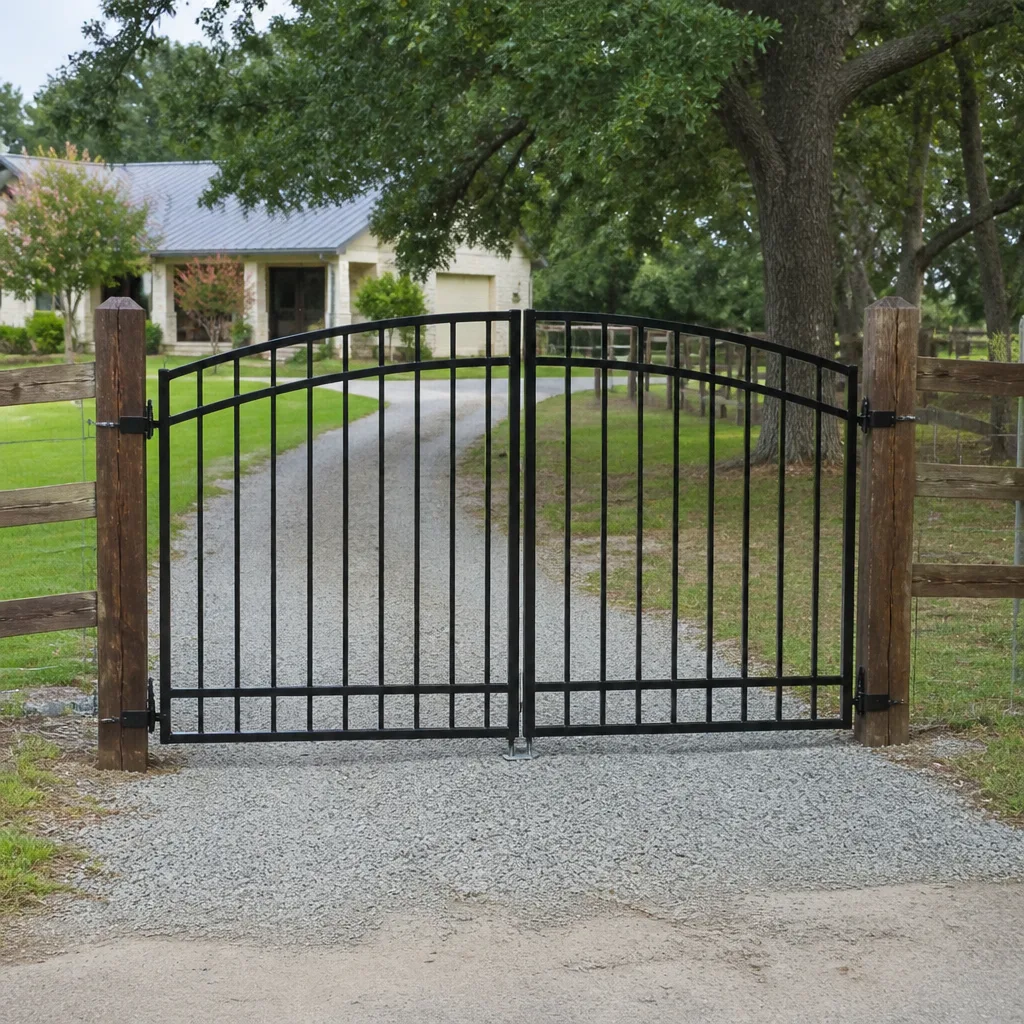 Farm & ranch
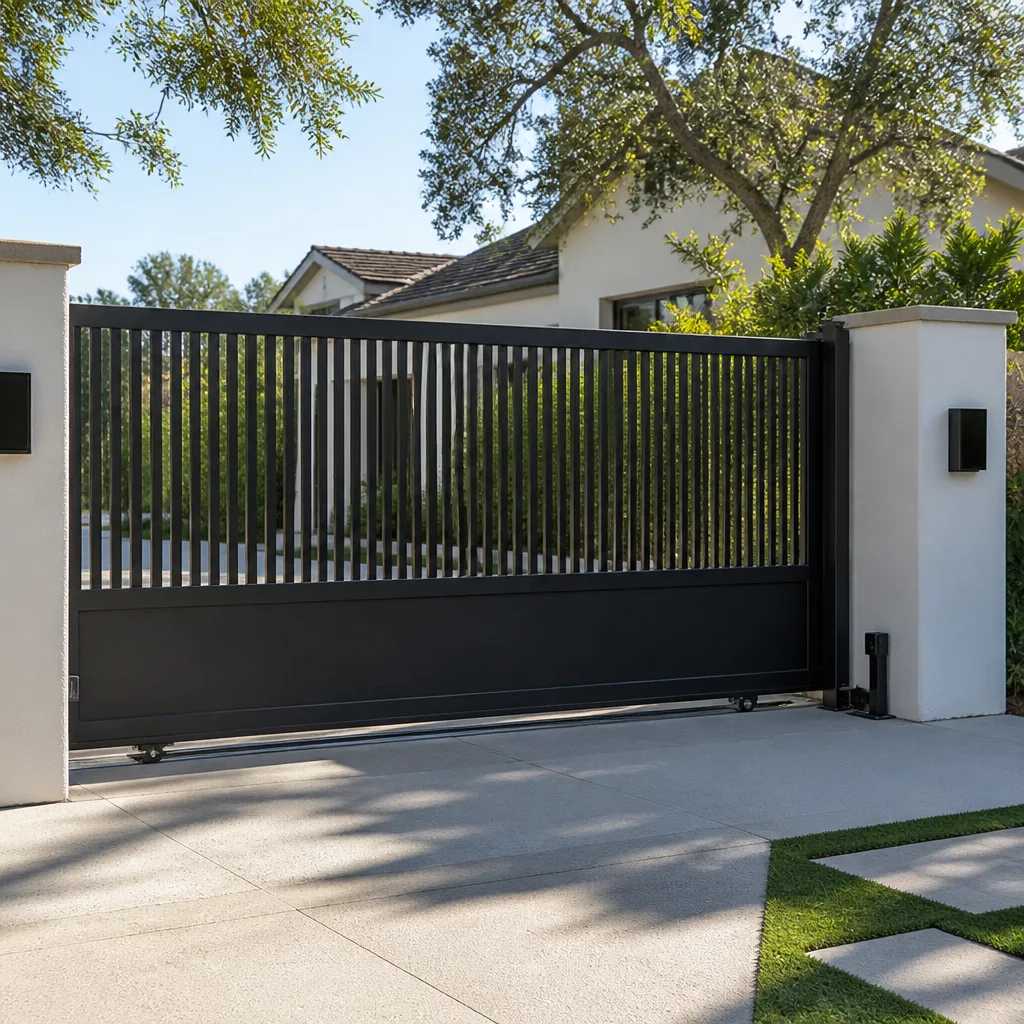 Sliding driveway gates
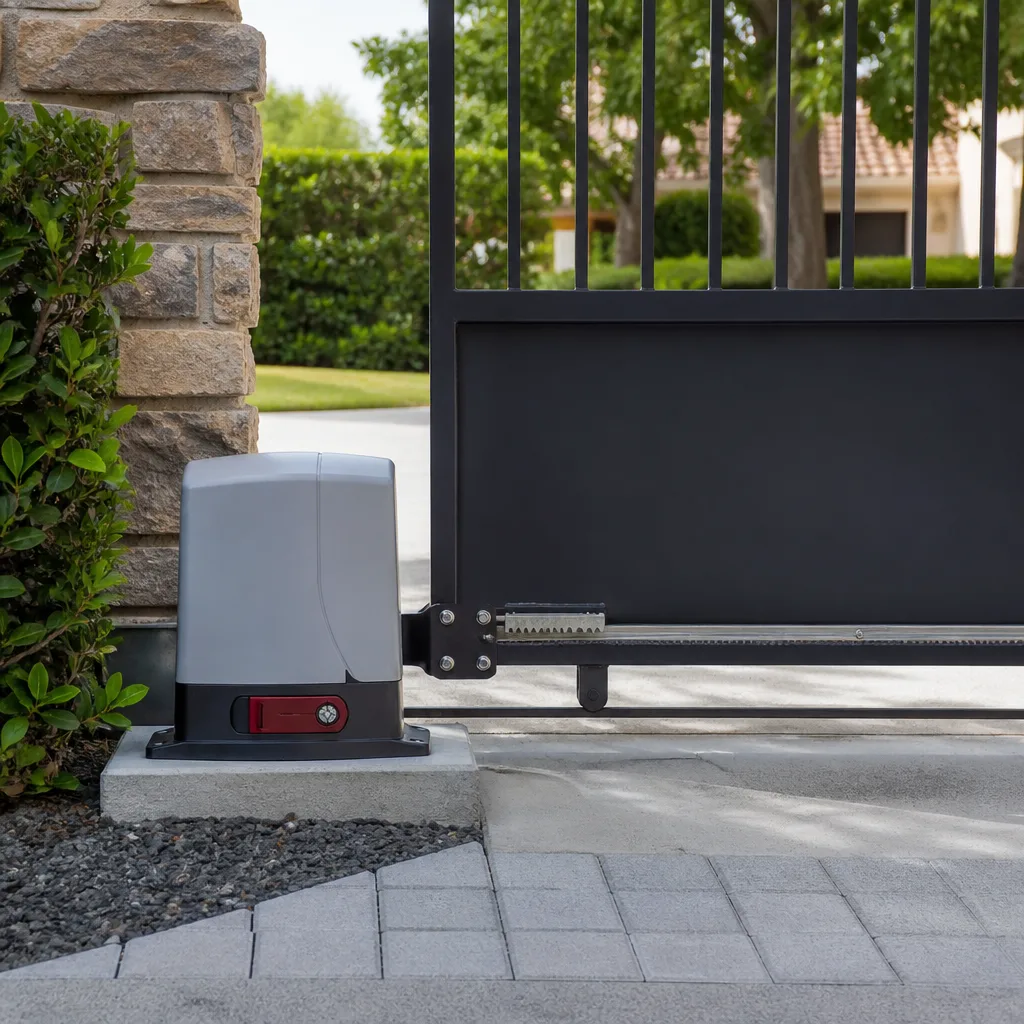 LiftMaster operators
Free on-site gate assessment - hinges, posts, and your LiftMaster or Nice gate operator checked before anything is quoted
The assessment is free and the quote is the invoice.
Get your free estimateDIY vs Professional Gate Repair: The Baltimore Homeowner’s Decision Guide
The gate repairs that look simplest on a screen are often the ones that cost the most when they go sideways. Adjusting a hinge looks like a wrench job until the post socket strips. Resetting limits on an operator looks like pressing a button until the motor learns the wrong travel and starts straining against its own stops. The skill question is a distraction. The real question is which repairs fail safely and which ones fail expensively. This guide sorts typical gate repairs by DIY risk and the cost of getting them wrong, so you can decide what to handle yourself and what to hand to a specialist here in Baltimore.
Quick Answer
Most manual gate problems in Baltimore – a sagging hinge, a stiff latch, a track that’s collected grit – are owner-safe if you have the right tools and stop when something binds. Electric and automatic gate repairs are not. Operator limits, sensitivity settings, low-voltage wiring, and anything involving a heavy sliding panel carry real injury and property risk, and DIY attempts on those usually make the final repair more expensive.
Styles & brands we work with
- Wrought iron
- Wood & steel frame
- Farm & ranch
- Sliding driveway gates
- LiftMaster operators
Table of Contents
- Diagnose First: The Step Most Owners Skip
- Which Gate Repairs Are DIY-Safe? A Task-by-Task Rating
- Why Operator Limits and Sensitivity Need Model-Specific Knowledge
- The Legal and Insurance Side of DIY Electrical Work in Maryland
- What We Encourage Owners to Do Between Service Visits
- How Baltimore Weather Shapes Gate Wear
- Common Mistakes to Avoid
- When to Call a Professional
Diagnose First: The Step Most Owners Skip
Before you decide DIY or professional, figure out what’s actually broken. Most gate problems announce themselves with a symptom, not a cause, and the symptom rarely points at the part that failed. A gate that won’t close might have a bad limit switch, a misaligned hinge, a warped post, or a safety edge that’s read the wrong signal. If you fix the wrong part, you’ve spent money and time and the gate still doesn’t work.
Here’s the diagnostic sequence we walk through on a service call. You can run the first three steps yourself in about ten minutes:
- Test the gate by hand. Disconnect the operator (most have a manual release) and swing or slide the gate through its full travel. If it binds, drags, or scrapes, the problem is mechanical, not electronic. If it moves freely by hand but fails under power, the problem is in the operator, wiring, or controls.
- Check the physical hardware. Look at hinges, rollers, tracks, latches, and post mounts. Look for rust, loose bolts, bent track, or a gate that hangs out of level. Any of those is a mechanical cause.
- Listen and watch under power. Re-engage the operator and cycle the gate. Does the motor strain, click, or stop short? Does the gate reverse for no reason? Note exactly where in the travel it happens.
- Check the obvious electronics. Confirm the operator has power, the control board isn’t showing a fault light, and the safety edges and photo eyes aren’t blocked or dirty. A surprising number of “dead gate” calls are a tripped breaker or a leaf stuck against a photo eye.
- Match the symptom to the system. A manual gate that drags is a mechanical problem. An automatic gate that reverses is a control or safety problem. A gate that works from the keypad but not the remote is a receiver or remote problem. Each points at a different repair, and each has a different DIY risk profile.
That diagnostic step is where most owners go wrong. They see the symptom – “the gate won’t close” – and reach for a tutorial on the closest-sounding part. We see the results of that guesswork often enough to know it’s the single biggest driver of repair costs going up. If you’re not sure which of those five categories your problem falls into, that’s your answer on DIY versus professional right there.
If you get to the end of this list and still can’t pin the problem down, give us a call. A proper diagnosis is part of what we do on every visit, and whether you end up booking gate repair with us or not, knowing what’s actually broken saves you from throwing parts at it.
Which Gate Repairs Are DIY-Safe? A Task-by-Task Rating
Here’s the breakdown we wish more homeowners had before they started. We’ve grouped common gate repairs into three risk levels based on what happens when the repair goes wrong. The rating isn’t about difficulty – several “easy” repairs have expensive failure modes, and one “hard” repair is actually owner-safe because a mistake just means it still doesn’t work.
Low risk – safe to attempt
- Cleaning and lubricating hinges, rollers, and tracks. A failure here just means the gate still drags. Use a lubricant suited to the material; avoid over-greasing tracks that collect grit.
- Tightening visibly loose bolts on hinges and brackets. If a bolt is loose, snug it. If the bolt won’t hold torque or the hole is stripped, stop and call – you’re about to make a small problem into a post repair.
- Clearing debris from the gate path and photo eyes. This is preventive and free.
- Replacing remote batteries and re-pairing a remote to the receiver. Follow the model’s pairing steps. If the remote won’t pair, the receiver or the remote is the issue, not your technique.
Medium risk – do it only if you’re confident
- Replacing a latch or a gate stop. Straightforward on most manual gates, but if the mounting holes don’t line up you’ll be drilling new ones into a post that may not take them well.
- Adjusting a hinge to correct a slight sag. This is where we see the most damage from DIY attempts. Over-tightening a hinge to lift a sagging gate can crack the weld or strip the post socket. If the gate sags more than a fraction of an inch, that’s usually a post or foundation issue, not a hinge issue.
- Replacing a manual gate’s roller or wheel. Doable, but heavy panels need support during the swap. Sliding panels can come off the track and land on a foot.
High risk – leave it to a professional
- Operator limit and sensitivity adjustments. Covered in detail below. A wrong setting can burn out a motor or defeat the gate’s safety reversal.
- Any work on the operator’s wiring, control board, or power supply. Low-voltage or not, this is electrical work with real shock and code implications.
- Replacing safety edges or photo eyes. These are life-safety devices. If they’re installed or aligned wrong, the gate can close on a person, a pet, or a vehicle.
- Anything involving a heavy sliding panel that’s come off its track or is binding. A several-hundred-pound panel is a crush hazard. This is the repair that sends people to the emergency room.
- Post replacement or post foundation work. Getting a new post plumb and set to proper footing depth is a construction job, not a repair.
If you look at this list and your problem lands in the high-risk column, that’s not a failure on your part. It’s the line where the repair stops being about skill and starts being about consequence. Brands like FAAC and Elite, both of which we work on regularly, have operator-specific procedures for these adjustments for good reason.
Why Operator Limits and Sensitivity Need Model-Specific Knowledge
Operator limit and sensitivity settings are the single most misunderstood part of gate repair, and the tutorials that claim to cover them usually don’t. Here’s why. Every operator brand and model has its own procedure for setting the open and close limits and its own method for calibrating how much force the gate applies before it reverses. A LiftMaster slide operator and a Mighty Mule swing operator don’t share a procedure. They don’t even share the same philosophy about how sensitivity is set.
On many operators, limits are set by running the gate to a physical stop and letting the motor learn the position. On others, you set them by turning a cam or pressing a sequence on the control board. Some models store the limits in memory and lose them when the battery drops or the power flickers. If you follow the wrong model’s procedure, you can drive the gate past its physical stop, which strains the motor and the gate hardware every time it cycles. You can also set the sensitivity too high, which defeats the safety reversal, or too low, which makes the gate reverse on its own and look “broken” when it’s just badly calibrated.
The failure modes here are sneaky. A mis-set limit doesn’t usually break the gate immediately. It shortens the motor’s life and wears the gate’s hardware a little faster each cycle, until something fails months later and the connection to the original adjustment is long gone.
This is where brand familiarity earns its keep. We work on LiftMaster, FAAC, BFT, Linear, Viking, Ghost Controls, DoorKing, Elite, and Mighty Mule, and we keep the model-specific documentation and parts on hand. What takes an owner an afternoon of searching, guessing, and re-doing takes us a few minutes because we’ve set limits on that model before. If your gate is one of these brands and the operator is behaving oddly, electric gate repair is the right call. Adjusting limits on a gate you don’t fully understand is the classic DIY attempt that ends with a more expensive bill.
The Legal and Insurance Side of DIY Electrical Work in Maryland
This is the part most DIY guides skip entirely, and it matters more than the technical part. Automatic gate operators run on line voltage at the power source and low voltage at the controls. Both are electrical work. In Maryland, as in most states, electrical work that involves connecting to household power is regulated, and whether a homeowner can legally do it themselves depends on local rules and the scope of the work. That’s a question for your jurisdiction, not a YouTube comment section.
The insurance angle is the one that should give homeowners pause. If a gate operator’s wiring is modified by anyone other than a qualified professional and a person or vehicle is later injured or damaged by the gate, a claim can be contested on the basis that the system wasn’t installed or maintained to code. That’s true whether the modification was the cause of the failure or not. The exposure isn’t just the repair cost – it’s the liability if something goes wrong later.
We’re not lawyers and we’re not going to give you legal advice. But we can tell you what we see. When an adjuster or an inspector looks at a gate that’s been DIY-wired, the modifications are usually visible. The wire isn’t the right gauge, the connections aren’t in a proper enclosure, the safety device is bypassed. And once that shows up, the conversation shifts from “what failed” to “who did this work.”
None of this means you can’t touch your gate. It means you should know the difference between a mechanical adjustment and a modification to an electrical safety system. Those are different categories with different rules. If you’re not sure which category your repair falls into, that’s the point to bring in a professional.
What We Encourage Owners to Do Between Service Visits
We’re not going to tell you to leave everything to a professional. There’s a lot an owner can do that reduces wear, catches problems early, and keeps the gate working between visits. Here’s what we actually encourage, and how to do it correctly:
- Clear the gate path every week. Debris, gravel, and leaves on a sliding gate’s track cause binding that strains the operator. A broom and two minutes is the cheapest maintenance there is.
- Clean the photo eyes and safety edges. Dust and grime on the photo eye lens is the most common cause of a gate that “randomly” reverses. Wipe them with a damp cloth, not a hose.
- Lubricate hinges and rollers on a schedule. Once or twice a year for most residential gates. Use a product matched to the material – not WD-40 on everything, which strips some lubricants rather than adding them.
- Check the hardware by hand. Walk the gate through its full travel once a month and listen. Any new binding, scraping, or clicking is a problem caught early.
- Test the safety reversal. Put a piece of wood in the gate’s path and confirm the gate reverses on contact. If it doesn’t reverse, stop using the automatic function and call a professional. This is a life-safety device.
- Look at the posts and hinges for movement. A gate that hangs a little differently each month is telling you the post or foundation is moving. Catch it before the post fails.
- Keep the manual release accessible and test it. If the power fails, you need to open the gate. Make sure you know where the release is and that it works.
These are the tasks we’d want every owner doing. They cost nothing and they catch the problems before they become repairs. If your inspection turns up something you don’t want to touch, that’s when you call – not after you’ve tried and made it worse. We work on the brand you already have, so whether it’s a Baltimore property with a Mighty Mule swing gate or a commercial LiftMaster slide operator, we can tell you what it needs.
How Baltimore Weather Shapes Gate Wear
Baltimore’s weather works gates hard. Freeze-thaw cycles in winter push posts and footings around and find their way into every hinge and bearing. Summer humidity and the wet spring season rust untreated hardware and warp wooden gates. The transition seasons, when the ground moves and then settles, are when we see the most post and hinge problems. A gate that was fine in October can bind in March without anyone touching it.
That matters for the DIY decision because some repairs are seasonal. A gate that drags in the cold is often a hinge or roller issue that’s easier to address in warmer weather – and harder to judge by feel when everything’s stiff. A gate that binds on one side in the spring may be a post that’s shifted, not a hinge that needs adjusting. Adjusting the hinge to compensate for a moving post is exactly the kind of DIY fix that doesn’t last and ends up costing more. The right response to a gate that changes seasonally is to check whether the hardware is moving or the post is.
We’ve been working on gates in Baltimore since 2016, and the same seasonal problems show up on schedule. If your gate acts up every spring or every freeze, that pattern is information. It usually points at the post, not the operator.
Common Mistakes to Avoid
- Adjusting a hinge to lift a sagging gate. A sag means the post or foundation is moving. Over-tightening the hinge to compensate cracks welds and strips sockets. Fix the post, not the hinge.
- Following a generic operator tutorial. Limits and sensitivity are model-specific. A procedure for a different brand can drive the gate past its stop or defeat the safety reversal. Find the model’s actual documentation or call someone who knows it.
- Bypassing a photo eye or safety edge “temporarily.” There’s no temporary bypass. A gate that closes on a person or a pet because the safety device was disabled is a serious liability. Don’t do it.
- Over-lubricating a sliding gate track. Grease on a track collects grit and turns into grinding paste. Clean the track and use the right lubricant for the material, not more of it.
- Treating a slow gate as an operator problem. A gate that runs slow is usually binding mechanically. Replacing the operator without fixing the binding just wears out the new one faster.
- Ignoring a gate that reverses on its own. Spontaneous reversal is the system telling you the safety device or the sensitivity setting is wrong. Don’t override it. Diagnose it.
- Replacing parts before diagnosing. The most expensive way to fix a gate is to replace parts until the symptom stops. Diagnosis is the cheap step, and it’s the one most DIY attempts skip.
When to Call a Professional
Call a professional when the repair involves the operator’s electronics or wiring, any safety device, a heavy sliding panel, or a post or foundation. Call if the diagnostic sequence in this guide didn’t point you at a clear cause. Call if you’ve tried a repair and the gate is now worse. Call if the gate reverses on its own, if the safety reversal test fails, or if anything about the gate’s behavior has changed in a way you can’t explain. And call if the gate is a brand you don’t recognize and you’re not sure what you’re looking at.
None of that is a judgment on whether you can do the work. It’s a judgment on the consequence of getting it wrong. We’ve seen plenty of owners who could set a limit switch correctly, and we’ve seen what happens to the ones who set it a little wrong and didn’t know. Baltimore Gate Repair offers free estimates in Baltimore – call (855) 356-2557. We answer 24/7. Fast dispatch from 7am to 7pm, Sunday through Friday.
See the difference
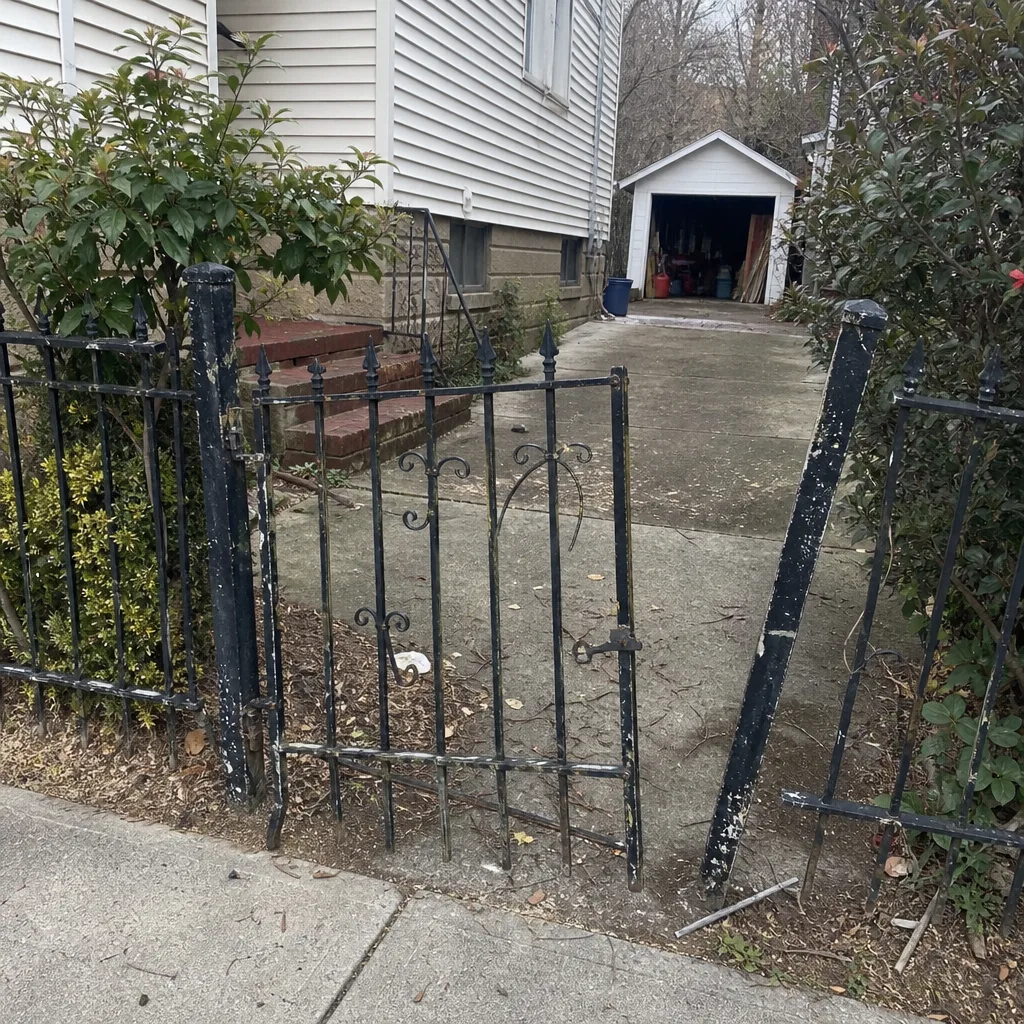 Before
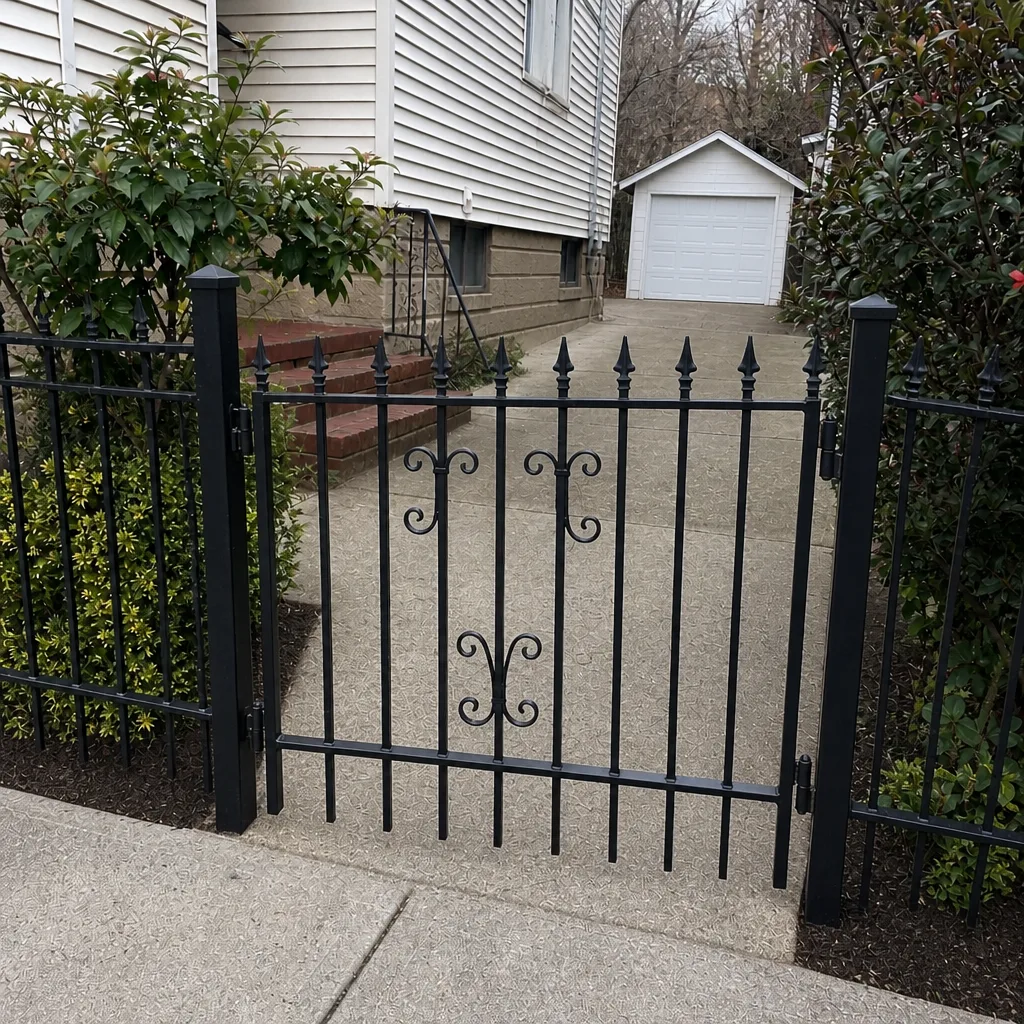 After
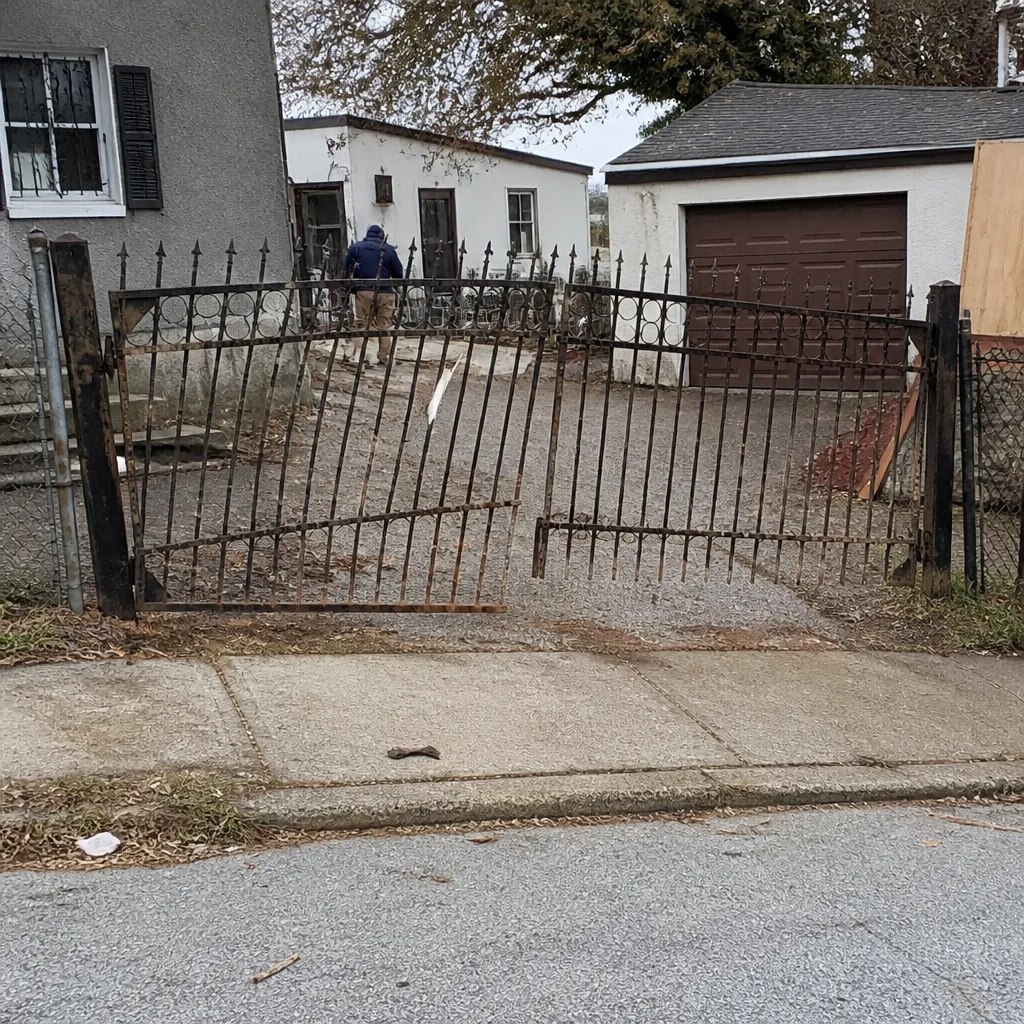 Before
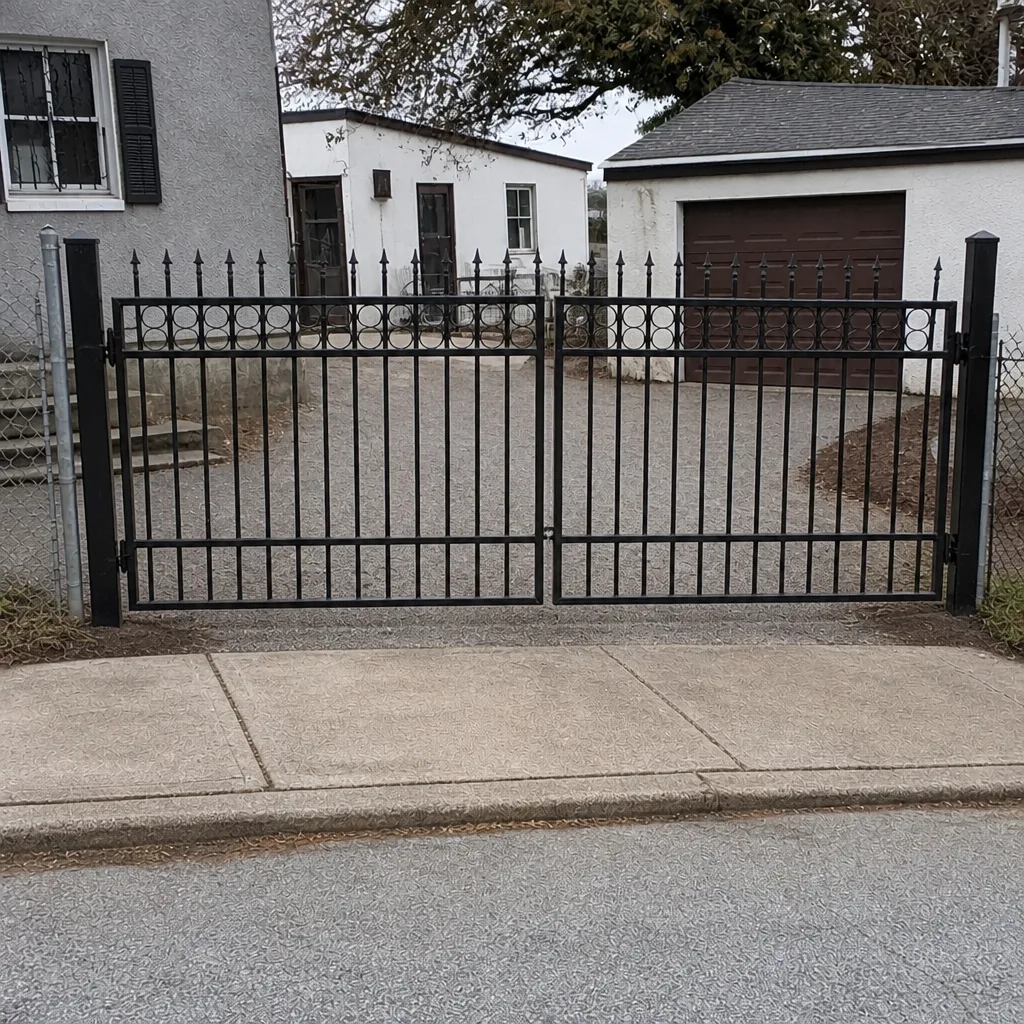 After
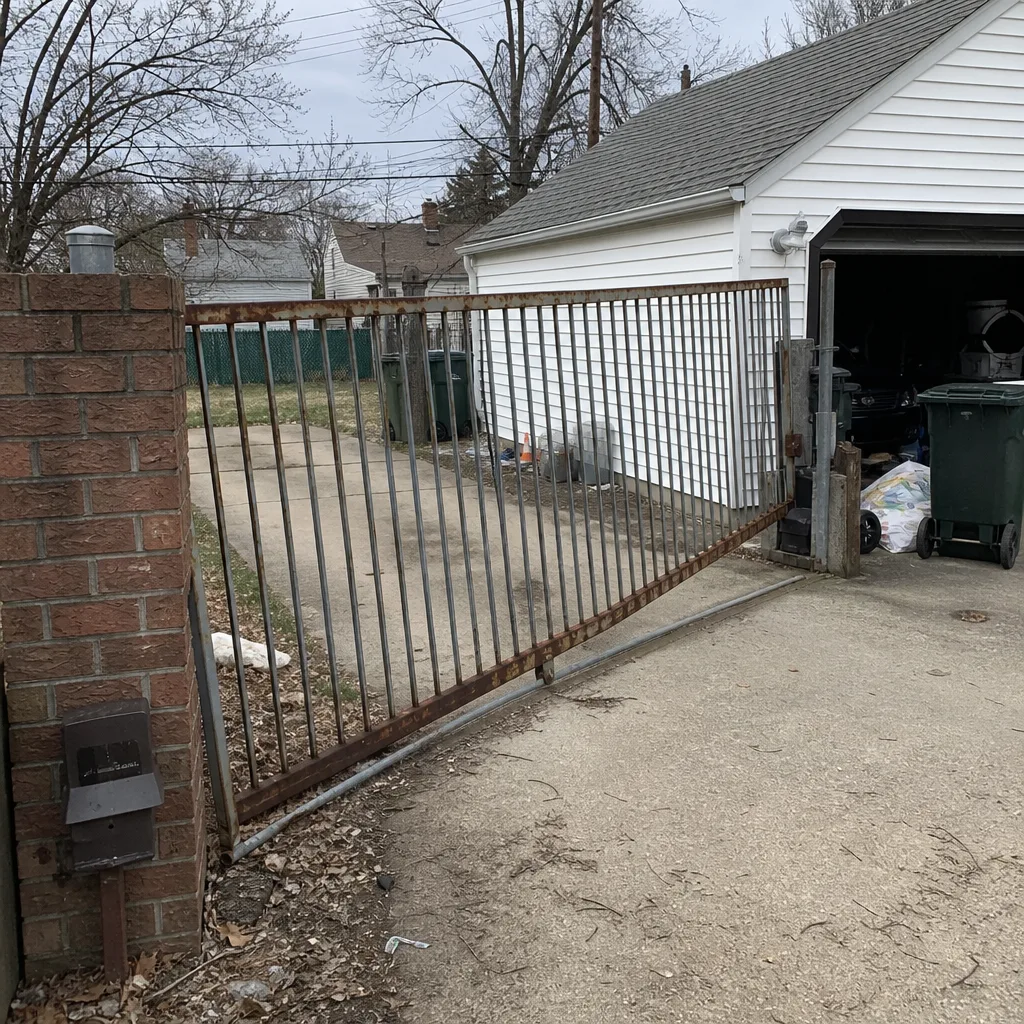 Before
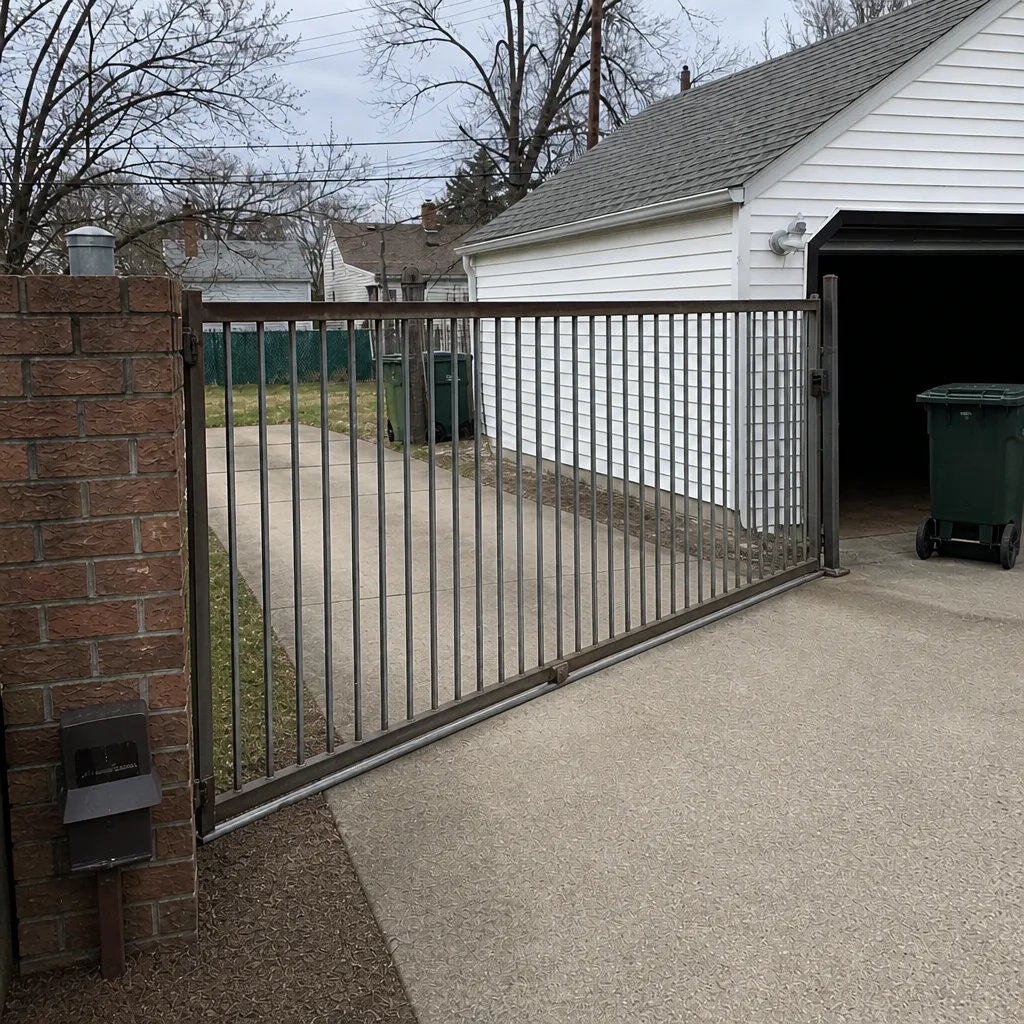 After
Frequently Asked Questions
Usually not safely, because the procedure is model-specific and a wrong setting can damage the motor or defeat the gate’s safety reversal. If you have the exact documentation for your model and you’re comfortable with the procedure, it’s technically possible. If you’re working from a generic tutorial or guessing, that’s the repair most likely to make the final fix more expensive. Call (855) 356-2557 for an exact quote – estimates are free.
Often yes, because the repair now includes undoing the DIY attempt as well as fixing the original problem. A hinge over-tightened to correct a sag can strip a post socket, turning a hinge adjustment into a post repair. A mis-set operator limit can wear motor components that would have been fine. The original repair is usually the cheaper one.
Gate repair covers the mechanical side – hinges, tracks, latches, posts, and panels. Electric gate repair covers the operator, the controls, the wiring, the photo eyes, and the safety devices. Most gate problems involve one or the other, but a failing gate often has both a mechanical cause and an electrical symptom, which is why diagnosing first matters. We handle both sides, so you don’t need a second company to finish the job.
It depends on the scope. A hinge or latch repair typically doesn’t require a permit. Replacing an operator, running new wiring, or replacing a post or foundation often does. Check with your jurisdiction before starting work that involves electrical connections or new construction. We can talk through what your specific job involves when we look at it.
No. Spontaneous reversal means the safety device or the sensitivity setting is wrong, and both are life-safety functions. Don’t override the reversal or bypass the photo eyes. Stop using the automatic function and have it diagnosed. This is one of the repairs where a DIY attempt is most likely to leave the gate in a less safe state than when you started. Call (855) 356-2557 – estimates are free.
We work on LiftMaster, FAAC, BFT, Linear, Viking, Ghost Controls, DoorKing, Elite, and Mighty Mule. We keep brand-specific parts and documentation on hand, which is part of why we can diagnose and fix gates that general contractors and handymen can’t. If your brand isn’t on that list, call and we’ll tell you whether we can help. You can also start with Baltimore Gate Repair for the full picture of what we do.
The Bottom Line
The DIY decision isn’t about whether you’re handy. It’s about which repairs fail safely and which ones fail expensively. Cleaning, lubricating, and clearing debris are yours to handle, and you should. Adjusting hinges to fix a sag, touching operator limits and sensitivity, working on the electrical side, or moving a heavy panel are the repairs where a wrong attempt costs more than the original problem. Diagnose first – that’s the step that tells you which side of the line you’re on. When the answer is “professional,” call a specialist who works on your brand. Baltimore Gate Repair handles gate repair, electric gate repair, and gate installation, so whether your gate is manual or automatic, we diagnose both sides of the problem.
Call (855) 356-2557. We answer 24/7. Fast dispatch from 7am to 7pm, Sunday through Friday. Estimates are free, and the price is set per job by the written estimate before any work starts.
Written by the team at Baltimore Gate Repair, serving Baltimore since 2016.