
Last updated November 14, 2026
 Wrought iron
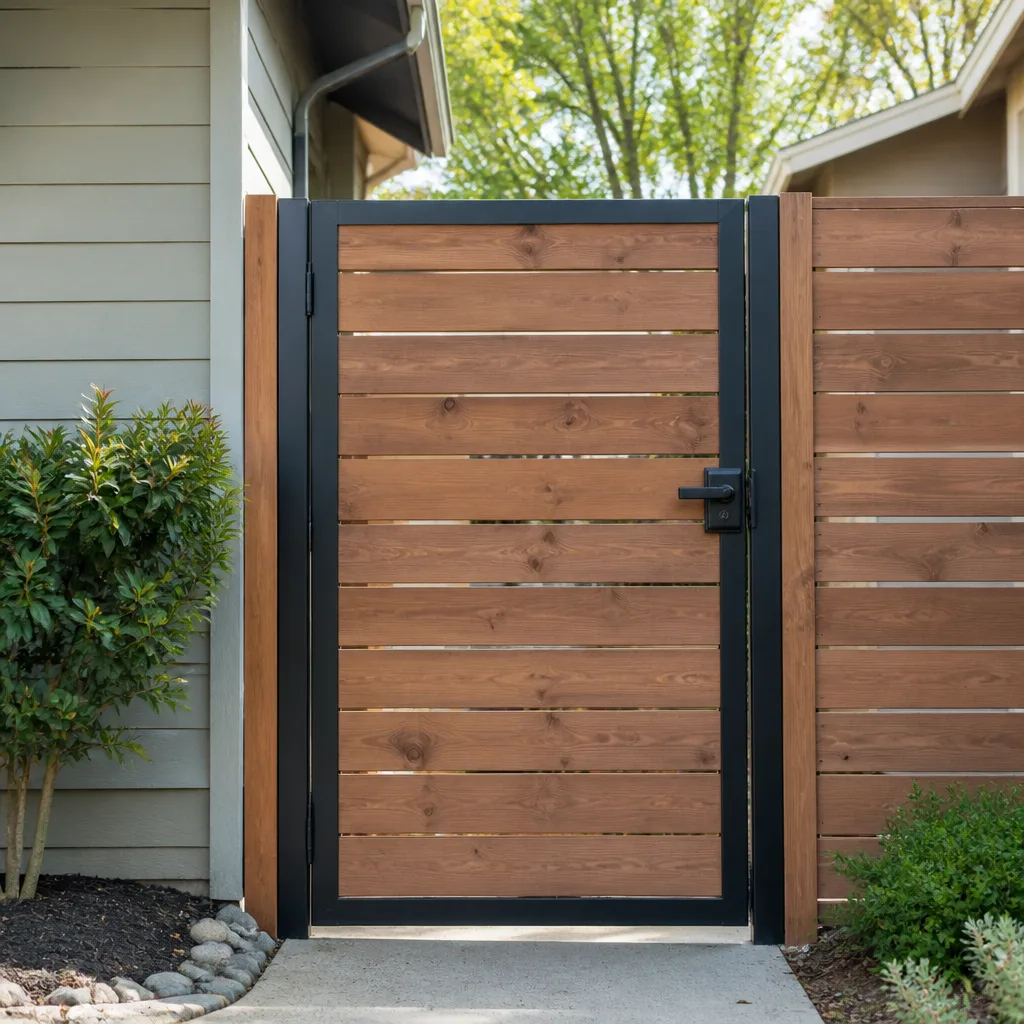 Wood & steel frame
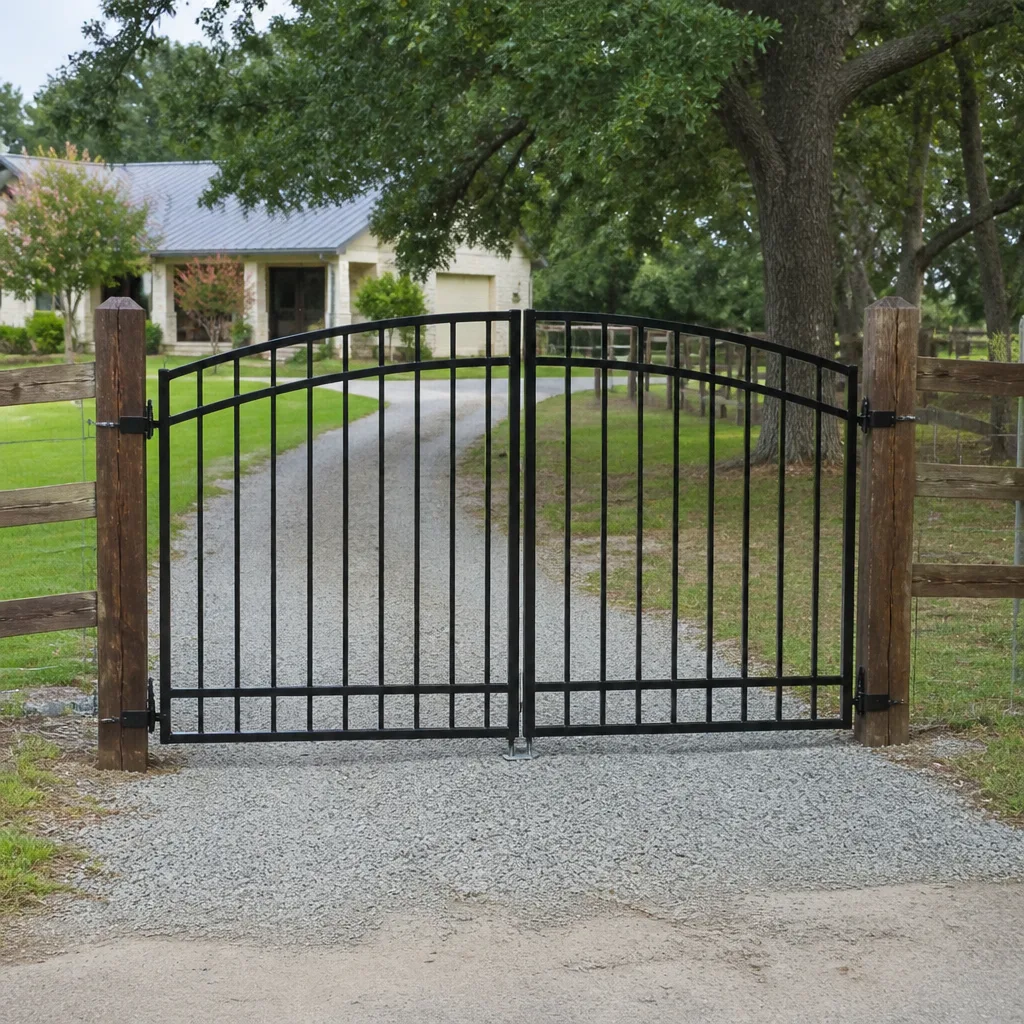 Farm & ranch
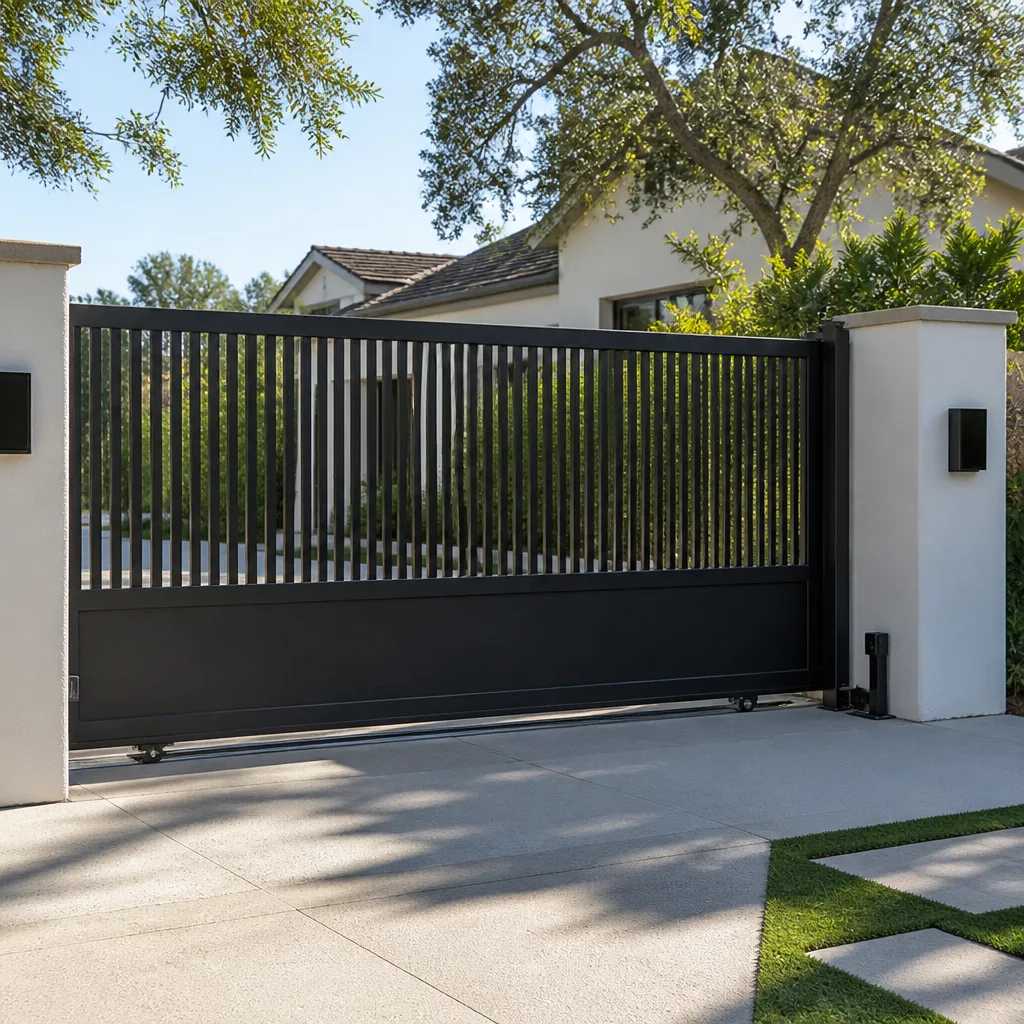 Sliding driveway gates
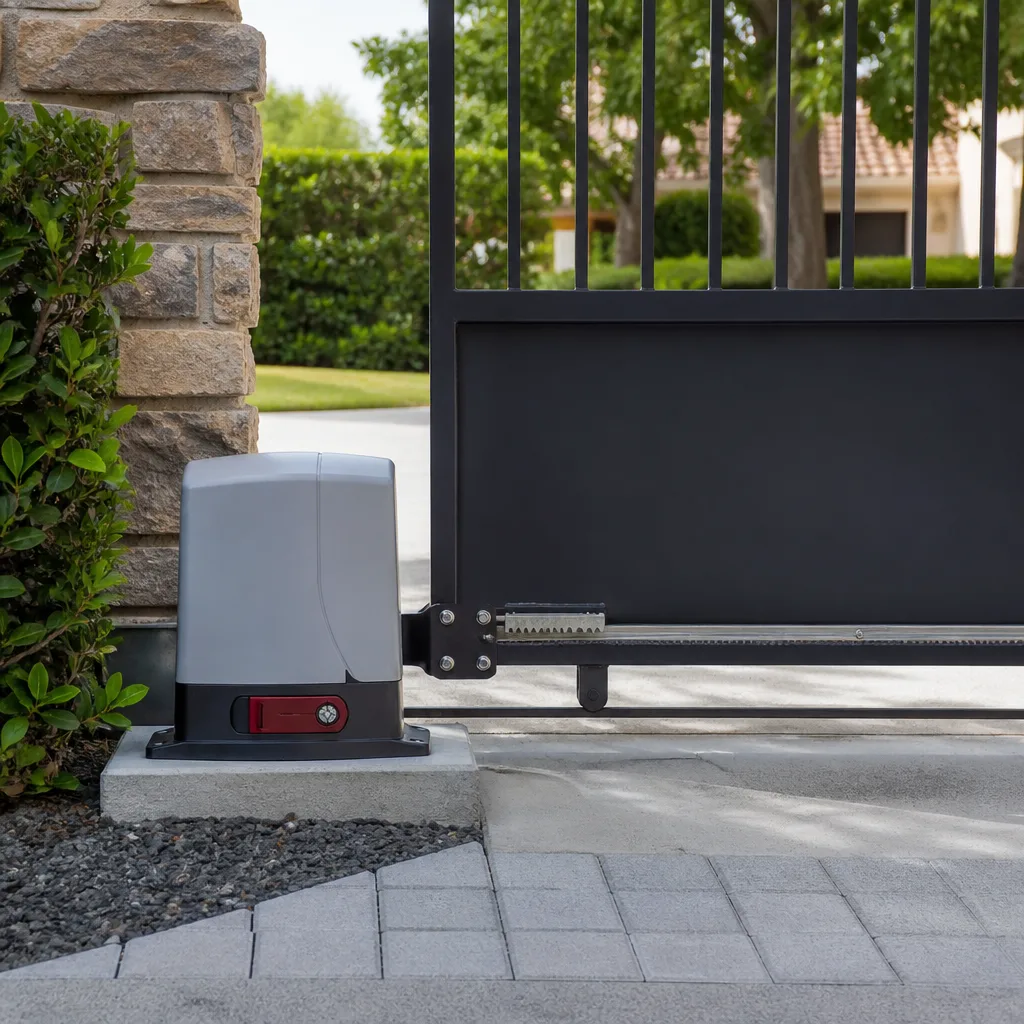 LiftMaster operators
Free on-site gate assessment - hinges, posts, and your LiftMaster or Nice gate operator checked before anything is quoted
The assessment is free and the quote is the invoice.
Get your free estimateGate Repair Warning Signs: A Baltimore Homeowner’s Reference Guide
Most homeowners assume a slowing gate just needs a remote battery. That’s the cheap guess. In our experience, a gate that “just seems slow” is one of the most expensive symptoms to ignore, because an operator running against a binding hinge or a post that has shifted will burn itself out, and the eventual bill covers both the obstruction and the motor. The fix would have been small. The question worth asking early is not “does my gate need work?” but “what’s causing this specific behavior, and how long do I actually have?” This guide pairs each visible symptom with its likely cause, separates the electrical signs from the mechanical ones, and explains which Baltimore weather patterns speed a minor problem toward failure.
Quick Answer
The warning signs of a failing gate are slow or jerky travel, grinding or clicking noises, a gate that reverses or stops partway, sagging hinges, visible post movement, erratic remote response, and the operator starting but not moving the gate. Electrical faults show up as unexplained stops, dead remotes, or tripped breakers; mechanical faults show up as dragging, scraping, or a gate that leans. Ignoring a mechanical sign usually costs more than ignoring an electrical one, because the motor keeps working against resistance until the operator fails too.
Styles & brands we work with
- Wrought iron
- Wood & steel frame
- Farm & ranch
- Sliding driveway gates
- LiftMaster operators
Table of Contents
- The Symptom-to-Cause Matrix: Eight Gate Behaviors That Mean Something
- Electric or Mechanical? How to Tell Without Tools
- Warning Signs Specific to Automatic Gates
- Weeks of Lead Time vs. Imminent Failure
- How Baltimore Weather Accelerates Specific Warning Signs
- Heavy Panels, Power, and Track: What You Should Never Touch
- A Short, Safe Checklist You Can Do Yourself
- Common Mistakes to Avoid
- When to Call a Professional
The Symptom-to-Cause Matrix: Eight Gate Behaviors That Mean Something
Here’s the core idea: a behavior is not the problem, it’s a clue. A slow swing can mean a weak battery, a failing motor, a binding hinge, a misaligned post, or a worn gearbox, and the urgency and repair scope are different for each. We diagnose across both sides of the system, and that crossover matters because an automatic gate can fail mechanically for what looks like an electrical reason and vice versa.
Number these in your head as you watch your gate run for a full open-and-close cycle:
- Travel is slower than it used to be. Likely causes: failing operator motor, weak battery in a solar or battery-backed setup, a binding hinge, or a post that has shifted out of square. Lowest-cost cause is mechanical binding; the highest-cost is operator failure, because the motor has usually been struggling for weeks.
- Grinding or scraping as it moves. Usually metal-on-metal contact: worn hinge pins, a drop pin rubbing, a sagging panel, or a roller track that’s out of alignment. Lead time is short here.
- Clicking but no movement. Often an operator that gets command but not power, a failed limit switch, or a dead battery behind a solar-charged operator. This is an electrical fault with a mechanical-looking symptom.
- Reversing partway. On an automatic gate, the safety sensors are usually the culprit, followed by a limit-switch out of position or a motor overload. On a manual gate it rarely happens.
- A visible sag at the outer edge. Hinge wear, a rotting or shifted post, or a footing that has moved. Sagging loads the operator, so it accelerates everything else.
- Erratic remote range. Usually the receiver, the antenna, the battery, or interference. Cheap to diagnose, cheap to fix, and worth doing early because a dead remote can read as a dead operator.
- Operator runs but the gate doesn’t move. Broken linkage, disengaged manual release, or a stripped gear in the operator. Stop using the gate until someone looks at it.
- Breaker trips when the operator starts. An electrical sign. Don’t reset and retry repeatedly. This one goes to an electrician-adjacent specialist, and we’d rather see it today than next week.
Each row on that list has an electric gate repair answer and a mechanical one. The trick is knowing which one you’re looking at before you spend anything.
Electric or Mechanical? How to Tell Without Tools
You don’t need a multimeter to sort most gate problems into an electrical pile and a mechanical pile. You need your ears and your eyes on a single full cycle.
The easiest filter is the manual release. Every automatic gate has one, and where the problem lives tells you a lot. Disengage the operator, following the instructions on the unit (do not force anything), and walk the gate through its full travel by hand:
- If the gate is easy to push by hand and the operator still fails, the problem is electrical: battery, control board, limit switches, wiring, or the motor itself.
- If the gate drags, catches, or needs real force to move by hand, the problem is mechanical: hinges, rollers, track, post alignment, or panel sag. The operator is a symptom, not the cause.
- If it drags and the operator also fails, you have both, and the operator likely went because it was fighting the drag. This is the expensive combination, and the mechanical fix has to come first.
Three more free clues:
- Listen for a hum without movement. That’s the operator straining against something, usually mechanical.
- Watch the travel. A jerky, uneven swing reads mechanical. A smooth but short travel reads electrical (limit switch).
- Test the safety sensors with the gate open. If it won’t close, the sensors are telling you something and it isn’t the gate.
A general handyman can spot a dragging hinge. What they often can’t do is diagnose the low-voltage side of an automatic gate, and a fence contractor who doesn’t touch operators will hand the electrical half of the job to someone else. That gap is exactly why we handle gate repair as one job, mechanical and electrical together, instead of splitting it. For a Baltimore reader dealing with a LiftMaster or FAAC operator, this matters: the mechanical symptom and the electrical one often start in the same place.
Warning Signs Specific to Automatic Gates
If your gate opens by remote or keypad, you interact with it differently than a manual gate owner, so you notice different things. Automatic gate owners notice remote range, sensor behavior, and the sound the operator makes. Manual gate owners notice the panel weight and the latch. Missing the automatic-specific signs is common because the gate still opens, just not quite right.
Watch for these:
- The gate won’t close, or closes partway and reverses. Safety sensors first, limit switch second, motor overload third. If it won’t close, the gate is effectively open, which is an access-control problem, not just a convenience problem.
- You have to press the remote twice, or get closer than before. Receiver or antenna issue, battery, or interference. Early warning, low cost if handled soon.
- The operator hums or clicks but the gate sits still. Control board, limit switch, or a dead battery behind a solar-charged operator. We see this with FAAC and BFT units where the battery has quietly aged out.
- The gate opens on its own. Ghost cycling. Usually a stuck limit switch, a faulty pushbutton or keypad, or interference on the receiver. Take it seriously, because a gate cycling on its own can move into someone.
- The entry keypad is intermittent or the code takes two tries. Keypad, wiring, or control board. Erratic access control is a warning that the control side is degrading.
- The arm or chain is visibly loose, worn, or out of its track. Stop using the gate. A sliding panel that comes off its track is heavy and dangerous.
One pattern we notice constantly in Baltimore: automatic gates fail at the operator because everyone was watching the panel. The panel is fine. The motor has been fighting a binding roller for a month.
Weeks of Lead Time vs. Imminent Failure
Not every warning sign is a call-today problem, and the useful skill is telling them apart. Getting that right saves you an emergency call; getting it wrong costs you an operator.
Symptoms that give you weeks:
- Remote range that’s slowly shortened.
- A single hinge that squeaks without visible sag.
- A keypad that sometimes takes two presses.
- Cosmetic paint or finish issues on a panel.
Symptoms that give you days:
- A gate that reverses partway on every cycle.
- A gate that won’t close reliably.
- Visible sag at the outer edge with a slow operator.
- Grinding that appeared recently and gets worse as it warms up.
Symptoms that are call-now:
- The operator runs but the gate doesn’t move.
- A sliding panel off its rollers or off its track.
- Any sign of wiring damage, smoking, burning smell, or a tripping breaker.
- A gate cycling on its own.
If you can’t sort your symptom into one of those three buckets, that itself is the answer: get someone to look. On the electrical side, a gate that’s been tripping a breaker is not something to keep resetting. Call (855) 356-2557 and we’ll tell you whether it can be booked into the next opening or needs same-day attention.
How Baltimore Weather Accelerates Specific Warning Signs
This is where a Baltimore gate ages differently from a gate in a dry climate. Our weather puts pressure on gates in three distinct ways, and each one speeds up a specific warning sign.
Freeze and thaw cycles in winter. Ground movement is the big one. A gate post set in soil expands, shifts, and settles as the ground freezes and thaws. A post that’s out by a fraction of an inch in one season can put the whole swing out of alignment. In our experience, a sagging gate that appeared “suddenly” in February often started moving in November.
Summer humidity and heavy rain. Wood panels swell with moisture and shrink in dry weeks. That movement binds hinges, interferes with latches, and slowly loads the operator. Steel panels are more stable, but their hardware and pivots don’t like persistent damp. Hinge pin wear is accelerated here in a way it isn’t in a dry climate.
Wind exposure on open driveways. A gate is a sail. A broad panel facing the prevailing wind load puts real force on the operator’s gearbox and the hinges on every cycle, and that wear doesn’t show up as a single failure. It shows up as a slow accumulation: hinge first, then track, then motor.
What does that mean for a Baltimore homeowner? The same warning sign that gives you a comfortable month in a dry, stable climate can go from “slight slow” to “operator failure” in weeks here, because the ground and the humidity are quietly adding resistance the whole time. So a slow gate in a wet stretch or after a cold snap is worth more attention than it looks like it deserves.
Heavy Panels, Power, and Track: What You Should Never Touch
Some parts of a gate can cause serious injury. A residential swing panel is heavy enough to break a hand; a sliding panel off its track can pin someone; and the operator wiring and power supply carry real risk. We don’t recommend DIY repair on any of these, and a good technician will tell you the same. What follows is a “what to check” list, not a “how to fix it yourself” guide.
- Power and wiring. Never open the operator housing, disconnect wiring, or work on the power side. If the housing is damaged or the wiring is exposed, stop using the gate and keep people clear.
- Heavy panels. Never prop a sagging panel, block a gate open, or try to lift a sliding gate back onto its track by hand. Many people have been hurt doing exactly that.
- The manual release. Knowing where it is and how it works is safe and useful. Forcing a stuck release is not. If it won’t move, call.
- Track and rollers. Wipe clear debris you can reach without dismantling anything. Do not adjust track alignment or remove rollers yourself. Those are the parts that send a panel off its line.
If you’re not sure whether something is safe to touch, it isn’t. Ask before you do.
A Short, Safe Checklist You Can Do Yourself
Five minutes and a walk around the gate gives you most of the useful information, without touching anything dangerous.
- Run a full open-and-close cycle and listen. Note the sound and where it comes from.
- Look at the outer edge of the panel for sag, and at the post for movement at ground level.
- Check the hinges and latches for visible gap or rust buildup.
- Look at the track and rollers on a sliding gate for debris, wear, or anything out of line.
- Note the remote and keypad behavior, and any safety sensor that seems to act up.
- Note anything electrical: a tripping breaker, a hum, a burn smell, exposed wiring. Do not test with tools.
Write those observations down. When you call (855) 356-2557, that short list tells us more about which parts to bring than any description of “it’s not working.” We work on LiftMaster, FAAC, Linear, and the rest of the brands you already have, and knowing the symptom matters as much as knowing the brand.
Common Mistakes to Avoid
- Assuming the remote is the problem. Most people start with a new battery. If the gate is slow but the remote works, the remote has nothing to do with it, and a week spent on batteries is a week the operator doesn’t get.
- Fixing the symptom and not the cause. Replacing a hinge that sagged because the post moved doesn’t fix anything. The new hinge will sag too, and the operator keeps working against the same misalignment.
- Continuing to operate a jammed gate. A gate that’s stuck or off its track under power can hurt someone. Stop and call.
- Ignoring a breaker trip. Reset once, not five times. A repeatedly tripping breaker is a warning, not a fluke.
- Giving a general handyman the operator side of the job. Swapping a hinge is reasonable. Diagnosing the low-voltage control side of an automatic gate is a different skill. Splitting the job between two contractors usually means paying twice for the same diagnosis.
- Treating a Baltimore slow gate the way you’d treat one anywhere. Our freeze-thaw and humidity cycles move a gate faster than they should. A slow gate in a wet stretch deserves more urgency here, not less.
- Waiting until the operator dies. This is the one that costs three times as much. A binding obstruction plus a burnt-out motor is two repairs where one would have been enough.
When to Call a Professional
Call a professional when the operator runs but the gate doesn’t move, when the gate won’t close or cycles on its own, when you see a tripping breaker or any sign of electrical damage, when a sliding panel is sagging or off its rollers, or when a mechanical symptom hasn’t improved after a few days. Call even if the gate “still works,” if it works harder than it used to. We can diagnose the mechanical side and the electrical side at the same visit. Call (855) 356-2557 for a free estimate in Baltimore. We answer 24/7. A call outside dispatch hours is booked into the next opening, Sunday through Friday, 7am to 7pm.
See the difference
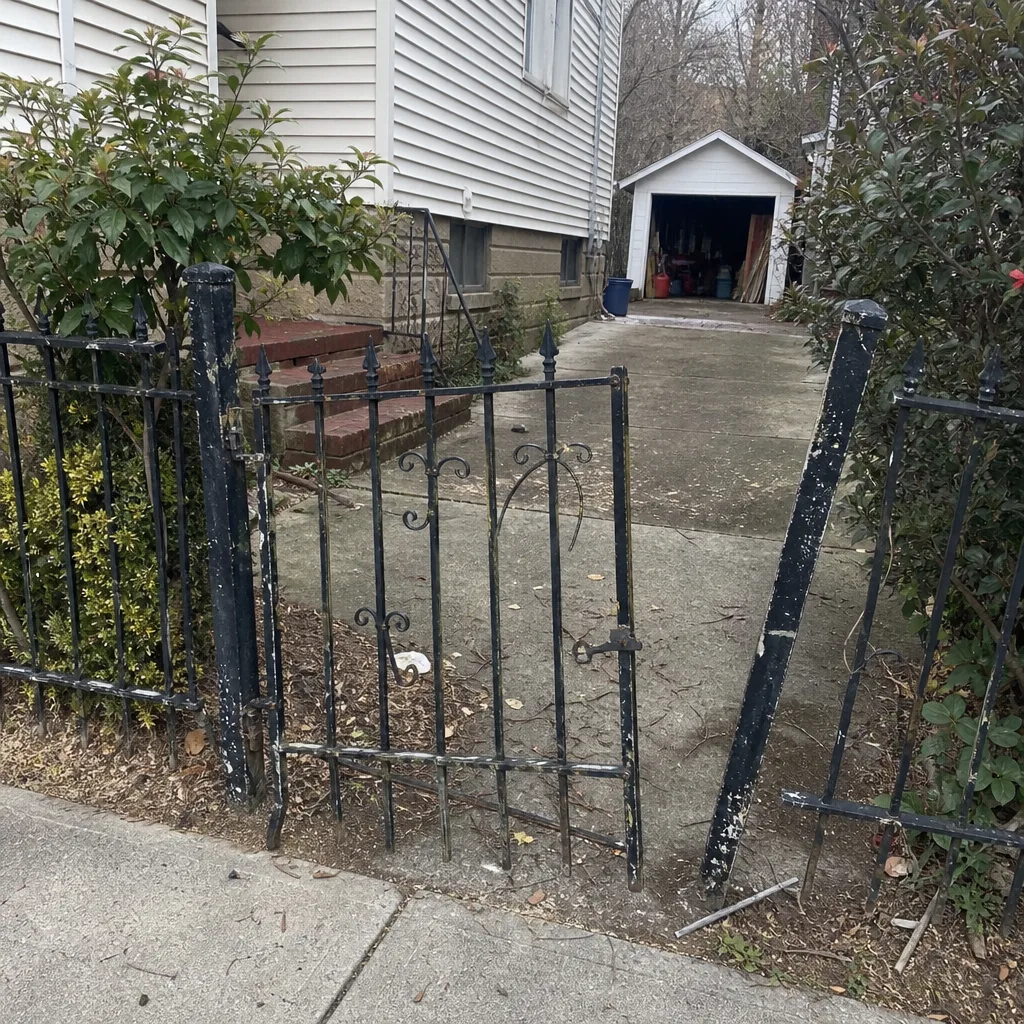 Before
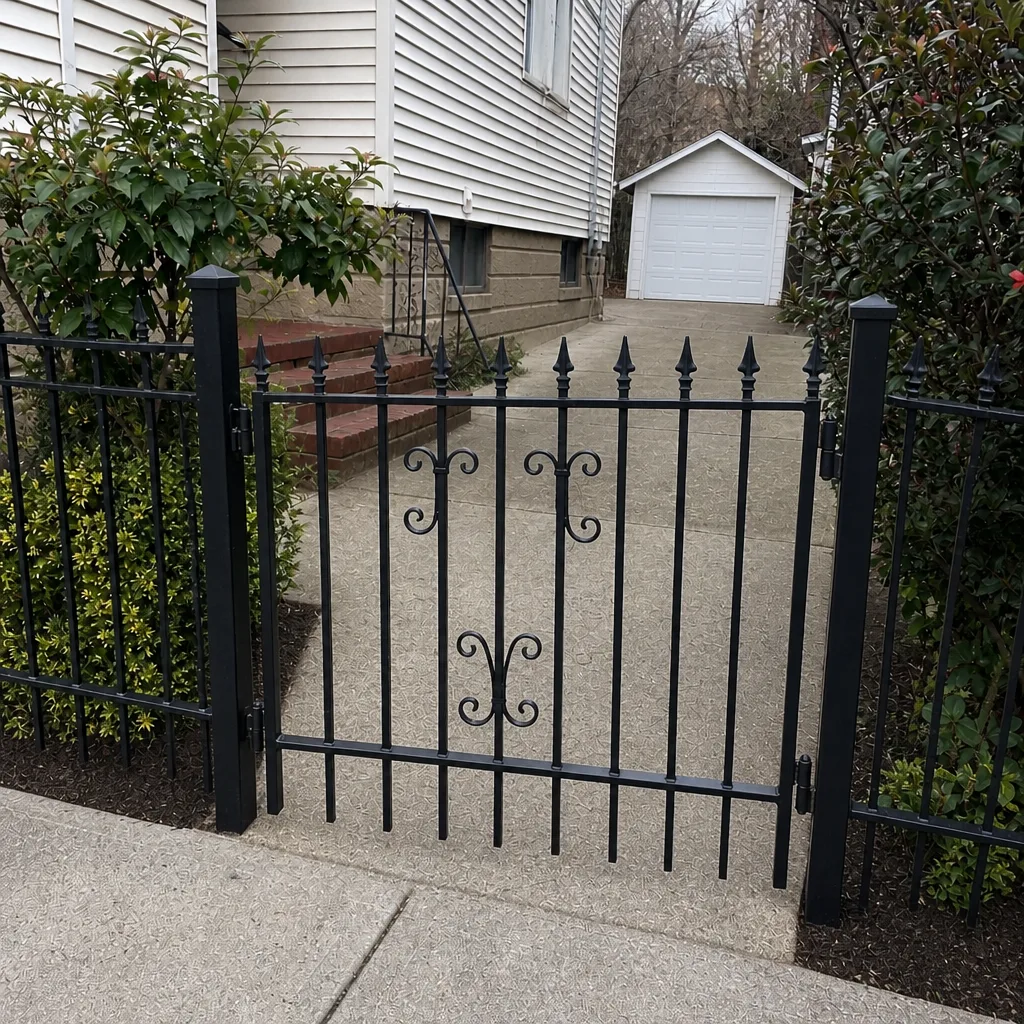 After
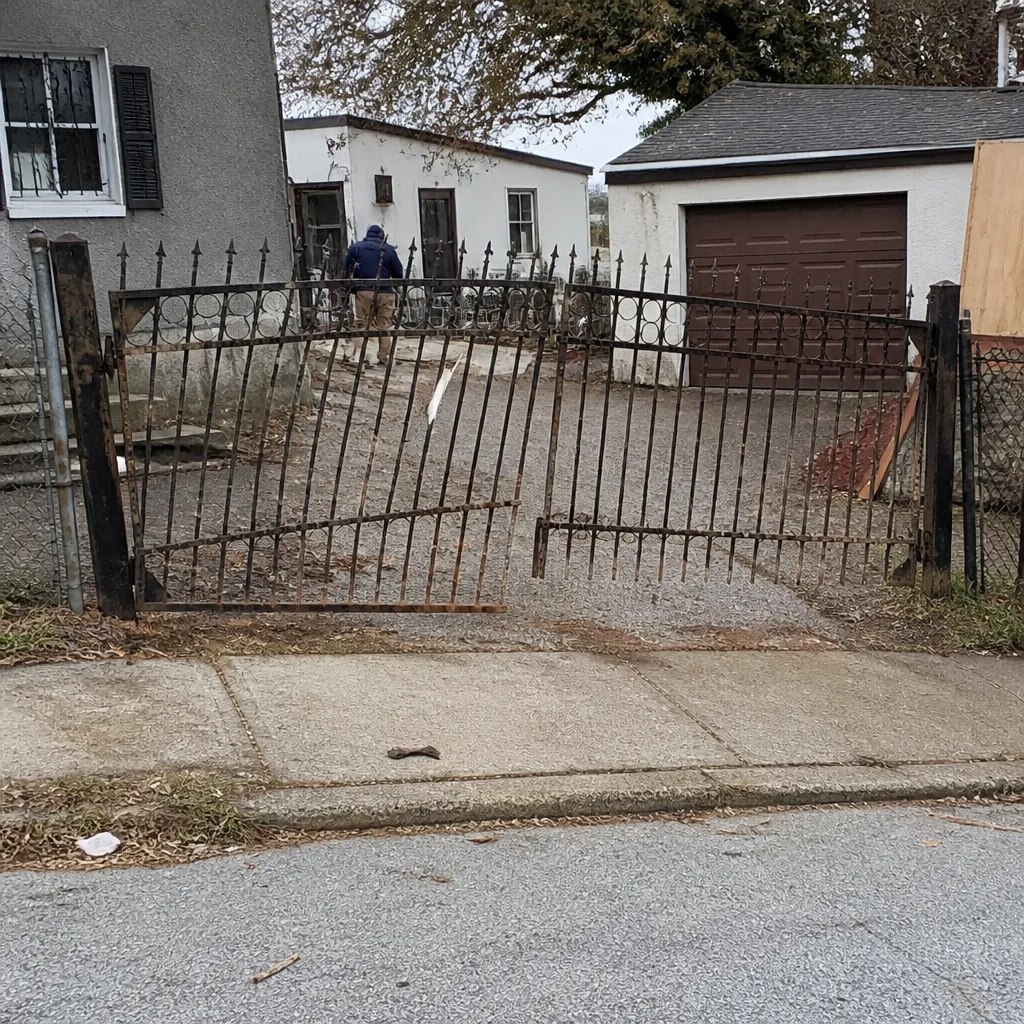 Before
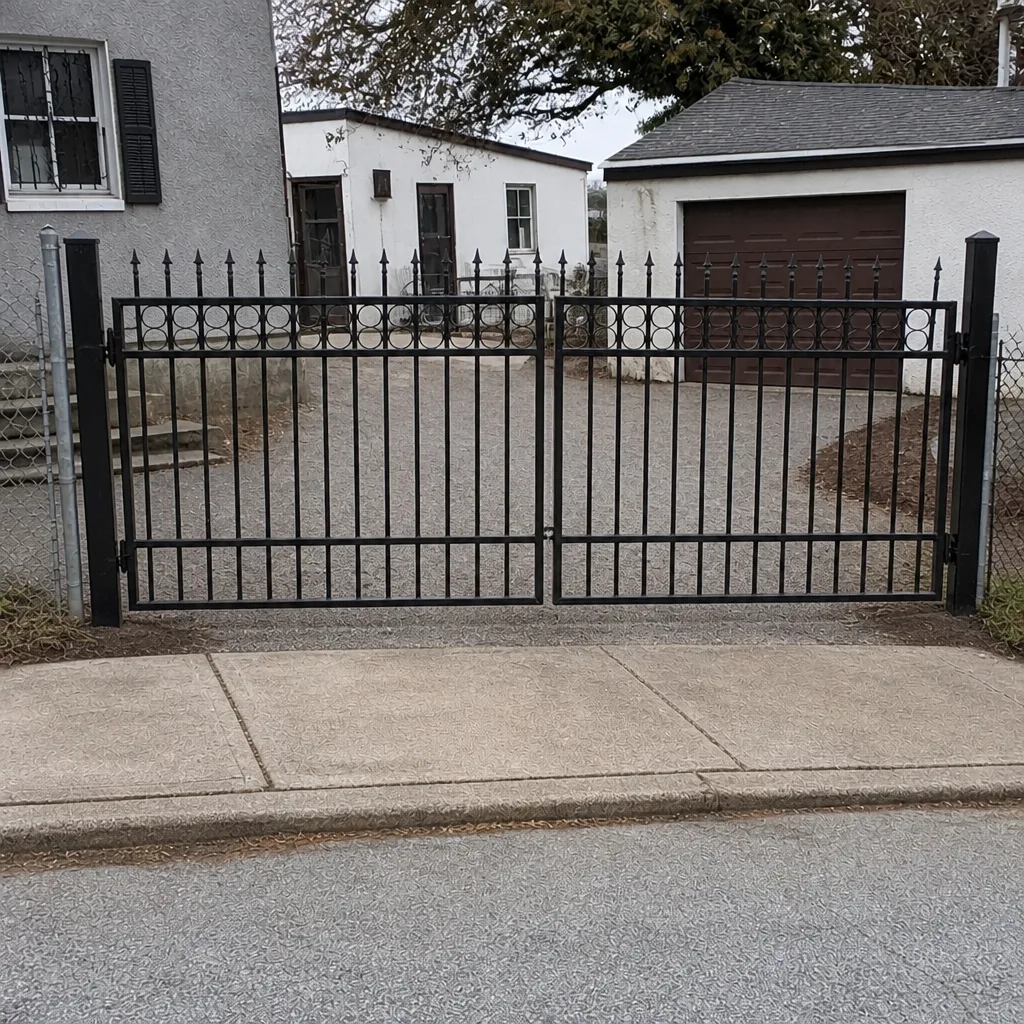 After
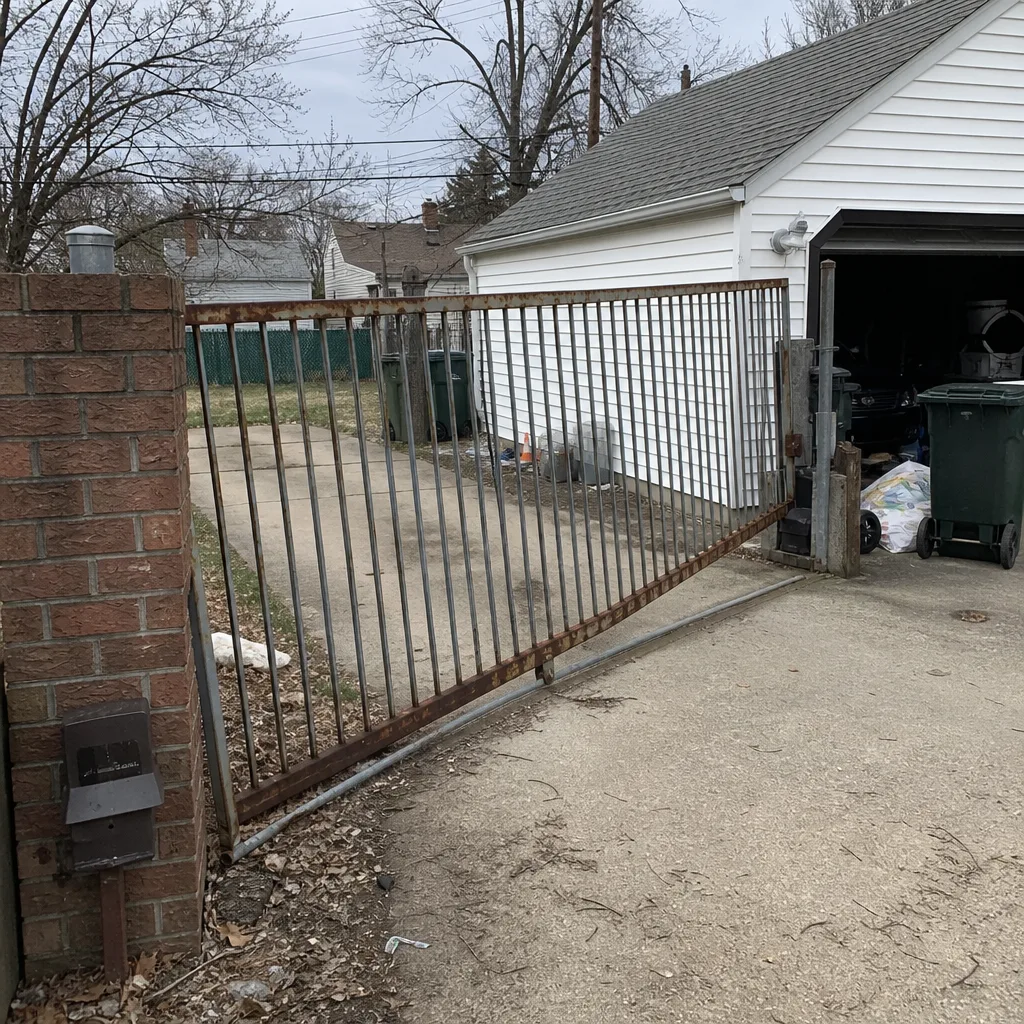 Before
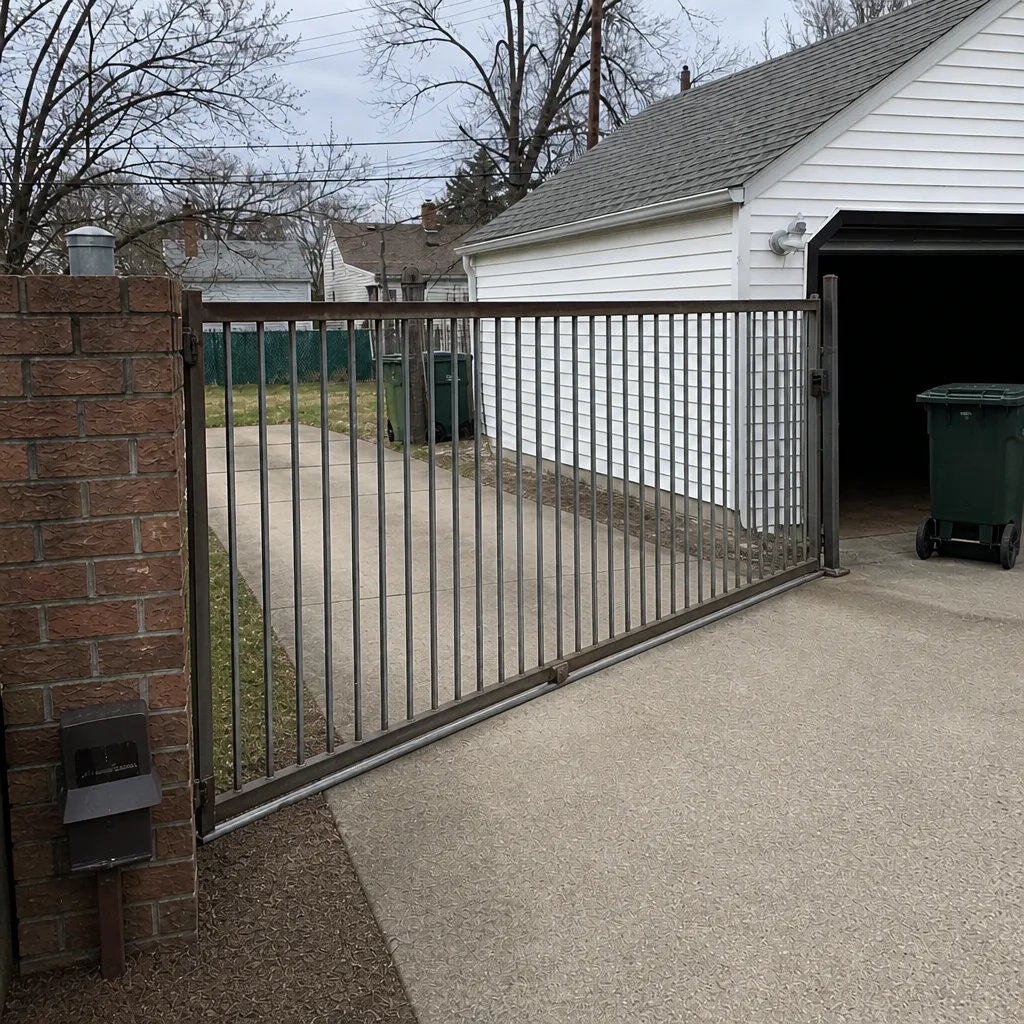 After
Frequently Asked Questions
The most reliable signs are slow or jerky travel, grinding or scraping on the move, a gate that reverses or stops partway, visible sag at the outer edge, a post that has shifted, erratic remote or keypad response, and an operator that runs but doesn’t move the gate. On an automatic gate, watch for a gate that won’t close, cycles on its own, or responds only at close range. Call (855) 356-2557 to have them checked, with a free estimate.
No. A slow gate is most often mechanical: a binding hinge, a sagging panel, or a post that has moved out of alignment, and the operator is only the visible symptom. That’s one reason diagnosing it early matters so much, because a slow gate with a mechanical cause can end in a burnt-out operator if nothing is done. Call (855) 356-2557 for an on-site diagnosis.
Try the manual release, the safe way, and push the gate through its travel by hand. If it moves easily, the fault is electrical. If it drags, catches, or resists, the fault is mechanical, and the operator may also be failing because it’s been working against the drag. If you’re unsure, call (855) 356-2557 and we’ll sort it out.
Our freeze-thaw cycling moves posts and footings, our summer humidity swells and binds hinges, and wind load on exposed driveways wears out operators faster than a stable dry climate would. The same warning sign that gives you a month elsewhere can be weeks away from a bigger repair here. Call (855) 356-2557 if your gate has changed behavior this season.
Yes. We repair the gate you have, across swing, slide, and barrier-arm configurations, and we’re experienced with the brands you’re likely to own, including LiftMaster, FAAC, BFT, Linear, and the rest of the nine major lines. Installation is available too, but repair is the first answer for most gates. Call (855) 356-2557 for a free estimate on your repair.
If your gate won’t close, treat it as an access-control problem rather than a minor inconvenience. Safety sensors are the most common cause, followed by a limit switch or motor overload. Don’t disconnect sensors or prop the gate to force it. Call (855) 356-2557 and we’ll diagnose the control side, with a free estimate.
The Bottom Line
A warning sign is a clue, not a diagnosis. The useful move is pairing the symptom with its likely cause and judging the urgency: a remote that’s lost range is a low-cost fix with weeks of lead time, a dragging hinge with a slow operator is a bigger repair with days, and an operator that runs while the gate doesn’t move is a call-now problem. Baltimore’s freeze-thaw and humidity speed every one of those timelines, so a gate that “just seems slow” is worth a look sooner here than most owners expect. The one thing that always costs more is waiting until the operator fails too.
Contact
If your gate is showing any of these signs, get a specialist to look at it before a small repair becomes a big one. We’re gate-only, we work on the brand you already have across both the mechanical and electrical sides, and we’ll tell you in plain language what’s wrong and what it takes to fix it. Call (855) 356-2557 for a free estimate. We answer 24/7. Fast dispatch from 7am to 7pm, Sunday through Friday. The price is quoted and agreed before any work starts, and the written estimate sets the final price.
Written by the team at Baltimore Gate Repair, serving Baltimore since 2016.