
Last updated November 14, 2026
 Wrought iron
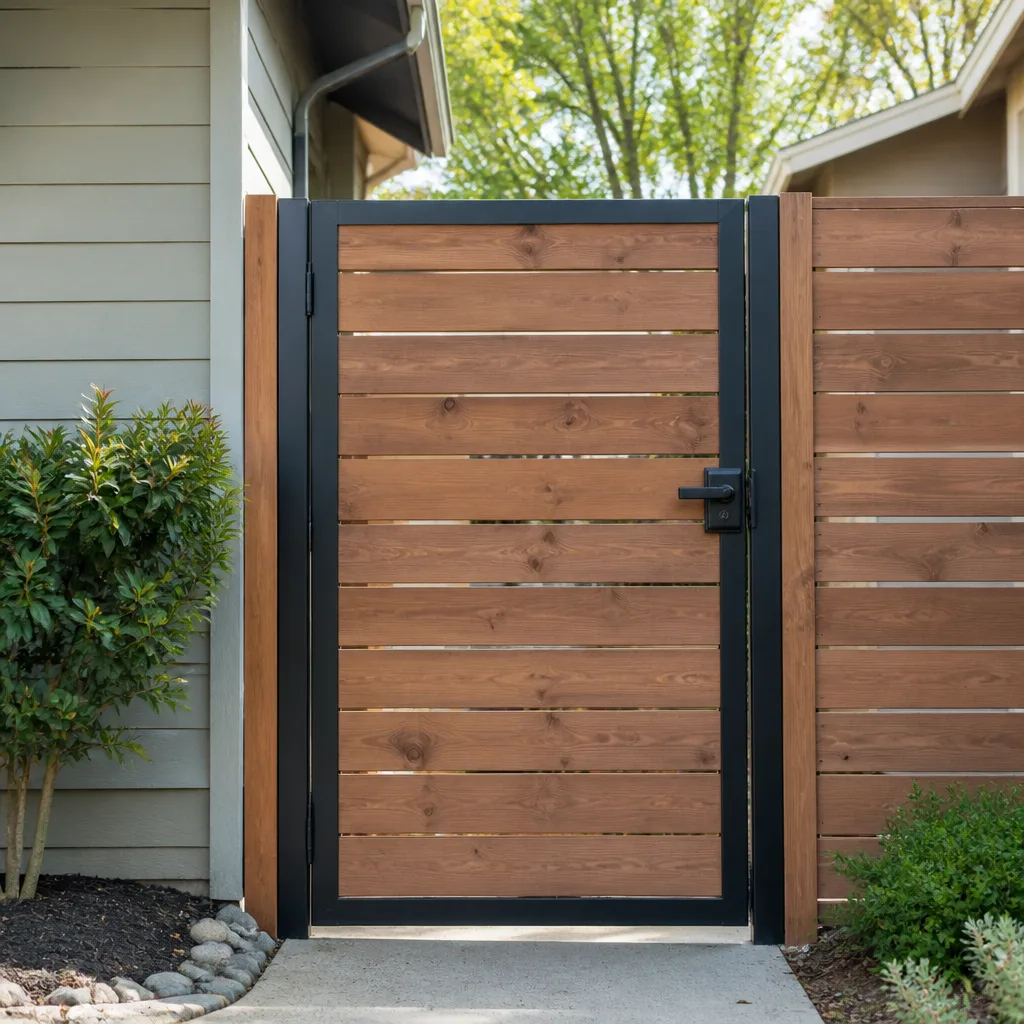 Wood & steel frame
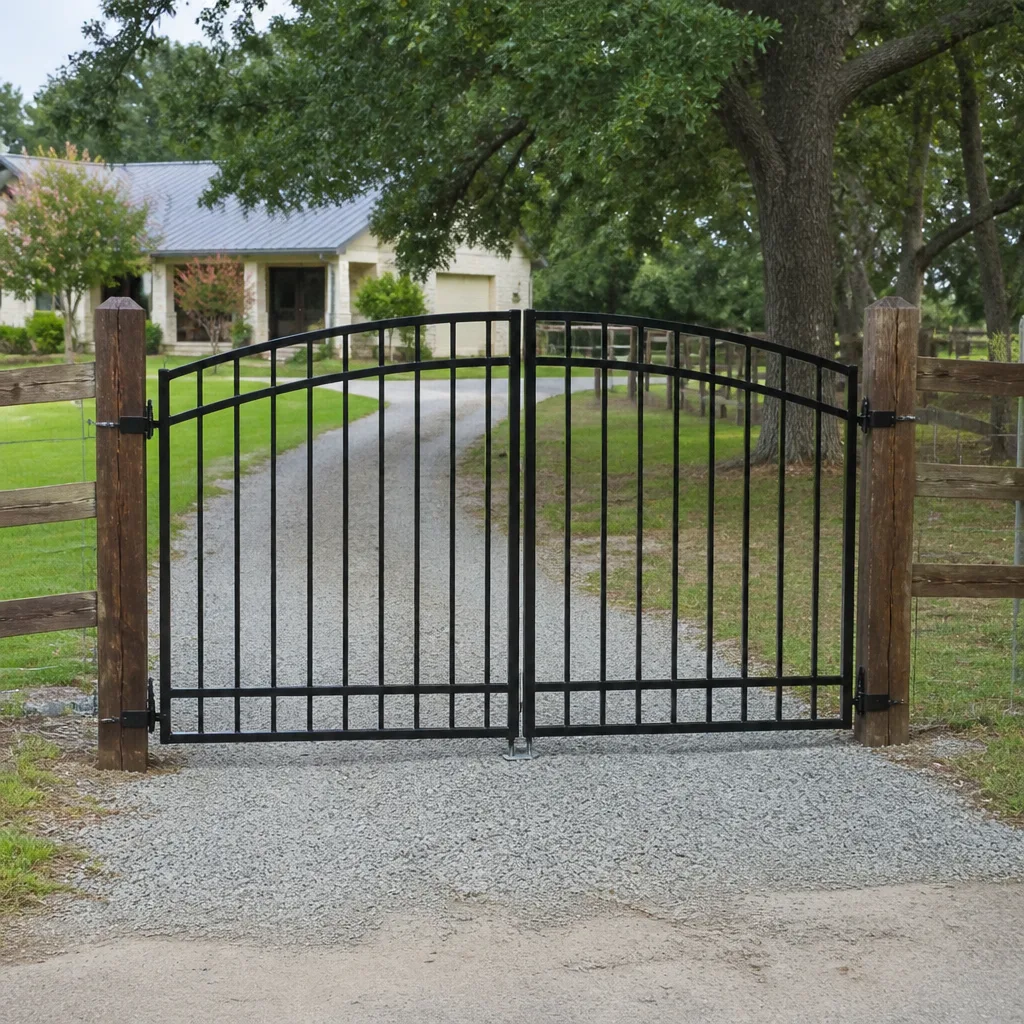 Farm & ranch
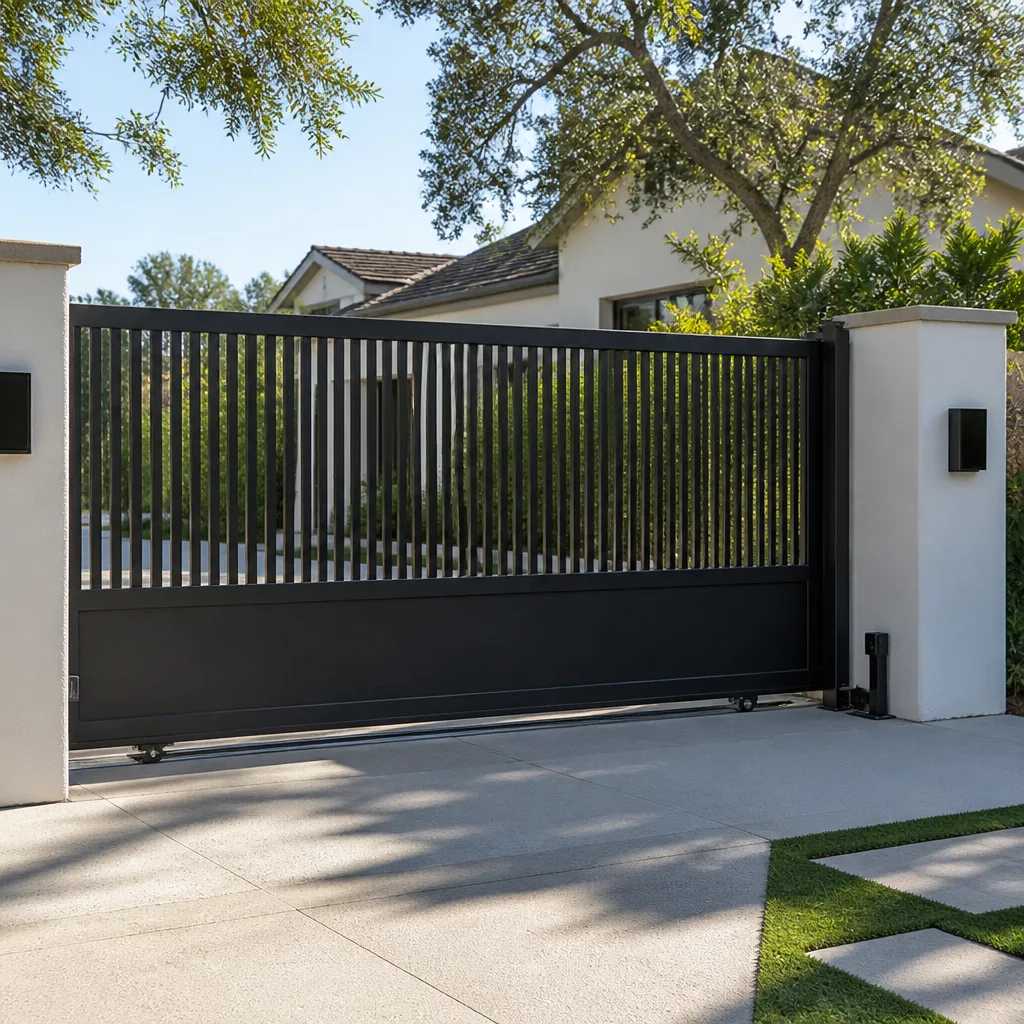 Sliding driveway gates
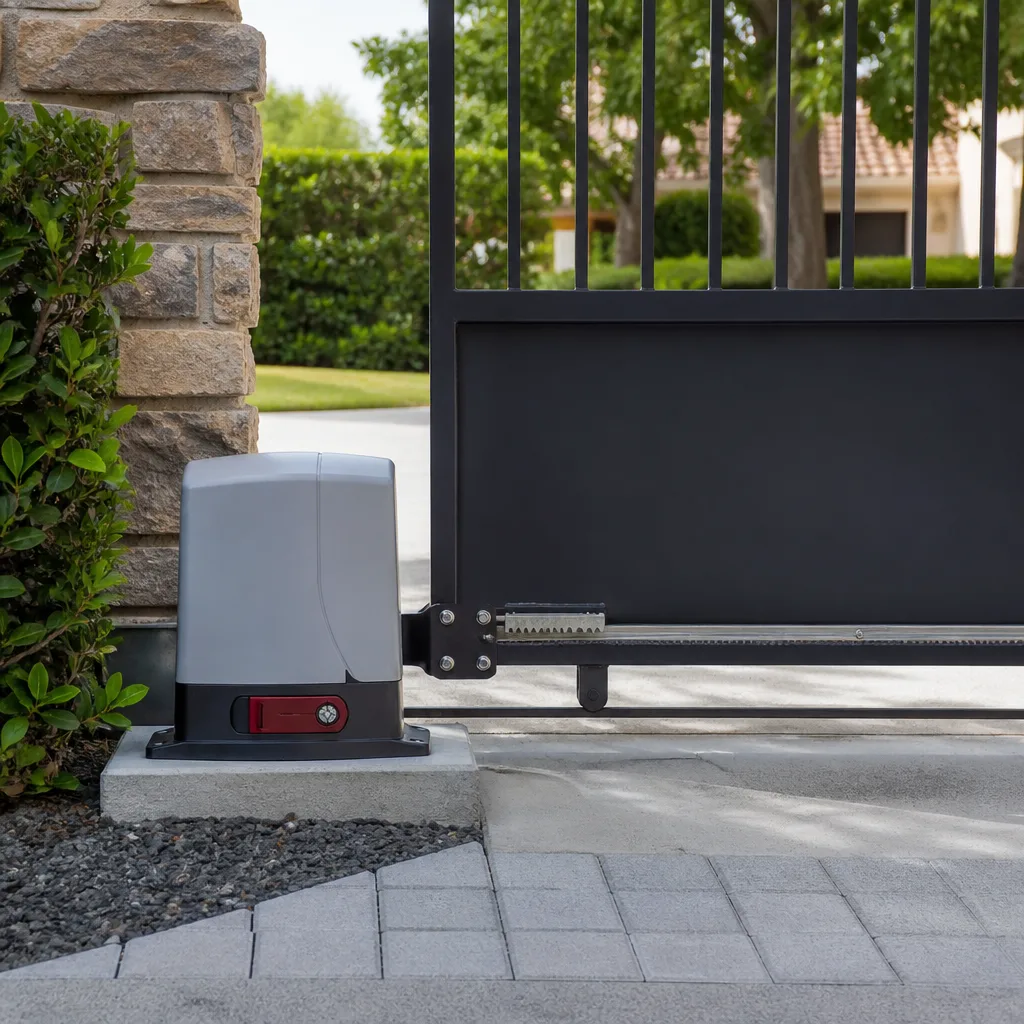 LiftMaster operators
Free on-site gate assessment - hinges, posts, and your LiftMaster or Nice gate operator checked before anything is quoted
The assessment is free and the quote is the invoice.
Get your free estimateHow to Hire a Gate Repair Contractor in Baltimore: A Step-by-Step Guide
There is no licensing category for “gate repair contractor” in Maryland, which means anyone with a truck and a tool belt can advertise as one, and many do. Search for gate repair in Baltimore and you’ll find fence companies, garage door shops, landscapers, and handymen all claiming the same specialty. Some of them will do a fine job. Plenty will misdiagnose a failing operator, replace the wrong part, and leave you with the same broken gate three weeks later. This guide gives you the exact questions to ask, the quote structure to demand, and the review patterns to watch for so you can tell a gate specialist from a generalist before anyone touches your gate.
Quick Answer
To hire a gate repair contractor in Baltimore, ask five qualifying questions: what percentage of their work is gates, which gate brands they stock parts for, how they separate the mechanical failure from the electrical one, what’s included in a written diagnostic report, and whether the quoted price is fixed before work starts. A genuine gate specialist answers all five without hesitation. A generalist will get vague around question three.
Styles & brands we work with
- Wrought iron
- Wood & steel frame
- Farm & ranch
- Sliding driveway gates
- LiftMaster operators
Table of Contents
- Why Gate Repair Contractors Are Not All the Same
- The Five Questions That Expose a Generalist
- How to Verify Electrical and Insurance Credentials in Maryland
- How to Read a Gate Repair Quote Line by Line
- What a Written Diagnostic Report Should Contain
- Red Flags in Online Reviews for Gate Work
- Baltimore Weather, Aging Gates, and Worn Operators
- Hiring for Installation vs. Repair: Different Job, Different Questions
Why Gate Repair Contractors Are Not All the Same
The gate trade sits at a strange intersection. Half of what fails on an automatic gate is mechanical: a sagging swing arm, a slide gate that jumps its track, a hinge that has pulled loose from its post. The other half is electrical: low-voltage control wiring, a sensor loop, an operator board that no longer reads its limits. A fence contractor understands the posts and panels but not the automation. A garage door company understands motorized openers but not the geometry of a swinging driveway gate. A handyman understands neither deeply enough to diagnose a fault that straddles both.
That’s why the quality difference shows up in the diagnosis, not in the repair itself. Replacing an operator board is a mechanical task almost anyone can do. Figuring out whether the board actually needed replacing, or whether a grounding fault upstream was killing it, is what separates the two. In our experience, the second repair on a gate is often the one that fixes a problem a generalist should have found the first time.
A specialist also carries parts. Gate repair done well depends on having the right arm, board, sensor, or receiver on the truck instead of ordering it. We stock and work across nine brands, from Mighty Mule residential swing operators to FAAC and BFT commercial slide units, so a diagnosis usually ends with a working gate rather than a second appointment.
The point isn’t that every generalist is bad. It’s that you should know which one you’re hiring before the gate is half-disassembled.
The Five Questions That Expose a Generalist
These five questions take about four minutes on the phone. Ask all five, in order. The answers, not the tone, tell you what you’re dealing with.
- “What share of your work is gates?” A gate-only operation answers immediately. A company that also does fences, decks, or garage doors will hedge, and that hedging is accurate information. Split focus means split parts inventory.
- “Which operator brands do you keep parts for?” Listen for specific names: LiftMaster, FAAC, BFT, Linear, Viking, Ghost Controls, DoorKing, Elite, Mighty Mule. A generalist will say “we can get whatever you need,” which means “we’ll order it and come back.”
- “How do you tell whether my problem is mechanical or electrical?” This is the crossover question. A real answer describes testing the operator separately from the gate leaf, checking the control side and the travel side independently. A vague answer describes replacing a part and seeing if it works.
- “Will you give me a written diagnostic before any repair?” If the answer is no, or “we’ll take a look and call you,” you have no record of what was tested and no way to compare a second opinion.
- “Is the price fixed before work starts?” The only acceptable answer involves a written estimate that both of you agree to first. Anything else leaves room for the invoice to grow.
If a contractor answers three of five well, keep the number. If they answer all five, you’ve found a Baltimore Gate Repair specialist or someone who operates like one. Call (855) 356-2557 if you’d rather run the questions past us directly. We answer 24/7. Fast dispatch from 7am to 7pm, Sunday through Friday.
How to Verify Electrical and Insurance Credentials in Maryland
Automatic gate work includes low-voltage connections that most homeowners reasonably assume require a license. Maryland doesn’t have a dedicated gate contractor license, and the electrical rules that apply depend on what the operator needs and how it’s wired. So verify what can actually be verified.
- Insurance. Ask for a certificate of general liability insurance before anyone arrives and confirm it’s current. Any legitimate operator provides it without friction.
- Whether they’re an insured and bonded company. “Licensed and insured” gets used loosely. Ask what the license covers. If it’s a home improvement license, that’s fine for gate work, but it isn’t an electrical credential and shouldn’t be presented as one.
- Who handles the electrical side. If your job requires new line voltage, a panel connection, or a new power run out to a remote gate, ask plainly whether they perform that work themselves or coordinate a licensed electrician. Both can be fine. What you shouldn’t hear is “we’ll figure it out.”
- Permits. Most cities and counties require a permit for a new gate with a new electrical circuit. Ask your local building department what applies at your address, and ask the contractor whether they’ll pull it.
- Written scope. An insured company documents what it will and won’t do. If the electrical work is excluded, that needs to be on paper before the gate comes apart.
A specialist who works on automatic gates every day knows where the low-voltage side ends and the licensed electrical work begins. That boundary is worth asking about directly. If your system needs troubleshooting before anyone upgrades it, that’s electric gate repair and it’s a different conversation from installing new wiring.
How to Read a Gate Repair Quote Line by Line
A lump-sum quote on a gate repair is the single fastest way to lose money on the job. Not because contractors pad it deliberately, but because a number with no breakdown can’t be checked, and the parts markup hides inside it. Demand line items. Here’s what a proper quote separates.
- The diagnostic. What was tested, on which component, and what the test measured. This should be a small portion of the total and separate from the repair.
- Parts, itemized with brand and part. “Operator board” isn’t enough. Which board, for which operator, at what price.
- Labor separated from parts. One blended number tells you nothing about whether you’re paying for a $90 part or a $400 one.
- What’s excluded. Digging, conduit, a post replacement, painting, sensor loop replacement, and electrical work should be named as excluded if they’re excluded.
- The validity and the fixed total. An estimate should state that the total is what you’ll pay unless you authorize an addition in writing.
Watch for two patterns in particular. The first is a quote that replaces an entire operator when the fault is one component, when a receiver or a limit switch or a battery backup was the actual failure. The second is a quote that lists only a total with no parts detail. Both make it impossible to compare against a second bid. That’s the tell.
You shouldn’t need to guess whether the number will hold. If a contractor can’t put the price in writing, agree to it before work begins, and stick to it, keep looking.
What a Written Diagnostic Report Should Contain
Before anyone starts wrenching on your gate, you should have a document that describes what’s actually wrong. Not a verbal summary at the door, a written one. A proper diagnostic report for an automatic gate in Baltimore includes most of the following.
- The failure mode as observed. Does the gate not move, move partially, reverse immediately, stutter, or run without stopping? Each of those points to a different subsystem.
- Operator test results. Whether the operator runs independently of the gate leaf. This is the single most useful split between mechanical and electrical faults.
- Control side check. Transmitter, receiver, keypad, loop, and safety edges tested individually, not as a group.
- Mechanical inspection. Hinge wear, post movement, track condition on slide gates, arm alignment, and whether the gate leaf is still square.
- The parts needed, with brand and part number. Confirm they’re in stock with the company, not just available in the market.
- A stated cause. Not “operator failure” but “the operator’s limit switch no longer reads the fully-closed position, and the gate stops because the control board times out.”
Six items might sound like a lot to ask of a small repair. In practice, a specialist produces all of it in the time it takes a generalist to guess twice. We’ve seen gates come back to life with one sensor adjustment after two prior visits replaced expensive parts. A written report is how you avoid being the third visit.
Red Flags in Online Reviews for Gate Work
Reading reviews for gate repair is unlike reading reviews for a restaurant. You’re not looking for tone. You’re looking for patterns that indicate misdiagnosis, which is a more serious problem than a grumpy employee.
- “Fixed it twice, broke again.” One review saying this is noise. Three across different gates says the shop is guessing rather than diagnosing.
- “They replaced the motor but it still won’t close.” A gate that won’t close after a new operator almost always means the control side or the safety edges were never tested. That’s a diagnostic failure, not a parts failure.
- “They said they’d come back with the part.” Expected on an exotic brand. Common across many reviews on a mainstream brand like LiftMaster or FAAC? That shop isn’t stocking parts.
- “They showed up but mostly worked on fences.” It sounds small. It’s the clearest signal that gates are a secondary line of business.
- Reviews that praise the price but describe the gate as “working better, not perfect.” On an automatic gate, “better” usually means the underlying fault was never found.
The reviews to trust are specific and mechanical. When a reviewer names the symptom, the part, and what the technician said, that reviewer had a real diagnostic conversation. Read for those.
Baltimore Weather, Aging Gates, and Worn Operators
Gate hardware in Baltimore lives through real seasonal swing. Freeze-and-thaw cycles work posts and hinges loose over a few winters, and a post that shifts a fraction of an inch can throw a slide gate off its track or bind a swing gate mid-travel. Summer humidity loosens wood gates and stresses older control enclosures. Fall leaf debris packs into the track, and in older Baltimore neighborhoods the combination of a mature tree canopy and a narrow lot tends to mean gates that get jammed more often than they get serviced.
Two practical consequences for hiring. First, a contractor who works year-round on gates in this climate will ask about seasonal symptoms. A gate that fails only in cold weather is a mechanical tolerance problem, not a motor problem. Second, a gate that’s been “mostly working” for a few winters is often one freeze away from a stalled operator. When you’re evaluating a company, ask whether they’ve seen your brand of operator in this kind of weather and how they’d approach a hinge or post issue versus a motor issue.
Older properties around the city, including many with manual swing gates retrofitted with automation, tend to have a mix of brands and a mix of wiring quality. That’s not a reason to avoid hiring. It’s a reason to hire someone who diagnoses both sides of the system instead of assuming the newest-looking component failed.
Hiring for Installation vs. Repair: Different Job, Different Questions
Everything above is about hiring for a repair on a gate you already have. Installation is a different evaluation, and the giveaways are different. Repair is urgent and diagnostic. Installation is measured, ordered, and scheduled, and the questions should reflect that.
For installation, ask what a written quote includes as a complete scope: the gate itself, posts and footings to proper depth, the operator, safety edges, the control side, and the power run. Ask who handles the electrical connection and whether the permit is on them. Ask what happens after install, in writing, if a limit needs adjusting or a sensor needs repositioning. A free on-site measure and a written price up front is the standard. Anyone quoting a new automatic gate over the phone without seeing the property is guessing, and you shouldn’t accept that guess as a price.
For repair, the questions are the five from earlier in this guide, plus the diagnostic report and a line-item quote. The reason to keep the two processes separate is that a company can be excellent at one and weaker at the other. We handle all three service lines under one roof: manual and electric repair, and new installation. That lets us tell you plainly when a gate is worth repairing and when the honest answer is that replacement is the better spend. You’ll get that answer from the same diagnostician who’d install the new one, which is the cleanest version of this you can get.
Common Mistakes to Avoid
- Calling a fence company because they’re near the top of the search results. Fence companies build gates. They don’t typically carry gate operator parts or diagnose control faults. The quote may look competitive until the second visit.
- Accepting a lump-sum price over the phone. Phone pricing on a gate repair is a placeholder. The only number that matters is the written estimate you agree to before work begins.
- Jumping straight to replacing the operator. Operator replacement is the most expensive, least diagnostic fix on the list. Ask whether the operator was tested independently of the gate leaf first.
- Skipping the diagnostic report. If you don’t have the findings in writing, you can’t compare a second opinion, which is exactly the situation a vague contractor wants.
- Assuming a nationwide brand means anyone can service it. Mighty Mule and LiftMaster are widely sold. Widely serviced with correct parts on the truck is a different thing in Baltimore.
- Ignoring a winter-only symptom. A gate that fails in cold weather and “works fine” in spring is still a gate with a mechanical fault. Waiting until it fails for good turns a small repair into a stalled system.
- Not asking who pulls the permit. If the job involves a new power run or a new circuit, it’s on the installer to tell you whether the permit is included. Ask before signing.
See the difference
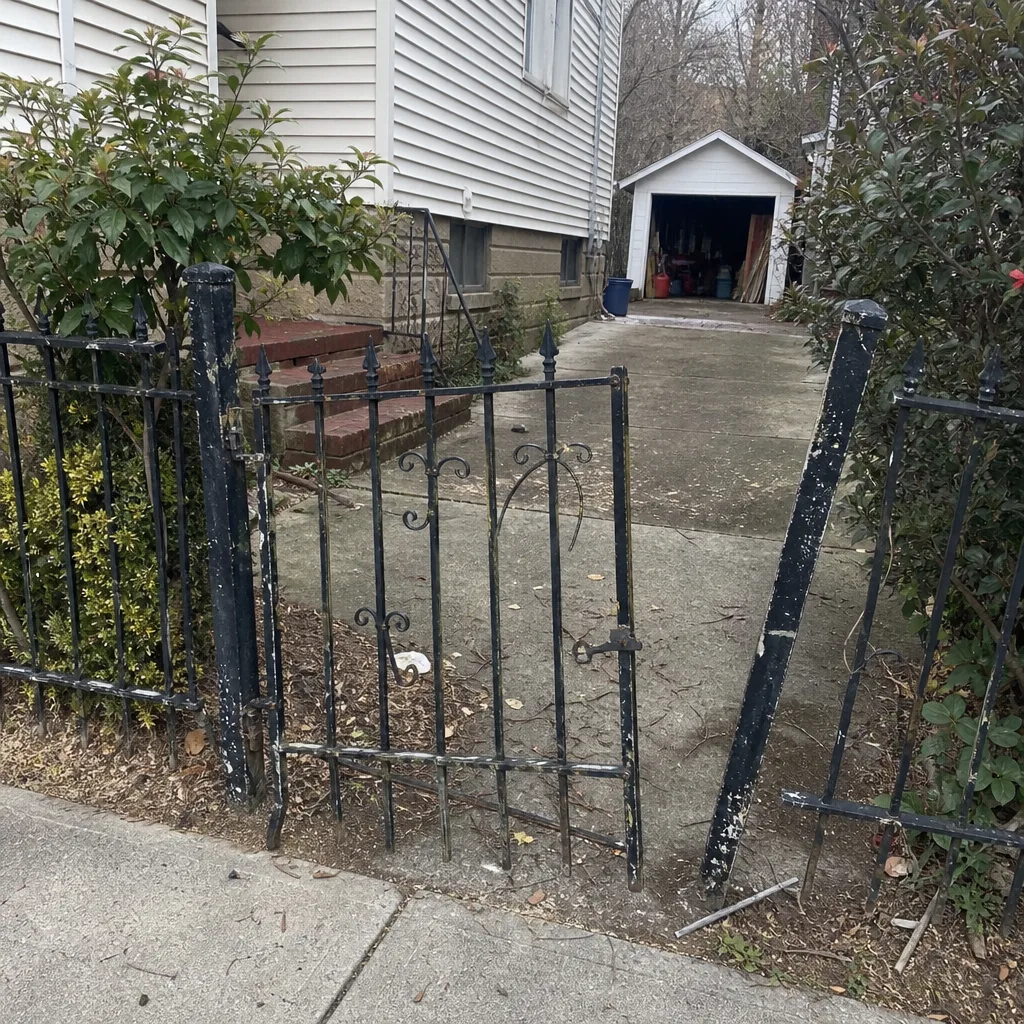 Before
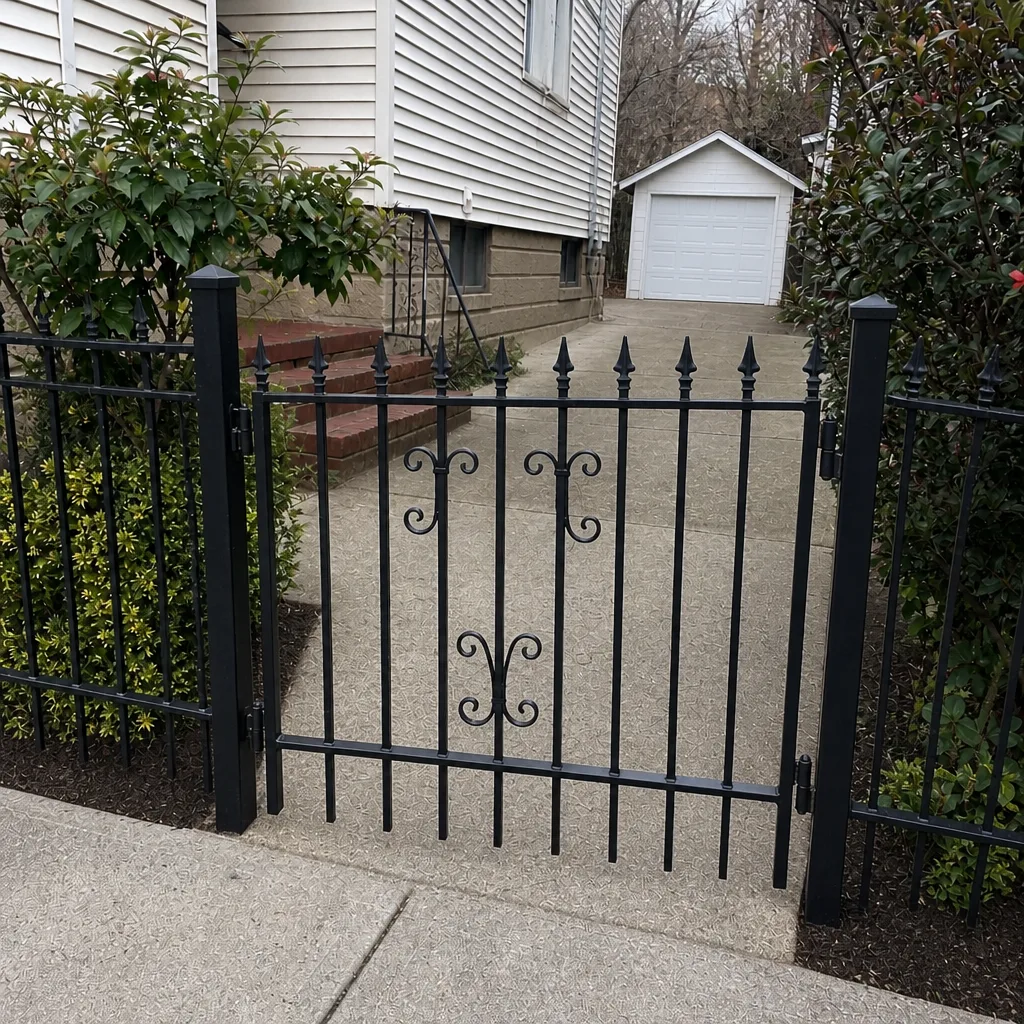 After
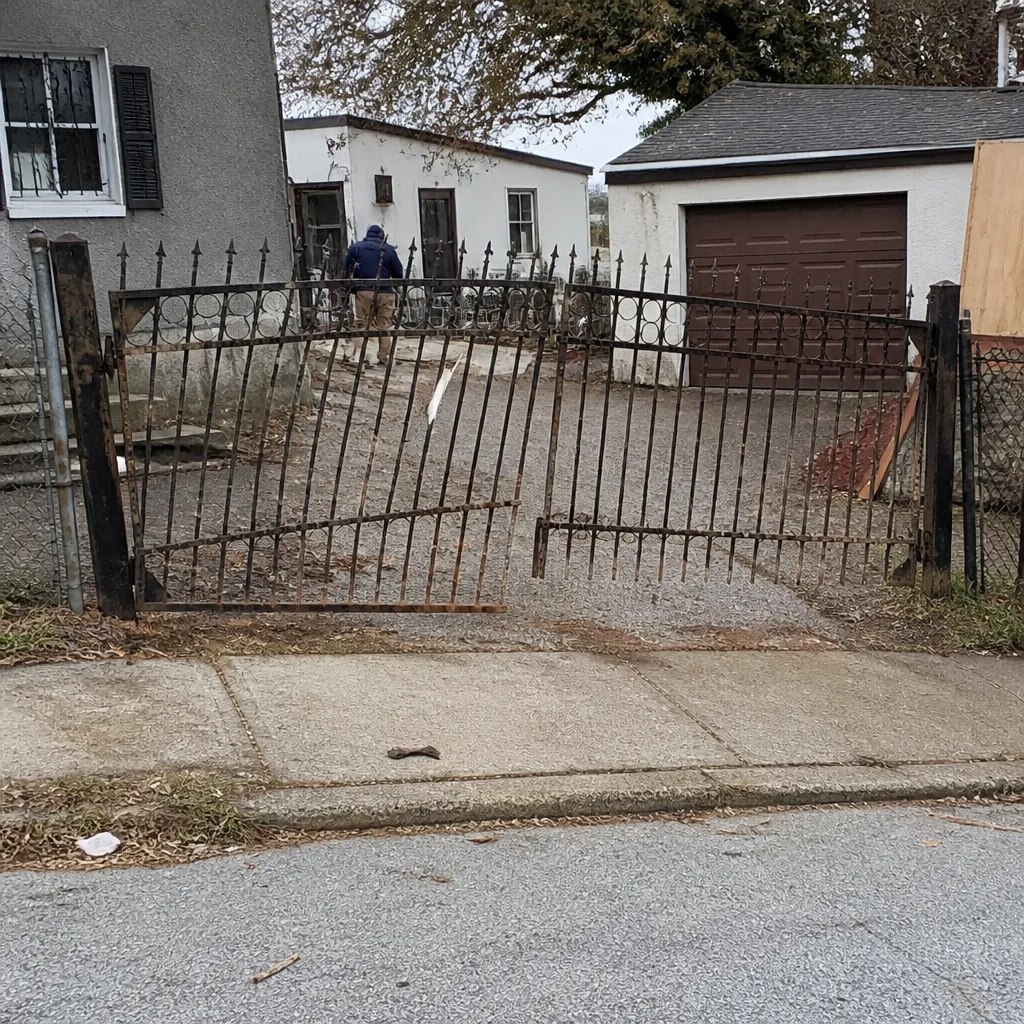 Before
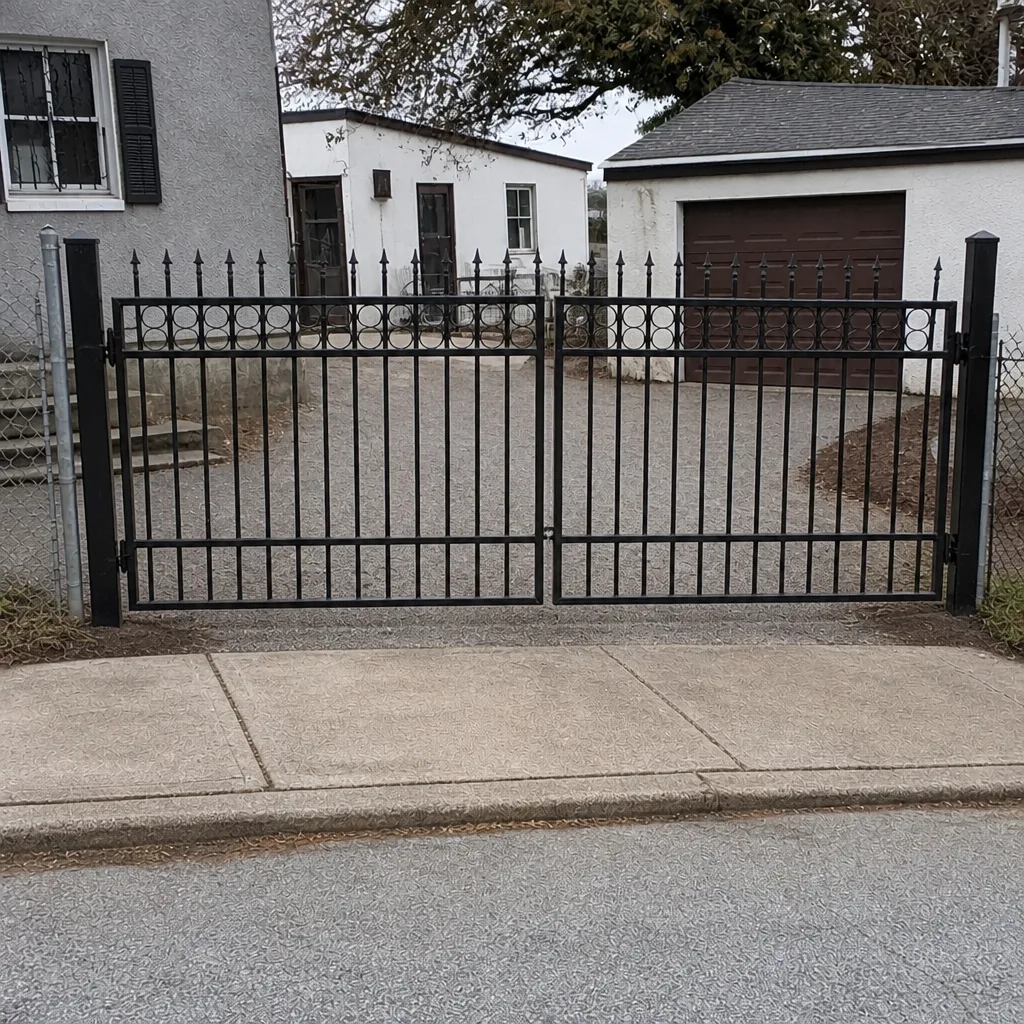 After
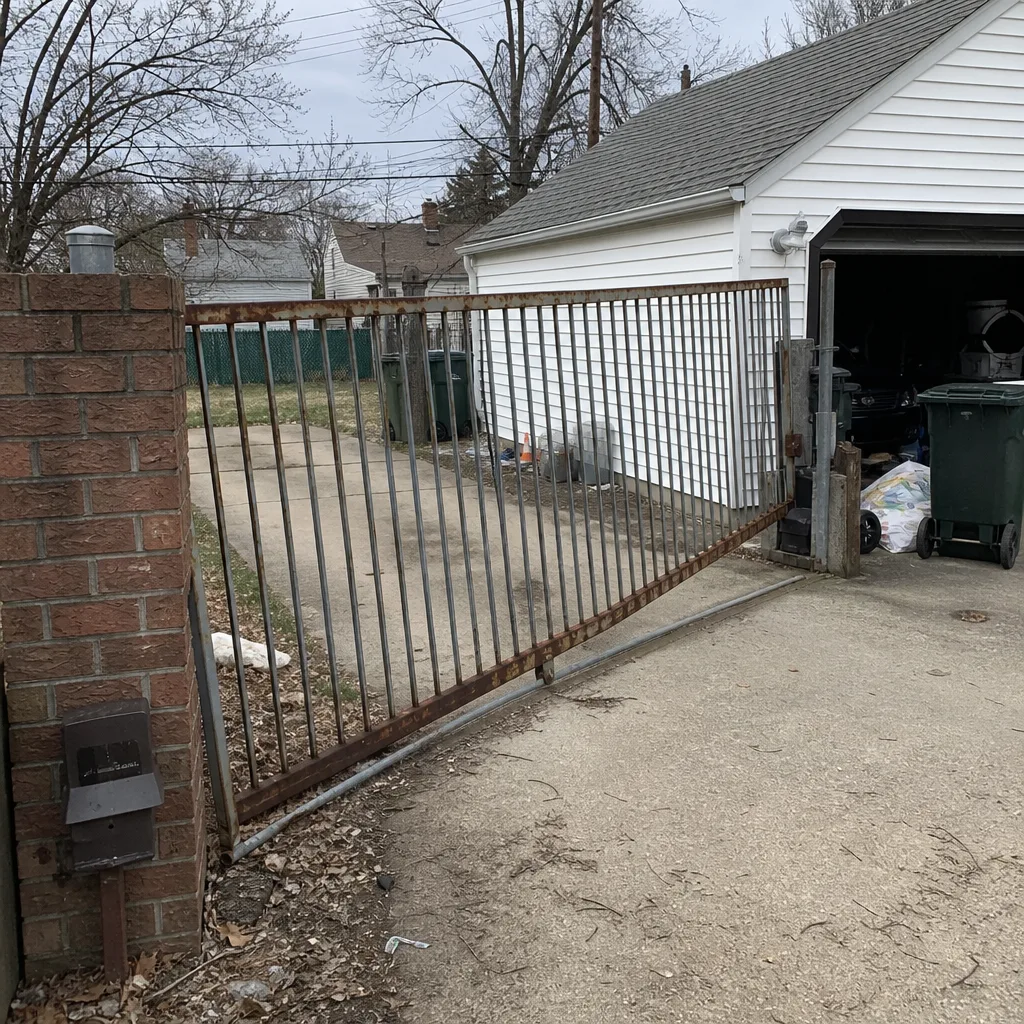 Before
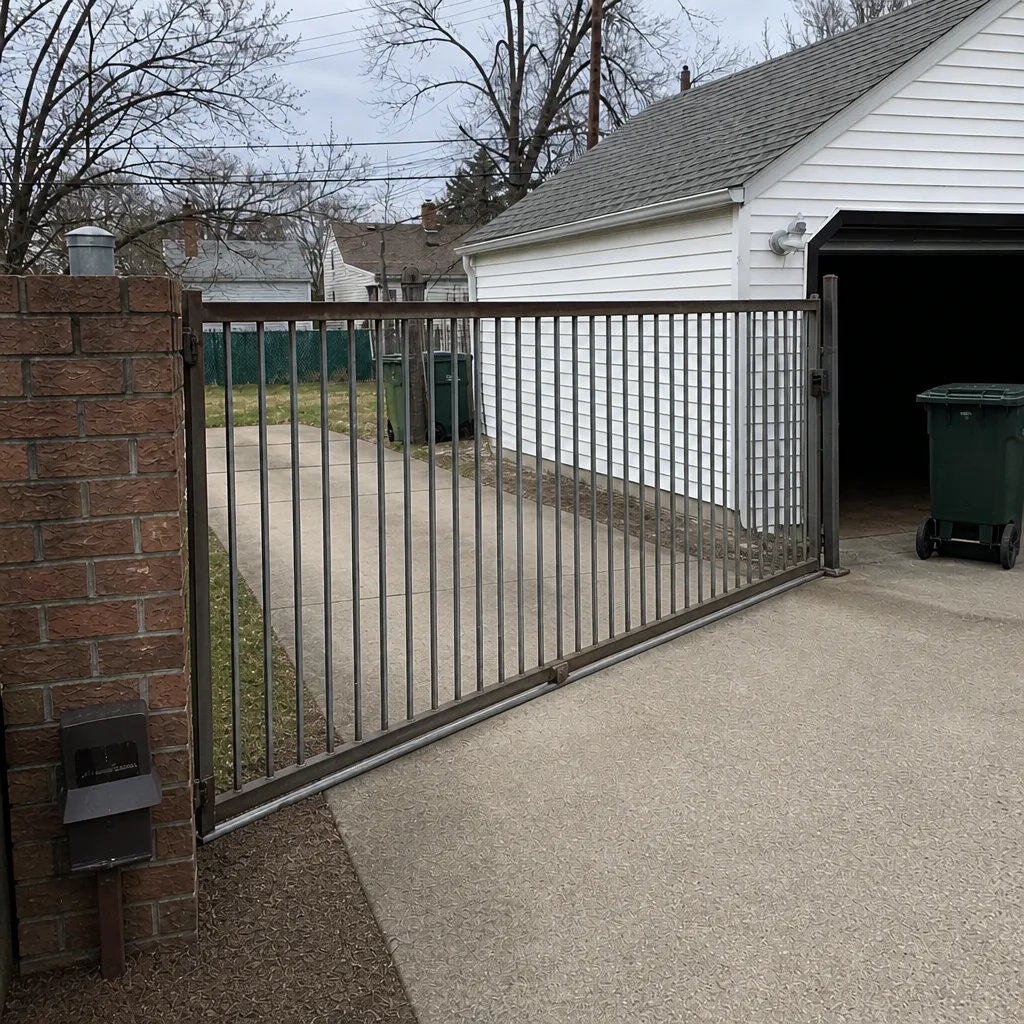 After
When to Call a Professional
Some gate problems are the kind a homeowner can reasonably look at and others need a trained technician. Call a professional when the gate stalls or reverses without an obvious obstruction, when the operator runs but the gate doesn’t move, when a slide gate comes off its track, or when the safety edges don’t stop the gate on contact. Call before adjusting anything on the control board or the power side, because that’s where a small mistake becomes a real hazard. A heavy swing or slide panel that gets loose or binds can crush, so stop using it until it’s looked at. If a gate failed suddenly and you need it back up and running today, call. Baltimore Gate Repair offers free estimates in Baltimore. Call (855) 356-2557. We answer 24/7. Fast dispatch from 7am to 7pm, Sunday through Friday.
Frequently Asked Questions
There’s no fixed number in this trade, because a gate repair price is set per job by the written estimate after a technician diagnoses the fault. A sensor adjustment and an operator board replacement are very different jobs, so any company that quotes a flat repair price over the phone is guessing. The estimate itself is free, the price is agreed before work starts, and the written number is what you pay. Call (855) 356-2557 for an exact quote. Estimates are free.
No, Maryland has no dedicated gate repair license, which is why verifying a company’s insurance and the scope of whatever license it does hold matters more than the word “licensed.” Ask for a current certificate of general liability insurance, ask what the license covers, and ask who performs any line-voltage electrical work. That’s the practical check, and a real specialist answers all three without hesitation.
Yes, and the five questions in this guide do most of the work. The fastest test is asking which operator brands they carry parts for. A gate specialist names specific brands and can tell you what’s on the truck. A generalist offers to “get whatever you need,” which means another appointment. Ask about how they separate mechanical from electrical faults and you’ll know within a couple of minutes.
Yes. Manual gate repair, electric gate repair, and new gate installation are the three service lines we handle, which means you don’t need a second company to finish the job. That matters on automatic gates because the mechanical fault and the control fault often overlap, and separating them is the whole point of a proper diagnosis.
We work on the brand you already have, and our confirmed range covers LiftMaster, FAAC, BFT, Linear, Viking, Ghost Controls, DoorKing, Elite, and Mighty Mule. That spans budget residential swing gates up to high-cycle commercial slide operators. We’re independent, so we’re not tied to one line, and we can tell you honestly when an existing operator is worth repairing and when it isn’t.
The failure mode as observed, the results of testing the operator separately from the gate leaf, individual checks on the transmitter, receiver, keypad, and safety edges, a mechanical inspection of hinges, posts, and track, the specific parts needed with brand and part, and the stated cause of the failure. Without those items, you have no record to compare against a second opinion and no proof the actual fault was found.
Same-day service is often possible, and a gate that’s stuck open when it shouldn’t be, or stuck closed when you need to get out, is the kind of call we take first. We answer 24/7. Fast dispatch from 7am to 7pm, Sunday through Friday. A call outside dispatch hours is booked into the next opening. Call (855) 356-2557. Estimates are free.
The Bottom Line
The difference between a gate repair that lasts and one that comes back is almost always the diagnosis, and the diagnosis is where generalists fall down. Ask the five questions. Get the parts itemized with brand and part. Insist on a written diagnostic before anyone touches the gate. Watch online reviews for misdiagnosis patterns rather than for tone. If the gate is new or being upgraded, treat it as an installation project with a free on-site measure and a written price, not a repair. A gate specialist will pass all of those tests without effort. Call (855) 356-2557 for a free estimate in Baltimore. We answer 24/7. Fast dispatch from 7am to 7pm, Sunday through Friday.
Written by the team at Baltimore Gate Repair, serving Baltimore since 2016.