
Last updated November 14, 2026
 Wrought iron
 Wood & steel frame
 Farm & ranch
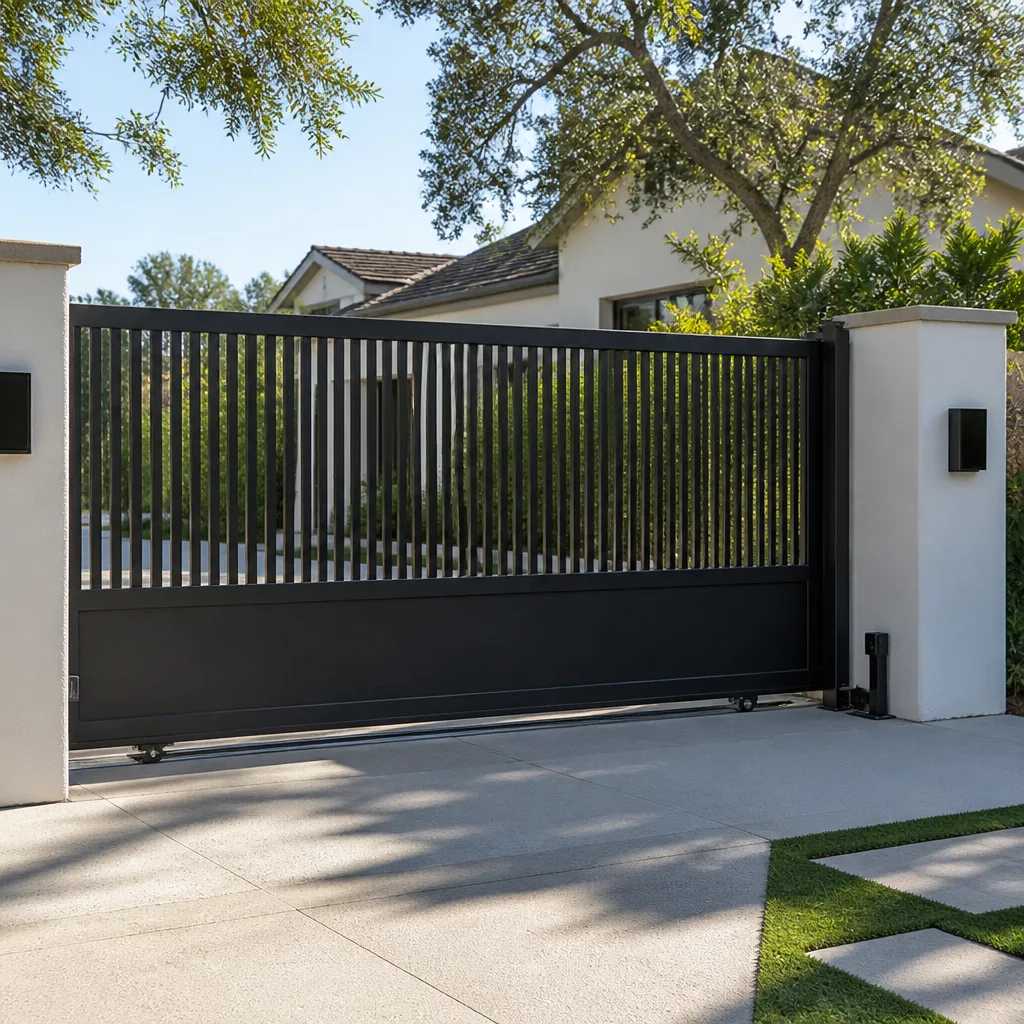 Sliding driveway gates
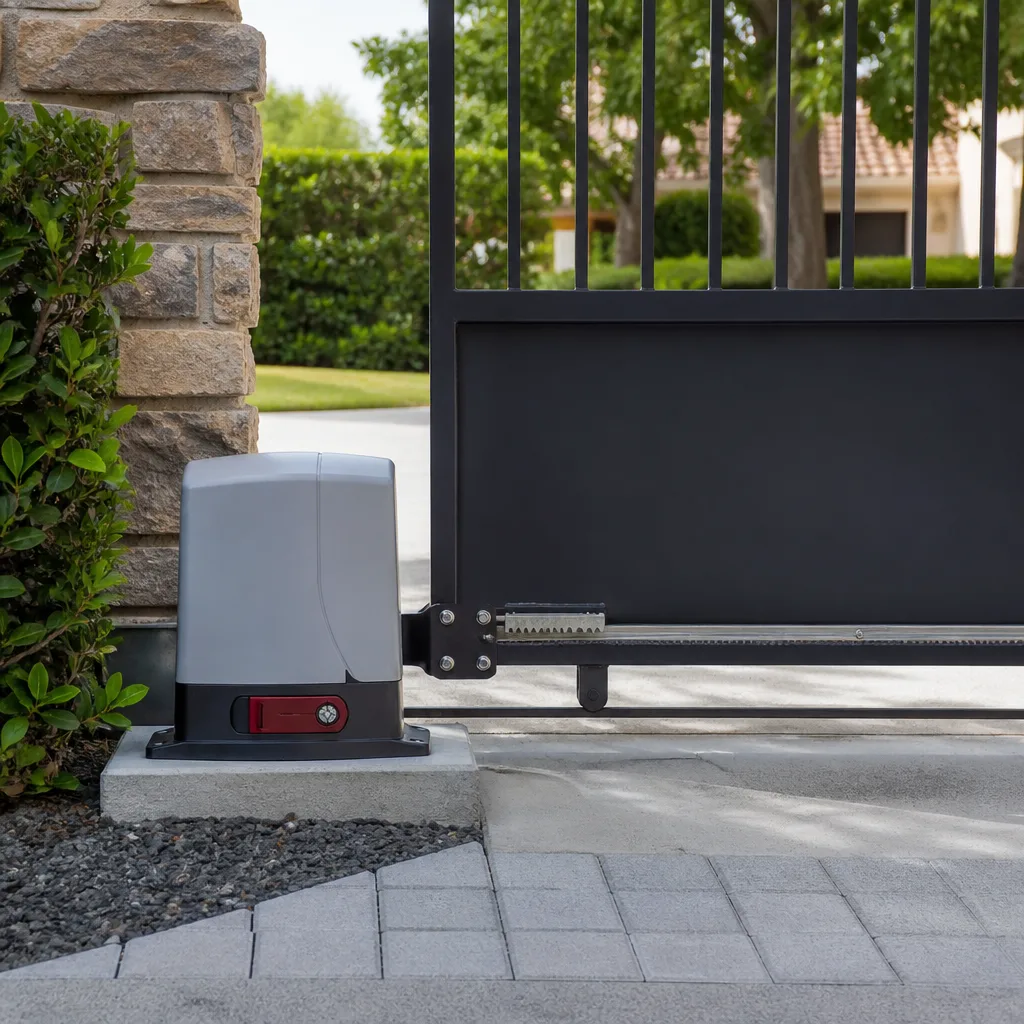 LiftMaster operators
Free on-site gate assessment - hinges, posts, and your LiftMaster or Nice gate operator checked before anything is quoted
The assessment is free and the quote is the invoice.
Get your free estimateGate Repair Emergency Preparedness Guide for Baltimore Homes
Most gate owners think about their gate exactly once: the morning it stops working. The rest of the time it’s invisible infrastructure, opening and closing so reliably that nobody wonders what happens when it doesn’t. Then a storm knocks out power, a delivery truck clips the slide track, or the operator simply quits, and the gate is stuck in a position that’s either a security problem or a mobility problem. The common misconception is that an automatic gate is an appliance you replace when it breaks. It isn’t. It’s a building system with a manual override, a power dependency, and a moving assembly under load. This guide covers how to release it, how to secure it, and what to tell the technician who responds. Everything here is written for homes in Baltimore, where freeze-thaw winters and heavy summer storms both put gate hardware through real work.
Quick Answer
Every automatic gate has a manual release you can operate yourself, and knowing where it is and how it works is the single most important piece of gate emergency preparedness. If your gate fails closed with a vehicle trapped inside, release it manually first and call a specialist second. If it fails open, your priority is security, not access. For either scenario, call (855) 356-2557. We answer 24/7. Fast dispatch from 7am to 7pm, Sunday through Friday.
Styles & brands we work with
- Wrought iron
- Wood & steel frame
- Farm & ranch
- Sliding driveway gates
- LiftMaster operators
Table of Contents
- Why Gate Emergencies Catch Baltimore Owners Off Guard
- How Do You Find and Use the Manual Release on Your Gate?
- What to Do When a Gate Fails Open vs. Fails Closed
- Power Outage Protocols: Which Gates Have Battery Backup?
- How Do You Secure a Gate After Storm Damage or a Vehicle Strike?
- What Information Should You Have Ready Before Calling?
- When to Call a Professional
- Frequently Asked Questions
Why Gate Emergencies Catch Baltimore Owners Off Guard
The gate is the one piece of property infrastructure that combines access control, mechanical load, and electrical supply in a single assembly, and it’s also the one nobody maintains on a schedule. People service their furnace before winter. They test smoke detectors. Almost nobody tests their gate’s manual release, and almost nobody knows which of their gate systems has a battery backup. That’s the gap this guide closes.
There’s a second reason preparedness matters more here than in a lot of places. Baltimore properties sit on old lots with tight setbacks, narrow driveways, and in many cases a single point of vehicle access. When the gate is the only way a car gets in or out, a stuck gate becomes a logistics problem within the hour. And when the gate is the only barrier between a street and a side yard, a stuck-open gate is a security problem from the moment it happens. Neither situation is catastrophic, but both get worse with delay, and delay usually comes from not knowing the procedure.
Think of the gate the way you think of your electrical panel. You don’t need to be an electrician to know where the main breaker is and how to shut off a circuit in a hurry. Same logic applies here. You don’t need to repair a gate to know how to release one, secure one, and describe the failure clearly enough that a technician arrives with the right parts. That last part matters more than people realize, and it’s a big piece of what separates a gate specialist from a general repair call. We work on nine major gate and operator brands, including Ghost Controls, DoorKing, Elite, and Mighty Mule, and the reason that’s relevant to an emergency is simple: the failure description you give on the phone determines what comes off the truck.
This guide is written by gate specialists for the people who own, manage, and depend on gates in Baltimore. Below you’ll find the release procedures, the fail-open versus fail-closed response, the power outage checklist, the temporary securing methods, and the pre-call information sheet that cuts wasted time on both ends of the conversation.
How Do You Find and Use the Manual Release on Your Gate?
Every automatic gate operator sold in the United States has a manual release, and it’s designed to be operated by the property owner, not just a technician. The release location depends on the operator type, so the practical first step is figuring out what kind of gate you have. Here are the five most common automatic gate configurations on Baltimore properties and where the release lives on each.
- Swing gate with a piston-style arm operator. The release is usually a keyed lever or a bypass key on the operator arm itself, mounted to the gate post or the gate leaf. Turn the key or flip the lever, then push the gate open by hand. On most residential arms this takes under a minute once you know where the key goes.
- Swing gate with an underground or articulated arm operator. Look for a release key slot on the operator housing near the hinge point. The release disengages the arm from the gate leaf so the gate swings free.
- Slide gate with a chain-drive or rack-and-pinion operator. These typically have a manual release lever or a clutch on the operator housing. Pulling or turning the release disengages the drive so you can push the gate along its track by hand.
- Barrier arm or gate arm operator. Common at commercial and multifamily entrances, these usually have a release key on the housing or a counterweight you can lift by hand once the operator is disengaged.
- Older or heavy-duty operators. Some commercial slide systems use a clutch adjustment or a specific release key rather than a simple lever. If you own a DoorKing or similar high-cycle operator, find the release procedure now, before you need it, and keep the key where the people who need it can reach it.
Two things to do this week, before anything fails. First, locate the release on your own gate and operate it once with the power off, so you know what normal resistance feels like. Second, label it. A key on a hook with a tag is faster to find at 6am than a key somewhere in a drawer.
A word of caution on the mechanical side. A slide gate is heavy, and a gate that comes off its track or drops a wheel can crush a hand or a foot. When you release a slide gate manually, push from the trailing edge, keep your body clear of the travel path, and never try to stop a moving gate with your body. If a gate has come off the track or is hanging, that’s not a manual-release situation. That’s a stop-and-call situation, and you can reach a specialist at (855) 356-2557.
What to Do When a Gate Fails Open vs. Fails Closed
A gate that fails closed is an access problem. A gate that fails open is a security problem, and in most cases the security problem is the more urgent one. The response is different for each, so the first thing to establish when something goes wrong is which failure you’re dealing with.
When the gate fails closed
This is the scenario people worry about most, and it’s usually the more manageable of the two. If a vehicle is trapped inside or someone needs to leave, release the gate manually first. Don’t spend time troubleshooting at the keypad while a car sits in the driveway. Once the vehicle is clear, then you can look at the operator.
- Check whether the issue is power: try the keypad or remote from a second angle and see whether the operator makes any sound at all.
- Check the safety loop or photo eye: a leaf, a branch, or debris in the path can keep a gate from closing, which can look like a failure to open in some sequence settings.
- Check the manual release isn’t partially engaged. A gate that was manually released and reset imperfectly will sometimes sit in limbo.
When the gate fails open
Now the priority is access control. A gate stuck open at an apartment entrance or a business driveway means anyone can walk or drive through, and that’s a real exposure. In that situation:
- Post someone at the entrance if you can, or close the entrance to traffic until the gate is restored.
- Close the gate manually if the operator allows it. Many slide and swing operators can be pushed closed by hand with the release engaged.
- If the gate is storm-damaged or off the track, don’t force it closed. Use a temporary barrier instead (covered in the storm section below), and call a specialist.
- If the gate sits at a vehicle entrance and a physical barrier isn’t practical, call a gate technician rather than a general handyman. Gate specialists carry the actuator and control parts that restore closure, and more importantly they can diagnose whether the failure is the operator, the safety devices, or the power supply.
In our experience doing electric gate repair, one of the most useful things a property owner can do in the moment is stay calm and think in sequence: safety, then access, then repair. If you get the sequence right, the gate gets fixed and the property stays secure in the meantime.
Power Outage Protocols: Which Gates Have Battery Backup?
A gate failure during a storm is often not a gate failure at all. It’s a power failure that the gate is correctly reporting. Baltimore sees its share of high-wind events and summer thunderstorms that take out residential power, and the first question on every gate call during an outage is the same: does this thing have a battery?
The short answer is that it depends on the operator, and you can usually tell by looking at the housing. Operators with battery backup have a separate battery enclosure, either integrated into the control box or mounted as a secondary box next to it, and many have a small status indicator or charging circuit. Operators without battery backup run on line voltage only and stop dead when the power does. A simple test: with the power on, check whether there’s a battery enclosure visible at the operator. If there is, the gate may continue to work through an outage for a period. If there isn’t, it won’t.
What to do during a power outage:
- Confirm the outage affects the whole property or just the gate circuit. A tripped breaker at the gate is not an outage, and resetting it may restore function.
- If it’s a true outage and your operator has battery backup, use the gate sparingly. The battery will run a limited number of cycles, and the number is specific to your operator, not a universal figure.
- If there’s no battery backup or the battery is depleted, use the manual release.
- When power comes back, test the gate from a normal control input (keypad, remote, or entry station) and watch for warning signs: irregular travel, slowing, or a gate that stops partway. Those suggest a larger issue than the outage.
- If the battery backup didn’t work as expected, that’s a diagnostic call. A failed battery, a failed charging circuit, and a baked control board look different on a meter and identical to the owner. Call (855) 356-2557 and describe what you observed.
If you’re not sure which category your gate falls into, that’s a good reason to have it looked at now rather than during the next outage. A free estimate and a quick look at the operator will tell you exactly what your backup situation is. The same visit is a good time to confirm whether the operator is one we know well. We’re familiar with LiftMaster, FAAC, BFT, Linear, Viking, Ghost Controls, DoorKing, Elite, and Mighty Mule, so the odds are good that we’ve seen your model before.
How Do You Secure a Gate After Storm Damage or a Vehicle Strike?
Storm damage and vehicle strikes are the two most common causes of a gate that’s still standing but no longer working. A limb takes out a photo eye and the gate won’t close. A truck clips the leading edge of a slide gate and now the track is out of alignment. A wind gust binds a swing gate against the operator arm. In all of these situations, the immediate goal is not to fix the gate. It’s to secure the property until a technician can get there.
Here’s the temporary securing sequence:
- Make the area safe first. If the gate is partially collapsed, hanging, or off its track, keep people and vehicles away from it. Don’t try to force a bent gate back onto the track.
- Disengage the operator. Use the manual release so the operator isn’t fighting the damaged gate. A stalling operator trying to push a jammed gate will burn itself out faster than it failed.
- Close the opening if you can. If the gate can be moved to the closed position by hand and secured there, that’s the best outcome. A gate in the closed position with the operator disengaged is a functional physical barrier even if it’s not automatic.
- Use a temporary barrier if the gate can’t be closed. Two traffic barriers with reflective paint, a properly anchored chain or tape across the opening, and visible warning signs will secure a driveway access point until a technician arrives. For pedestrian openings, a secured chain with signage is a reasonable interim measure. This is a short-term fix, not a solution, and it should be treated as a stopgap.
- Document the damage. Photos of the gate, the track, the operator, and the impact point will help both the repair and any insurance conversation.
- Call a gate specialist, not a general fence contractor. Storm-damaged gates often need both mechanical alignment and a check of the operator and safety devices. A contractor without gate-specific experience and brand-specific parts will typically shut the gate off and tell you to call someone else.
One point that comes up a lot after storm calls: don’t re-engage the operator on a damaged gate to “test” it. If the gate is out of alignment or the track is bent, an engaged operator will continue to drive against the obstruction and can damage the actuator, the limit switches, or the control board. The test costs more than the diagnosis.
If your gate is down after a storm, call (855) 356-2557. We answer 24/7. Fast dispatch from 7am to 7pm, Sunday through Friday, and a free estimate once a technician is on-site.
What Information Should You Have Ready Before Calling?
The five minutes you spend gathering information before you call is the cheapest time you’ll spend on the whole repair. Gate operators vary widely by brand and model, and a technician who knows the model before arriving can bring the right parts and often fix the problem on the first visit. Here’s the pre-call sheet, and it’s worth putting these items in a note on your phone now.
- Brand and model of the operator. Look for a label on the operator housing or under the cover. If you can’t find it, take a photo of the housing. Brand matters because different operators use different actuators, boards, and release mechanisms. Telling us it’s a DoorKing slide operator and telling us it’s “a gate done by a company” are two very different pieces of information.
- Gate type and configuration. Swing or slide? Barrier arm? Single or double leaf? Residential or commercial? How wide and how heavy (roughly) is the gate leaf?
- Failure description. What exactly happened, and when. Does the gate move at all? Does it move partway and stop? Does it make a sound or a click? Does the remote or keypad respond? Did it fail during a power event, after a storm, or with no apparent cause?
- Power status. Is the property’s power on? Have you checked the breaker at the gate? Is there a battery enclosure visible?
- Access instructions. Gate code, lockbox, call box, and where the technician should park. For Baltimore properties with narrow street access or a rear-alley driveway, a note about access makes the difference between an on-time arrival and a wasted trip.
- Photos if possible. The operator label, the gate in its failed position, and the control/keypad area. Photos speed diagnosis more than any other single item.
Have this ready and the call is shorter, the arrival is faster, and the diagnosis starts the moment the technician sees the gate. If you’re looking for a starting point, the main Baltimore Gate Repair page lays out what we do and how we work. A note on access before we arrive for gate repair helps more than most people expect: if you tell us the exact issue, we can bring the right part the first time.
Common Mistakes to Avoid
These come up repeatedly on emergency calls. Each one costs the owner time, money, or both.
- Running the operator against an obstruction. When a gate won’t move, the instinct is to hit the remote repeatedly. That’s the fastest way to turn a cheap fix into an expensive one. If the gate won’t move, disengage the operator and diagnose before you retry.
- Calling a general handyman for an electric gate. A gate operator is a low-voltage automation device with a mechanical load attached. A generalist without gate-specific diagnostic tools will spend the call learning your model. That’s not a slight on handymen; it’s a fact about specialization. A gate specialist has seen the failure before and carries the parts.
- Skipping the manual-release orientation. The number of owners who have never located their release is high. Do it once, with the power off, on a calm afternoon. It’s a ten-minute task that pays for itself the first time you need it.
- Assuming the battery backup is working. Battery backup is only backup until the battery fails, and batteries fail quietly. If your operator has a battery, test it during an outage or have it checked. Don’t wait for the outage to find out.
- Forcing a storm-damaged gate back onto its track. A bent track or a misaligned slide gate can’t be forced into operation without doing more damage to the frame and the operator. Secure the opening with a temporary barrier and let a technician realign it properly.
- Not knowing where the power disconnect is. If the gate fails in a dangerous position or you need to work around it, you need to be able to cut power at the gate. Locate that switch now, mark it if necessary, and make sure everyone who uses the gate knows where it is.
- Assuming this is a problem with your gate only. If there was a power event, road construction, or a vehicle strike, the cause matters. Tell the technician what happened before the failure, not just the failure itself. In our experience in Baltimore, the cause is often a nearby event, and the fix depends on understanding it.
See the difference
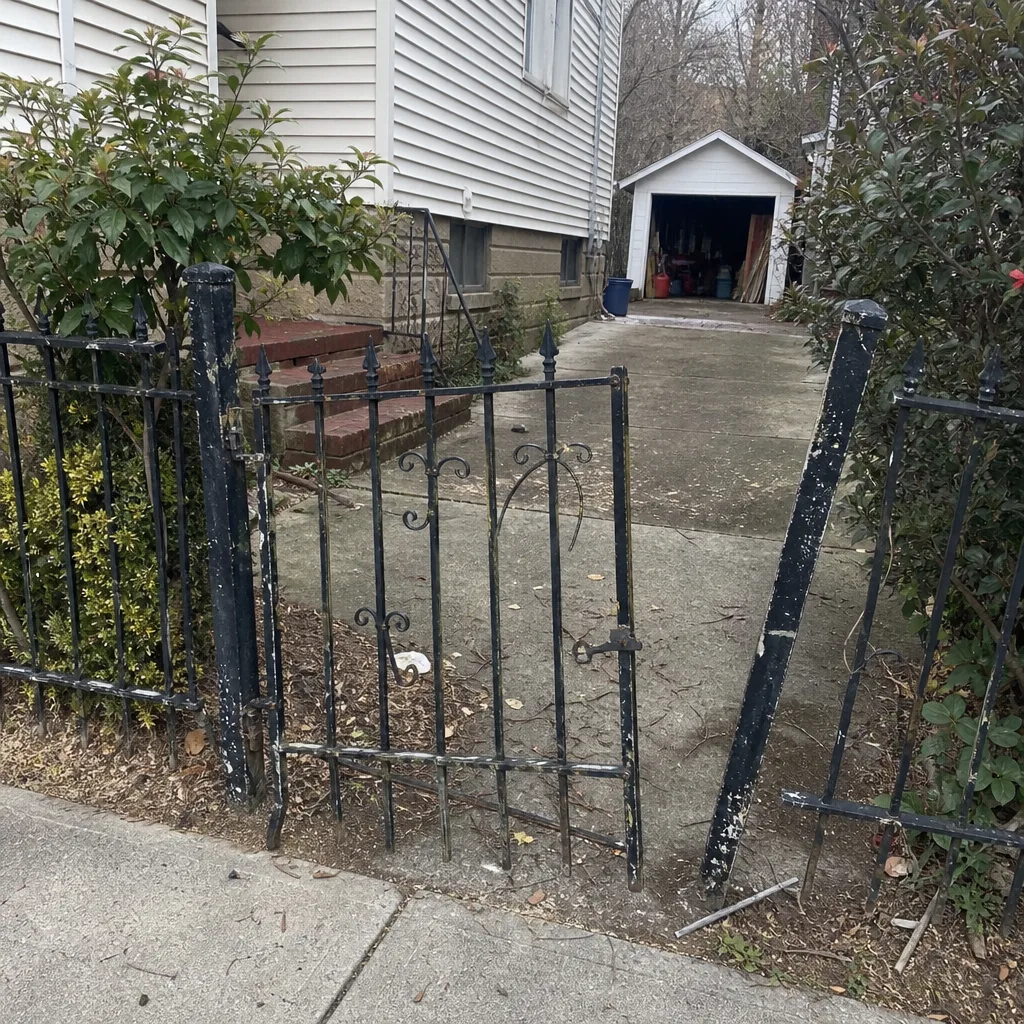 Before
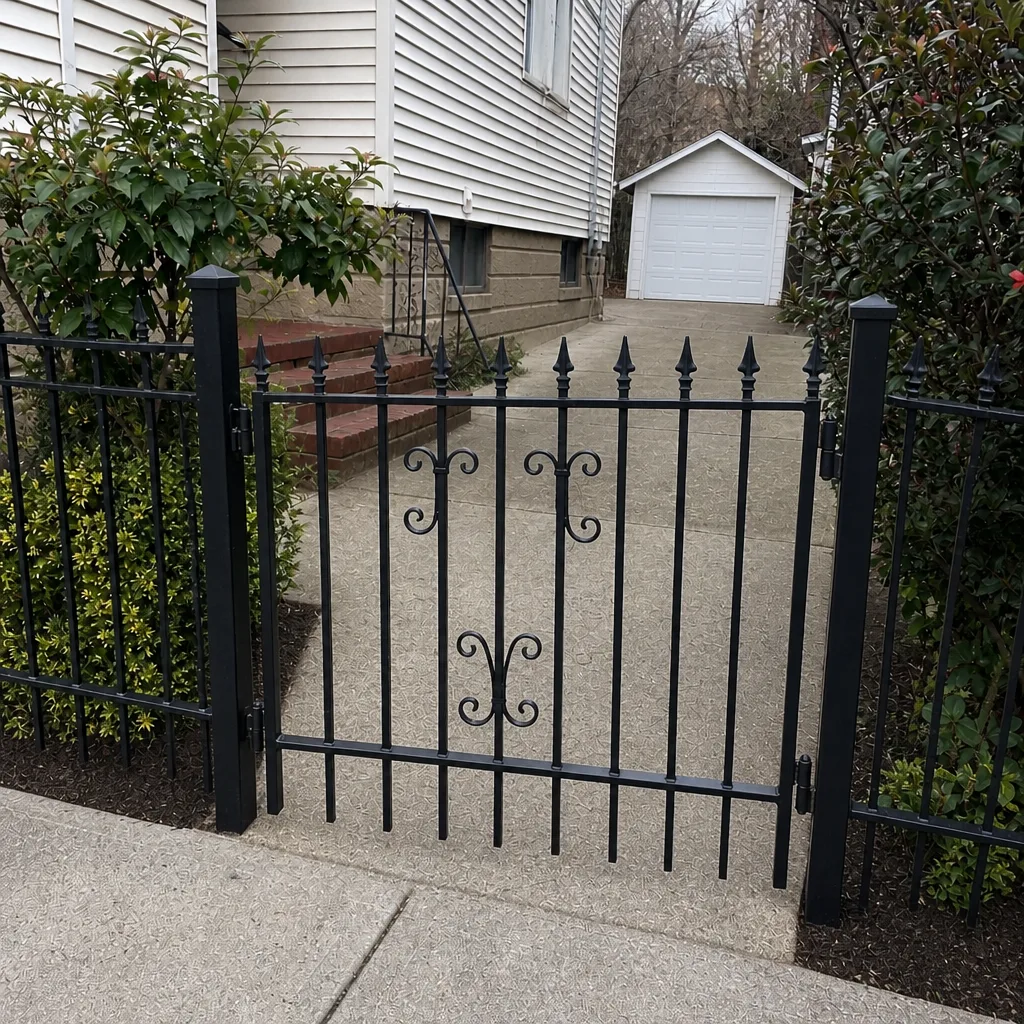 After
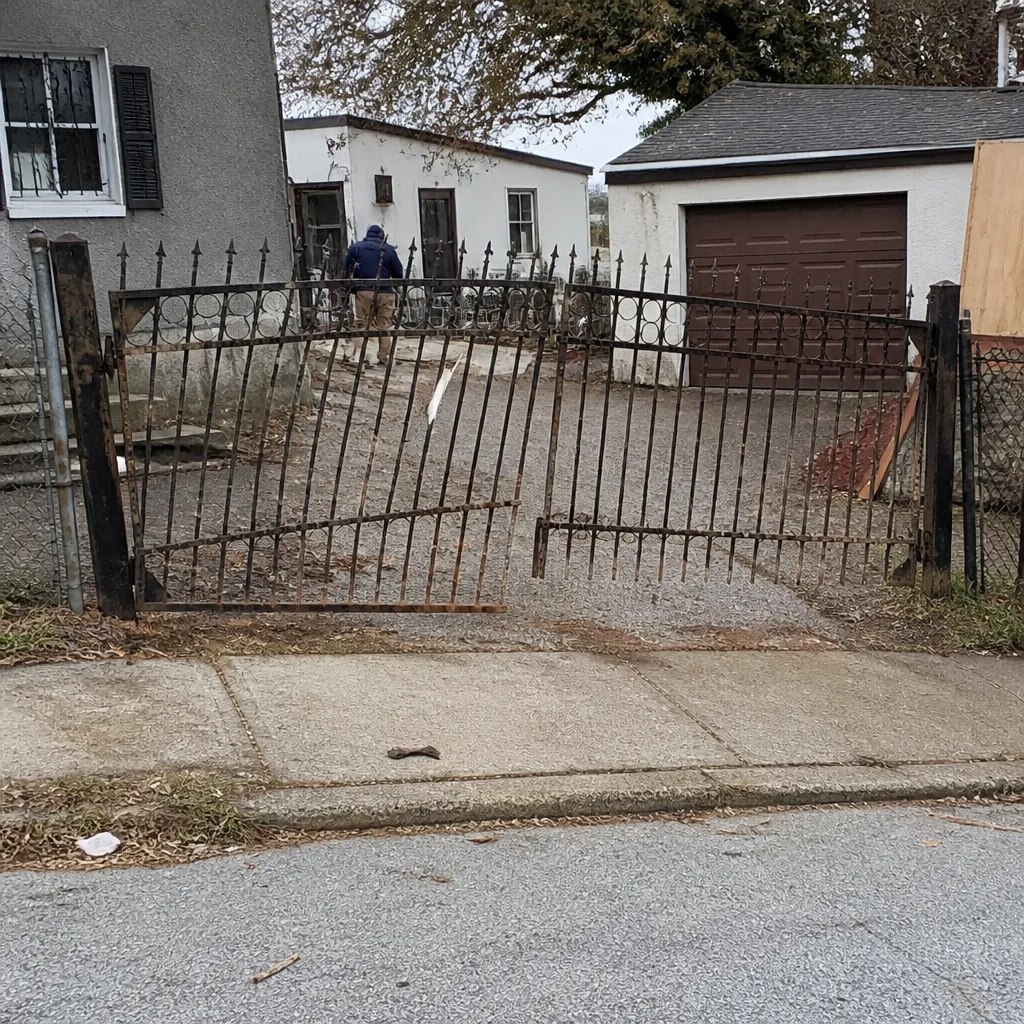 Before
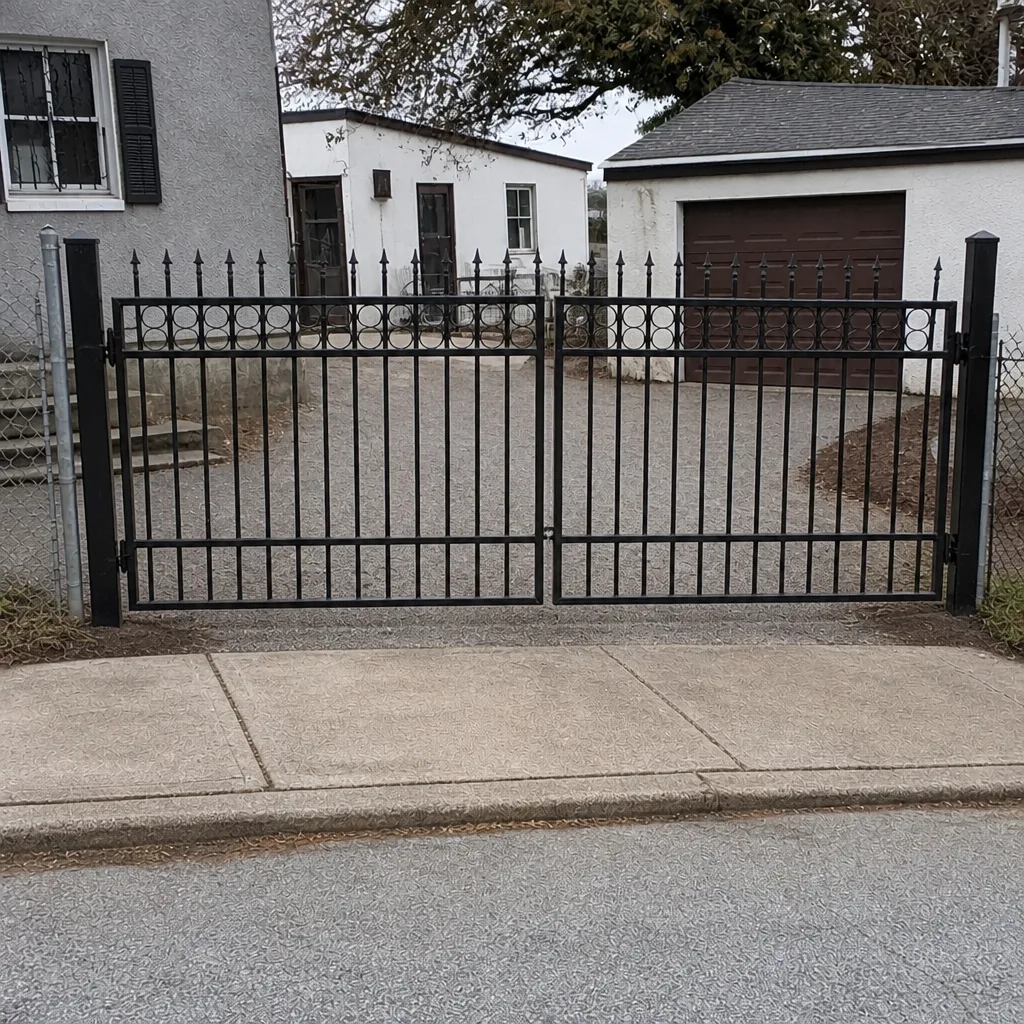 After
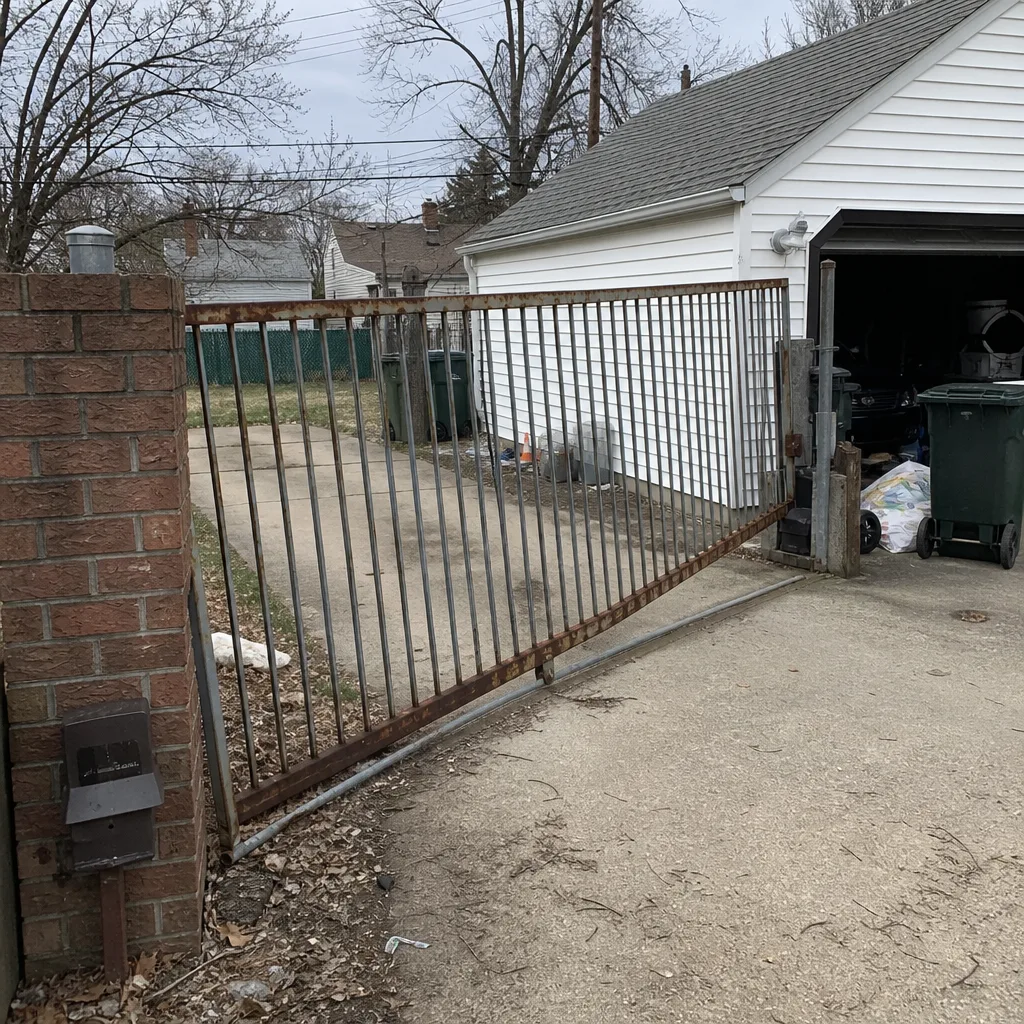 Before
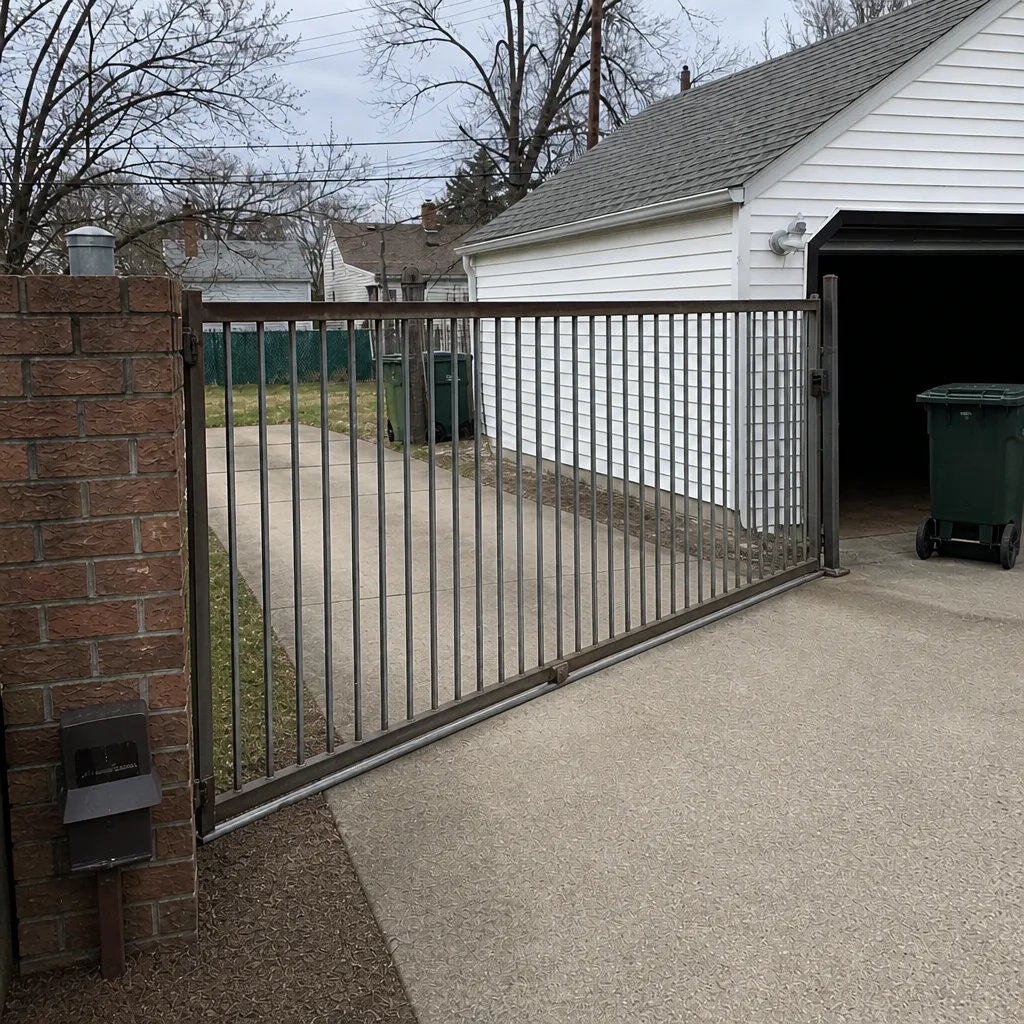 After
When to Call a Professional
Some gate problems are owner-fixable. A dead remote battery, a keypad that needs its code reset, a manual release that needs to be re-engaged properly. Those are maintenance items, and you can handle them. The line is drawn at the mechanical assembly, the operator’s electrical and low-voltage side, and anything involving a gate that has moved out of alignment.
Call a specialist when the gate won’t reverse or stop correctly, when the operator runs but the gate doesn’t move, when the gate moves but the operator doesn’t respond to control inputs, when the gate is hanging, off the track, or damaged, when the control panel shows a fault or warning, and when the safety devices have been bypassed with no clear path to restore them. If your gate sits at a commercial or multifamily entrance and needs a specific model of operator, call before you order a replacement.
Baltimore Gate Repair offers free estimates in Baltimore – call (855) 356-2557. We answer 24/7. Fast dispatch from 7am to 7pm, Sunday through Friday.
Frequently Asked Questions
Yes, on virtually every automatic gate operator sold for residential use, the manual release is designed to be operated by the owner. The release is usually a keyed lever or a release key on the operator housing. Locate it before you need it, engage it to disengage the operator, and push the gate open by hand. If you can’t find the release, call (855) 356-2557 and we can talk you through where it’s likely located on your operator type.
Close the gate manually if the operator allows it with the release engaged, and post a person or a temporary barrier at the opening if it can’t be closed. Don’t force a damaged gate closed on a track or hinge that’s already misaligned. Call for a specialist, and tell them the gate type and whether it’s operator, power, or mechanical. In our experience in Baltimore, fail-open access problems are usually resolved on the first visit when the exact failure is described accurately.
Some operators do and some don’t, and you can often tell by looking for a separate battery enclosure at the operator. Operators with integrated or external battery backup will usually run for a limited number of cycles during an outage. The number of cycles is model-specific. If you’re not sure, that’s a good question to ask during a service visit, before you need the answer.
You can own the simple maintenance items: remote batteries, keypad settings, release engagement. You can’t safely work inside the operator on the control board, the motor, the safety devices, or the low-voltage wiring without the right diagnostic tools, and a mistake there can cost more than the repair. Electric gate systems combine mechanical load and live electrical components, and the safe move for anything beyond a reset or a manual release is a call to a trained technician.
The scope depends entirely on what failed. A remote or keypad issue is often quick. A failed actuator, a damaged track, or a control board fault takes longer, and the parts need to be identified or ordered. The written estimate you receive after diagnosis sets the scope and the price, and you’ll know the cost before any work starts. Call (855) 356-2557 to arrange a free estimate and get a realistic timeline for your specific gate.
A gate specialist is the better call for anything involving an operator, because the work spans mechanical and low-voltage automation, and most fence or handyman crews work on one side of that line or the other. Gate-only shops also carry brand-specific parts and have seen the failure modes before. We work with LiftMaster, FAAC, BFT, Linear, Viking, Ghost Controls, DoorKing, Elite, and Mighty Mule, and that range covers most of what’s installed on Baltimore properties. For service in the Baltimore area, a free estimate is the simplest place to start.
The Bottom Line
Gate emergency preparedness comes down to four things you can do this week: find and test your manual release, determine whether you have battery backup, locate the power disconnect, and write down the brand and model of your operator. Those four steps cover the fail-closed access emergency, the fail-open security exposure, the power outage, and the storm-damaged gate. Do them once on a calm afternoon and you’ll never spend an emergency wondering where the release key is. When the call needs to happen, call (855) 356-2557 for a free estimate. Electric or manual, we diagnose both sides of the problem, and we answer 24/7. Fast dispatch from 7am to 7pm, Sunday through Friday. Since 2016, Baltimore Gate Repair has done nothing but gates: nine brands, one specialist.
Written by the team at Baltimore Gate Repair, serving Baltimore since 2016.