
Last updated November 14, 2026
 Wrought iron
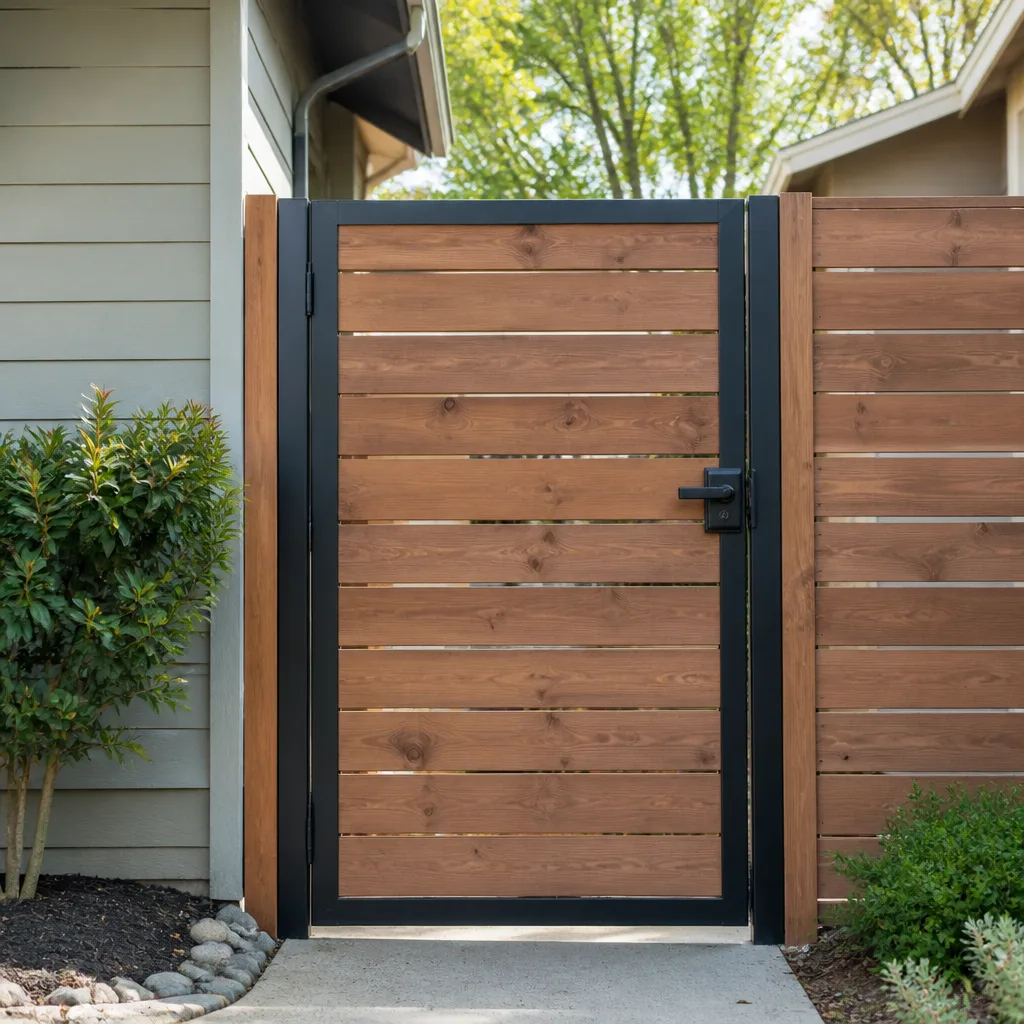 Wood & steel frame
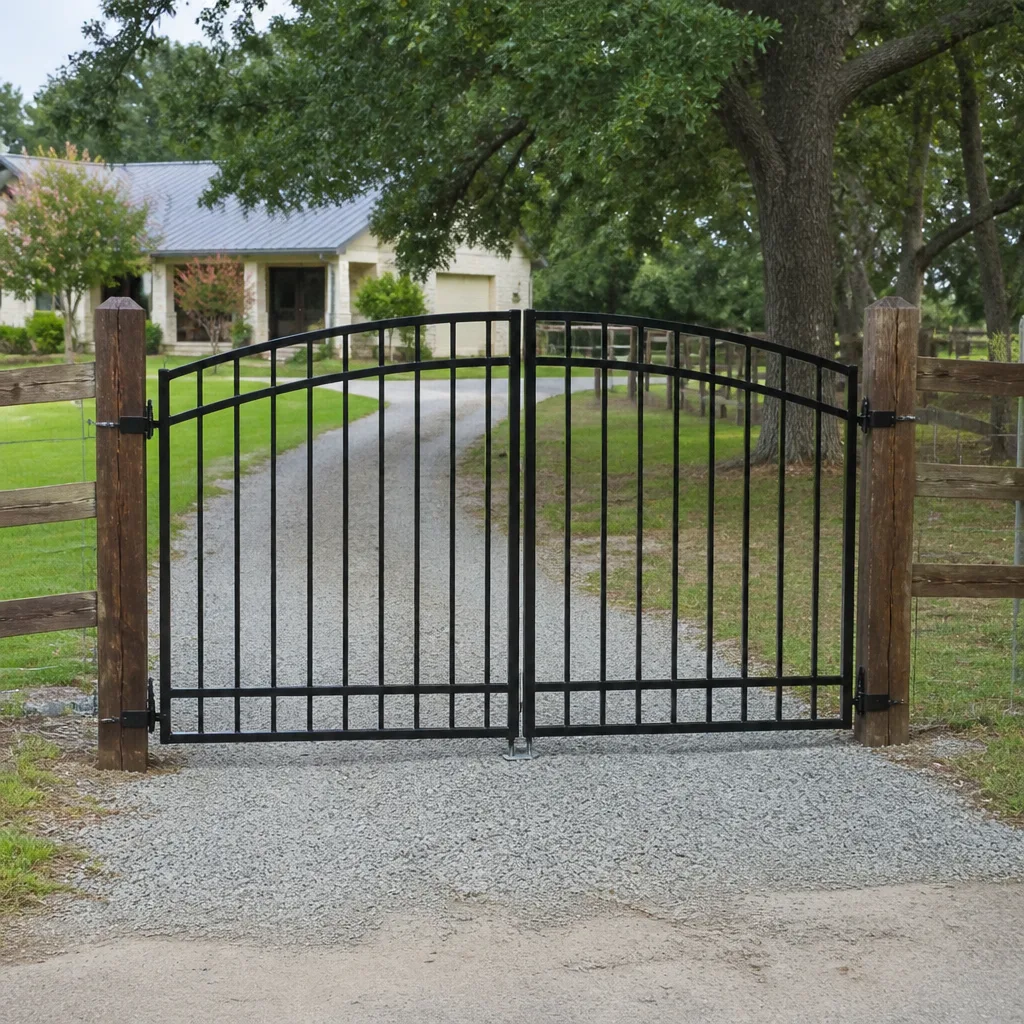 Farm & ranch
 Sliding driveway gates
 LiftMaster operators
Free on-site gate assessment - hinges, posts, and your LiftMaster or Nice gate operator checked before anything is quoted
The assessment is free and the quote is the invoice.
Get your free estimateGate Repair Maintenance Schedule: What to Do and When
Most gate advice tells you to “inspect in spring and fall.” That’s a national template, and in Baltimore it misses the two seasons that actually break gates. Our coldest damage happens in the freeze-thaw stretch from January into early March, and our heaviest wear shows up during the sticky July and August humidity. A gate that gets one generic check a year spends the rest of the year quietly failing. What follows is a real calendar: month by month, task by task, split between what you can safely do yourself and what needs a gate specialist. We’ll cover lubricants that survive Baltimore heat, the electrical checks that belong in fall, and a logging habit that holds up for warranty and insurance paperwork.
Quick Answer
A workable gate maintenance schedule in Baltimore runs on four anchors: a fall inspection before the first freeze, a mid-winter check on hinges and operators, a spring restart after the ground thaws, and a summer pass on wiring, batteries and track. Lubricate moving metal at each anchor, clear the track and photo-eye path monthly, and log every visit with the date and what was done. Anything involving the operator’s wiring, a heavy panel off its track, or a slide gate that has jumped its rail should go to a trained gate technician, not a homeowner.
Styles & brands we work with
- Wrought iron
- Wood & steel frame
- Farm & ranch
- Sliding driveway gates
- LiftMaster operators
Table of Contents
- The Baltimore Gate Maintenance Calendar
- Why Your Schedule Must Follow Baltimore’s Seasons
- Lubricants That Survive Baltimore Summers and Winters
- Electrical Checks That Belong in Fall
- What You Can Safely Do Yourself
- What Requires a Gate Specialist
- How to Log Maintenance for Warranty and Insurance
- The One-Weekend Fall Checklist
The Baltimore Gate Maintenance Calendar
Here’s the full year in one place. Each block is standalone, so you can jump to the season you’re in.
- January: Check hinge and latch operation after hard freezes. Listen for grinding, stiffness, or a swing gate that binds halfway. Look for fresh cracks at weld seams and post brackets.
- February: Push on both gate posts. Any wobble after a winter of frost heave means the footing is giving. Clear snow and ice from the track and the photo-eye lens; ice packed in a slide rail is a common cause of a gate that stalls.
- March: Test the operator’s manual release. Run the gate a full open and close cycle and watch for slow spots. Check the battery backup (if fitted) after the cold stretch. Clear debris from gutters above the gate line so meltwater doesn’t pour onto the operator.
- April: Post-thaw inspection. Trace the wire run for nicks, cracked conduit or water intrusion at conduit ends. Lubricate hinges, rollers and the chain or screw drive. Clear the track of grit and grit-bound rollers.
- May: Trim anything growing into the gate’s swing or slide path. Test safety edges and photo-eyes by interrupting the beam. Check that the gate reverses on contact.
- June: Re-check lubricant after the first hot week; heat thins light oils. Clean the operator housing vents so the control board isn’t cooking in the enclosure.
- July and August: Watch for swelling wood, sticky hinges, and humidity-related board faults. Check that the photo-eye still lines up after a season of post movement. Clear nesting debris from the operator and the track.
- September: The big pre-winter inspection. Photograph the whole system, test electrical components, tighten every fastener you can reach, and confirm the battery backup holds a charge.
- October: Lubricate everything one last time for the cold, seal or sand any rust you found, and check that drainage around the posts sheds water away from the footing.
- November: Confirm the gate cycles cleanly as temperatures fall. Set up your snow plan: who clears the gate line, and where the plow won’t push snow into the track.
- December: Monthly visual checks only. Look for frost cracking on the operator enclosure, test the keypad or access control, and keep the photo-eye lens clear.
That’s the shape of it. Compare this to a generic spring-and-fall template and you’ll see what’s missing: no mid-winter check, no heat-driven lubrication follow-up, and no pre-freeze electrical test. In our experience these are the three that decide whether a Baltimore gate survives into spring.
Why Your Schedule Must Follow Baltimore’s Seasons
Gate failures are seasonal here, and the reason is thermal cycling. A metal gate in Baltimore spends the winter breathing in and out. Daytime sun warms the steel, nighttime cold shrinks it, and the cycle repeats for weeks. Fasteners loosen. Weld seams develop hairline cracks. Concrete footings that heaved from a deep freeze settle back differently in spring. That’s why a post that was plumb in November can be a degree or two off in April, and a swing gate that tracked cleanly all winter suddenly drags on the ground come March.
Summer brings the opposite problem. Humidity in July and August pushes moisture into hinge pins, chain links and older operator enclosures. Wooden gates swell and bind. Light oils thin out and run off. Electronics inside a sealed enclosure bake in afternoon sun, and heat-related control board faults surface in a way they simply don’t in cooler months.
Then there’s the freeze-thaw line itself. We’re inland enough to get regularly hard freezes, which means concrete movement is real, but we also get thaws warm enough to melt everything and refreeze overnight. The water finds every crack in a driveway apron, runs under the bottom rail of a slide gate, and freezes solid. Come morning, a gate that’s still a perfectly good gate won’t move because there’s a sheet of ice under the carriage.
The practical translation: inspect before the freeze, inspect again after the thaw, and treat summer as a humidity and heat watch. No national spring-fall schedule covers that middle. This guide is built around the reality of gates in Baltimore, not a calendar written somewhere the ground never freezes.
Lubricants That Survive Baltimore Summers and Winters
Which lubricant you use decides whether your moving parts survive the year. The wrong one either washes off in July or turns to glue in January.
What fails in the summer
- Light machine oils and thin spray lubes: They run off in heat and leave hinges and chains dry by mid-July. They do fine for photo-eye lenses and general cleaning, but not for load-bearing moving parts.
- Household greases: They thin, migrate, and hold grit. A greasy hinge in a Baltimore summer is a grit magnet, and grit is what wears a hinge out.
- General-purpose water-displacing sprays: Great for driving moisture out of a hinge pin, poor as a stand-alone lubricant in July, because they evaporate and leave you where you started.
What fails in the winter
- Thick chassis grease applied by the handful: In January it gets stiff enough to make hinges bind and slow the gate’s swing. The gate isn’t broken; the grease is.
- Grease on outdoor padlocks and latches: Cold grease traps a little moisture, the moisture freezes, and the lock body won’t turn. That’s why a latch that worked all fall suddenly won’t budge during a cold snap.
- Anything that sets into a waxy film: It cracks with freeze cycles around a hinge pin. The cracked film then lets water in underneath it, which is worse than no lubricant at all.
What actually works here
For hinge pins, rollers and latches, a light lithium or dry-film lubricant holds up across both seasons without attracting grit in the summer. For chain-driven slide gates (operators from Linear, Viking and Ghost Controls are common on residential drives, and DoorKing on commercial), a proper chain lubricant applied thinly beats a heavy coat every time. And with any product, apply thin coats, wipe off the excess, and re-check after the first hard freeze after application. If a hinge is bone dry, clean the pin before you lubricate it. A lubricated hinge on top of grit is a hinge that’s on its way out.
Electrical Checks That Belong in Fall
Most guides put electrical inspection in spring. In Baltimore that’s the wrong order. Winter is when control boards, battery backups and wiring terminations get tested hardest, so you want to find problems in October and November, not after a gate has already failed on a cold morning. Residential and commercial operators from FAAC, BFT, LiftMaster and DoorKing all include sealed electronics, and a little pre-winter attention goes further than any fix.
Here’s the fall electrical routine:
- Test the battery backup. Cut power to the operator at the breaker, then run the gate through a full cycle. If it’s sluggish or doesn’t complete, the battery is marginal. Replace it before winter, not after a real outage.
- Inspect every wire termination. Look for loose screws, corrosion at connectors, and conduit ends that have pushed water into low spots. Freeze-thaw cycles move grade and root systems; a wire that was nicely buried in spring may be stressed by fall.
- Check the operator enclosure. Look for gaps at the lid, worn gaskets and any sign of moisture trail marks after rain. Water in an enclosure is the number-one killer of control boards.
- Test the safety edges and photo-eyes. Interrupt the beam, then put gentle pressure on the safety edge. The gate should stop or reverse cleanly. A slow or intermittent response in fall is a pre-freeze warning.
- Verify the manual release. It should move freely and allow the gate to swing or slide by hand. If it’s seized, that’s a job for a technician before winter sets in.
- Look at the keypad or access control. Cold weather is exactly when a marginal keypad starts failing, so clean the contacts, check the weather seal, and make a note of any inconsistent readings.
Any of those that involve opening the operator housing, working near line or low-voltage wiring, or making a repair to the control board should go to an electric gate specialist. Our electric gate repair team runs through this exact fall sequence, and it’s the kind of check that saves a surprise in January.
What You Can Safely Do Yourself
Plenty of gate maintenance is well within reach for a property owner, and tackling it regularly is what keeps a gate running well between professional visits. The rule is simple: you can do anything that doesn’t involve opening an electrical enclosure, disconnecting the operator, or lifting a panel.
- Keep the track and rail clear. Sweep grit, leaves and ice out of a slide gate’s rail. On a swing gate, clear the ground under the swing path so the panel doesn’t drag.
- Clean the photo-eye lenses. Do this monthly, more often in pollen season. A dirty lens causes a gate to stop halfway, and that’s one of the simplest fixes there is.
- Lubricate moving metal. Hinges, rollers, latches, and chain (for chain drives) with the products above. Thin coat, wipe excess, repeat when dry.
- Tighten what’s visibly loose. Bolts on hinges, latch brackets and operator mounting hardware. Don’t force anything that seems stripped; note it and get it looked at.
- Trim vegetation. Keep plants clear of the swing or slide path. A branch that clips the gate adds load to the operator every single cycle.
- Walk the perimeter once a month. Look for new cracks, rust, wobbling posts, and fresh ground heave. Notes on what you see are worth more than memory.
The property owner who does these monthly chores does real good. But there’s a line, and it’s not a line about skill, it’s a line about what can genuinely hurt someone.
What Requires a Gate Specialist
Some of this work is genuinely dangerous, and some of it is simply beyond what a homeowner should take on with a cordless drill and an afternoon.
Wiring and power. Never open the operator’s electrical housing or touch the low-voltage run. Even a “low voltage” operator carries mains power at the controller. Faulty wiring can hurt you, and it can also void any warranty on the operator.
Heavy panels and slide gates. A gate panel weighs what it weighs. A sagging swing gate, a sliding panel that has slipped its track, or a barrier arm that’s come loose can crush fingers and worse when it moves unexpectedly. We’ve seen enough gates that jumped their carrier and landed on someone’s driveway to be cautious about that particular repair. If your gate has come off its rail or carrier, stop using it and don’t try to lift it back on with a helper.
Post replacement and footing work. A leaning gate post is a structural repair. The post has to come out, the footing gets rebuilt, and the gate has to be rehung and realigned. That requires equipment and the know-how to get the gate’s tracking right afterward.
Operator repair and adjustment. If the gate reverses on contact, stops mid-cycle, or behaves differently than it used to, the limit switches, the force settings, or the board is involved. That’s a job for someone with parts on the truck and the right diagnostic tools.
That last distinction is the big one. A general handyman or fence contractor can replace a board if they have one, but they don’t carry a range of parts for specific brands on a truck, and the diagnostic step takes longer. A gate specialist arrives already familiar with the model, knows what fails first on that platform, and carries the parts to get you back up and running today. The gate repair work we do is entirely gate-focused, so that’s the whole job.
How to Log Maintenance for Warranty and Insurance
A maintenance log is only as good as its detail. Do it right and it’s what pays off when you’re filing a warranty claim or an insurance claim, and it’s what tells a gate specialist exactly what’s been happening over the last year.
Log each visit the same way, every time. Here’s a format that holds up:
- Date and time. Include the hour, especially if the item relates to weather. “August, afternoon” isn’t as useful as a date and time.
- What was inspected and what was done. “Lubricated hinges, cleared track, tested photo-eye” is better than “maintenance.”
- What was found. Note problems even if you didn’t fix them: “Left hinge pin showing wear,” “post wobbly,” “wire run has a nick in the conduit near the fence line.”
- Photos. One shot of the gate in its current state, plus a close-up of anything you flagged. Photos beat memory by a mile, and they settle a lot of arguments with an insurer.
- Who did the work. Name yourself for what you did, and record the company and technician for professional visits.
- Any parts replaced, with brand and model if listed. This is where a technician’s paperwork pays off. It’s the difference between “board replaced” and “replaced control board on a LiftMaster operator.”
- Follow-up flags. “Recheck post next fall” gives the next person a head start.
Keep the log with your property files, not in a drawer in the garage. A gate that’s on a documented schedule also tends to have a stronger insurance record, because you can demonstrate regular attention. On the warranty side, operators have conditions, and a well-kept log is exactly the evidence you need if a failure gets questioned. This is also where Baltimore weather becomes useful: if you can show a gate was checked in October and again after the thaw, you’ve got an unbroken record of winter care. It’s a small habit that adds real value when a gate eventually needs the kind of work a property owner can’t do.
The One-Weekend Fall Checklist
If you only do one serious maintenance pass a year, do it before the first hard freeze. Here’s the checklist in order, roughly half a day’s work if you’re doing the DIY half yourself.
- Walk the gate line. Note every wobble, crack and rust spot. Check that posts are plumb, that ground under the path is sound, and that no root or concrete shift is pushing the gate.
- Sweep and clear. Track, rail, carriage, swing arc. Remove anything that might hold ice or grit.
- Lubricate. Hinges, latches, rollers, chain. Thin coats, and keep grease off photo eye lenses.
- Test the operator. Full open-and-close cycle. If it’s automatic, inspect the manual release and make sure the gate can be moved by hand.
- Do the battery backup test. Cut power at the breaker and confirm a clean cycle. If it stumbles, replace the battery now.
- Set up the snow plan. Flag the gate for anyone clearing snow. If your plow person would push snow into the gate line, put a physical marker at the edge of the path so it’s obvious for anyone with a blade that day.
- Photograph and write it down. Fill in the log. Add anything you couldn’t fix to a call list.
- Book the professional inspection. Anything on your call list, plus the electrical items, gets scheduled now rather than in the middle of a cold snap.
This one weekend does more for a gate than a year of guesswork. And it keeps the small stuff – a stiff hinge, a gritty track, a marginal battery – from becoming the thing that stops the gate in the cold.
Common Mistakes That Cost Baltimore Property Owners the Most
- Treating the gate like it doesn’t need a calendar. Gates don’t announce that they need attention. By the time one stops moving, the underlying wear has usually been building for months. Schedule it, or it won’t happen.
- Waiting for spring to look at the electrical side. By spring, the damage is done. The fall window is the one that counts, because winter is going to stress every board, battery and wire connection anyway.
- Greasing a hinge and walking away. A hinge packed with thick grease in summer is a hinge that binds in January. Thin coat, right product, and recheck it after the first hard freeze.
- Ignoring a slightly wobbly post. A wobbling post in a Baltimore freeze-thaw cycle is a post that wobbles more every winter, and eventually you’re rebuilding the footing instead of tightening a bolt.
- Forgetting the corners. The photo eye, the keypad and the operator enclosure are all out of the normal sight line. Check the areas nobody thinks about until a gate won’t move.
- Using a plow with no plan for the gate line. One snow-clearing pass pitched the wrong way, and the gate track fills with packed ice. Put a visual marker at the path edge.
- Not keeping notes. A memory of what the gate did last winter is worth a lot less than a log of the same. It’s five minutes a month that supports everything downstream.
See the difference
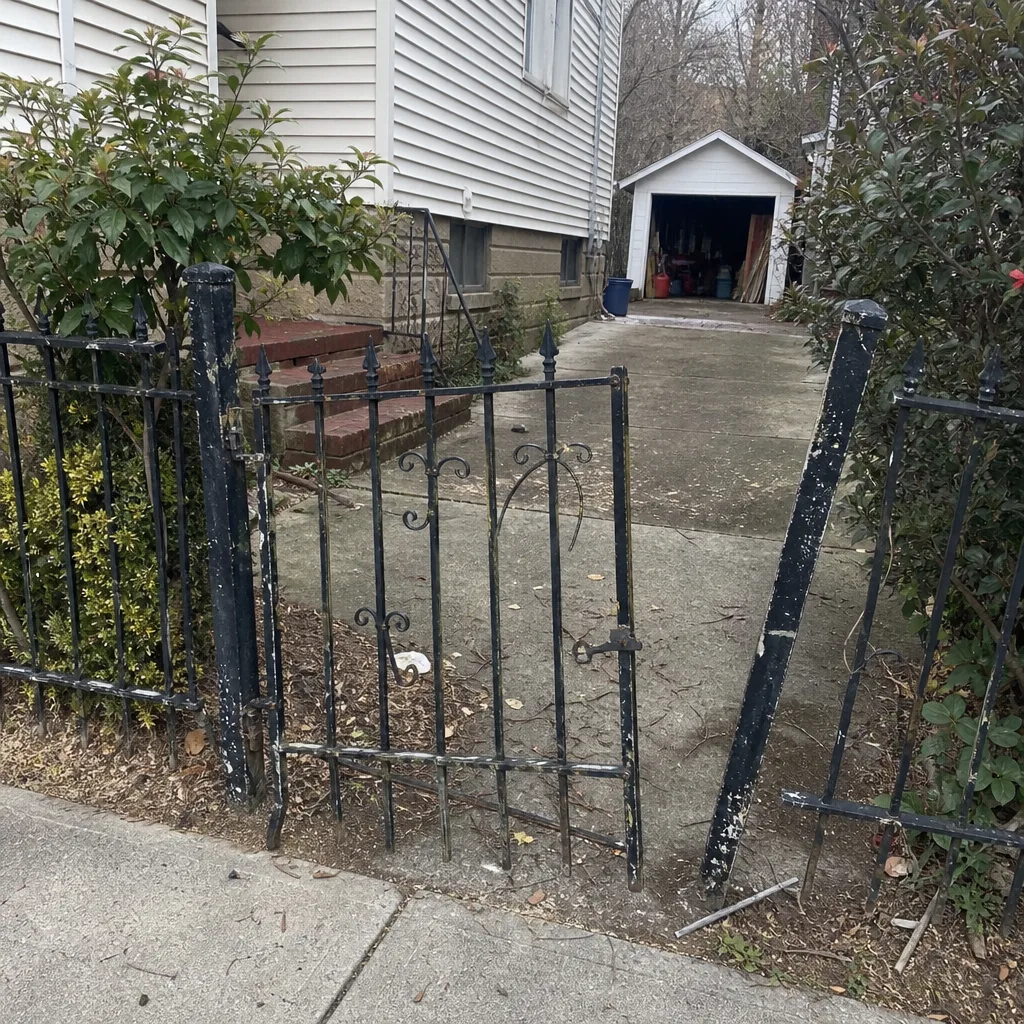 Before
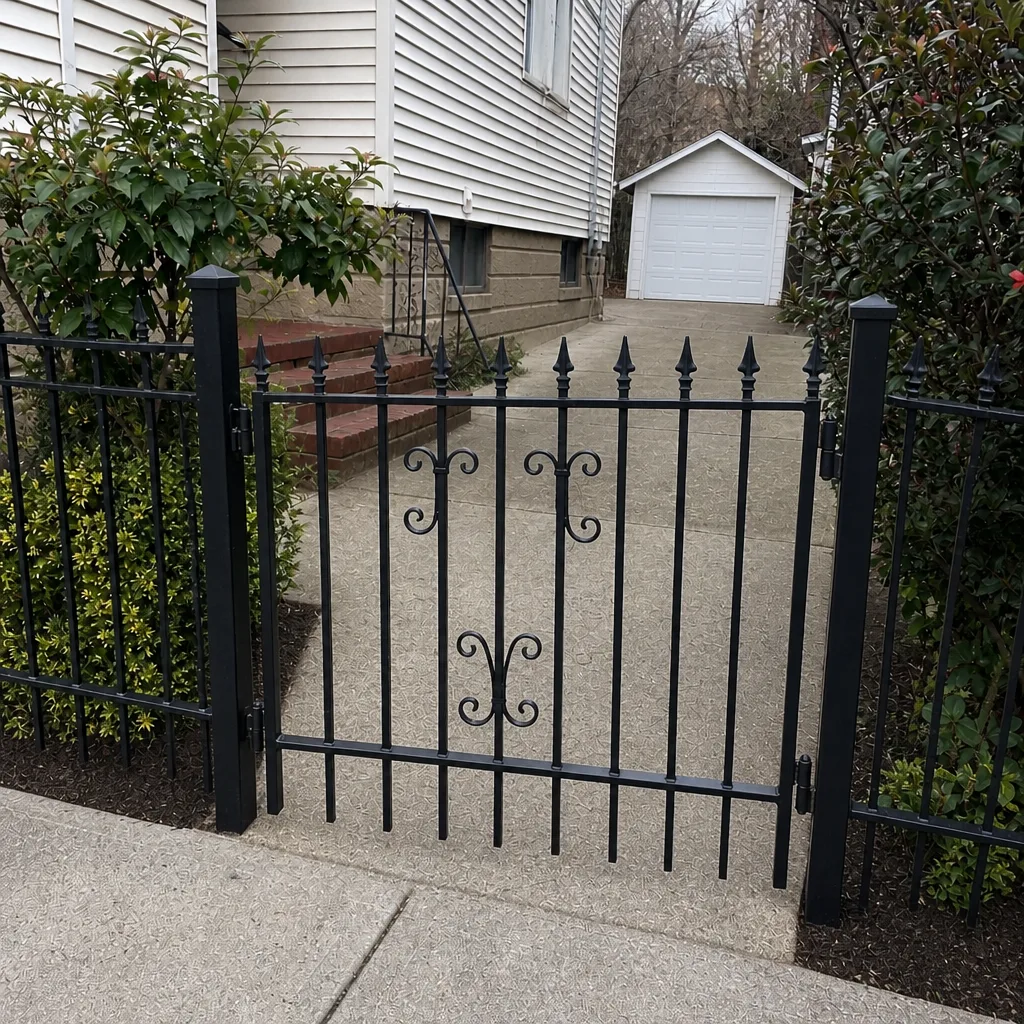 After
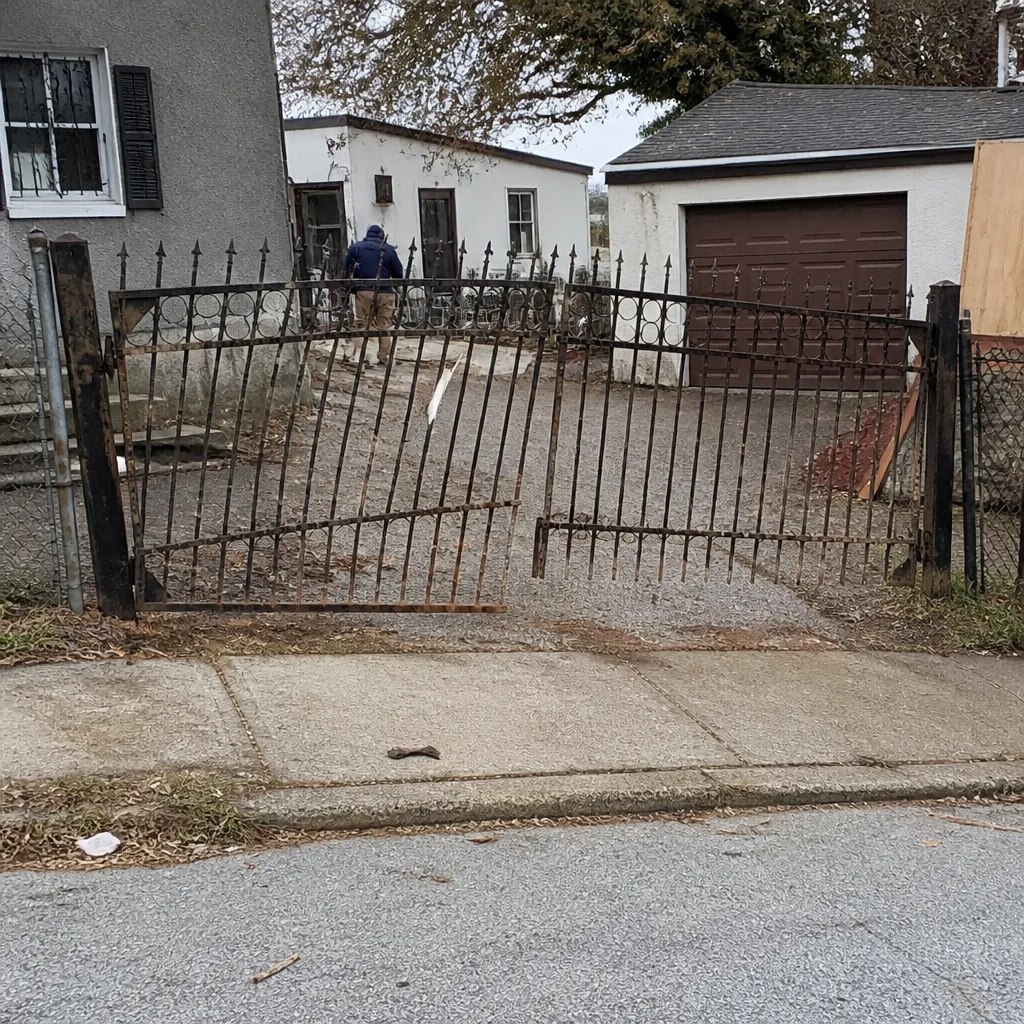 Before
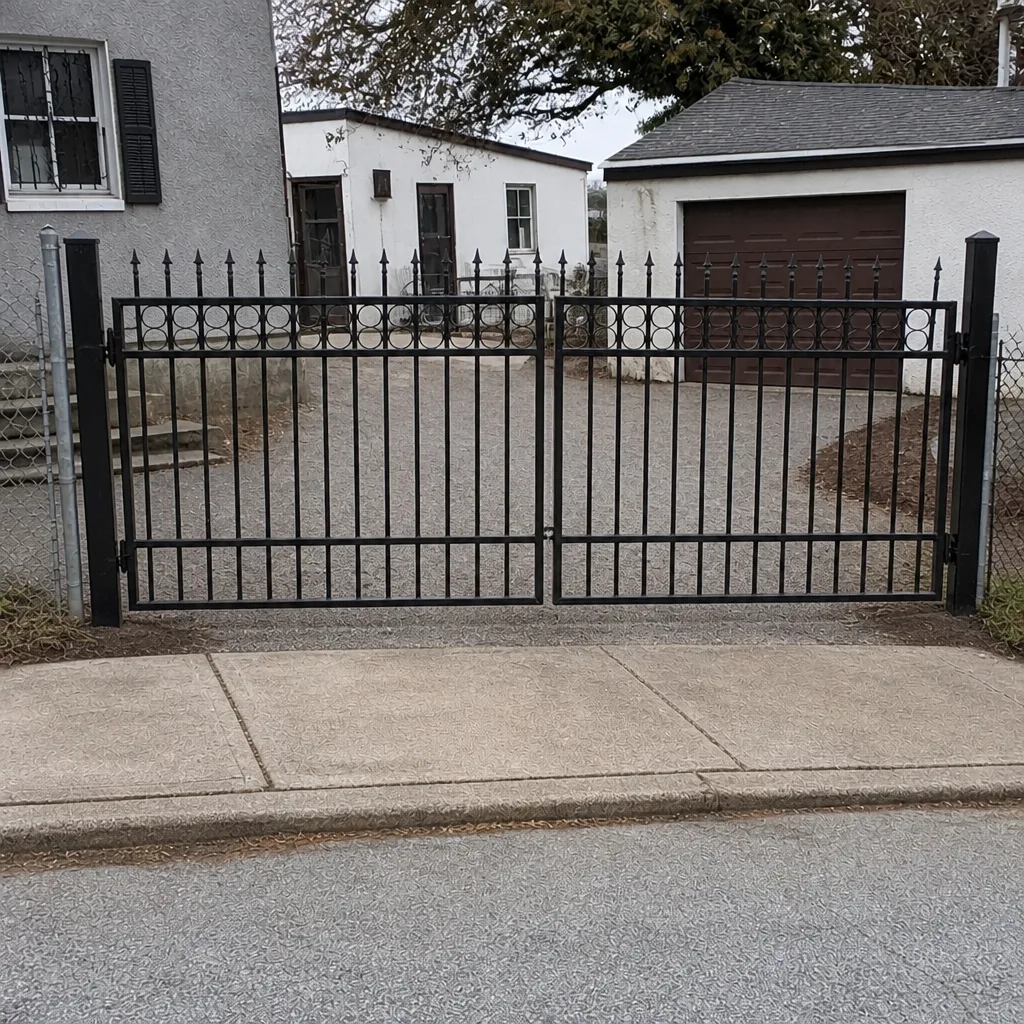 After
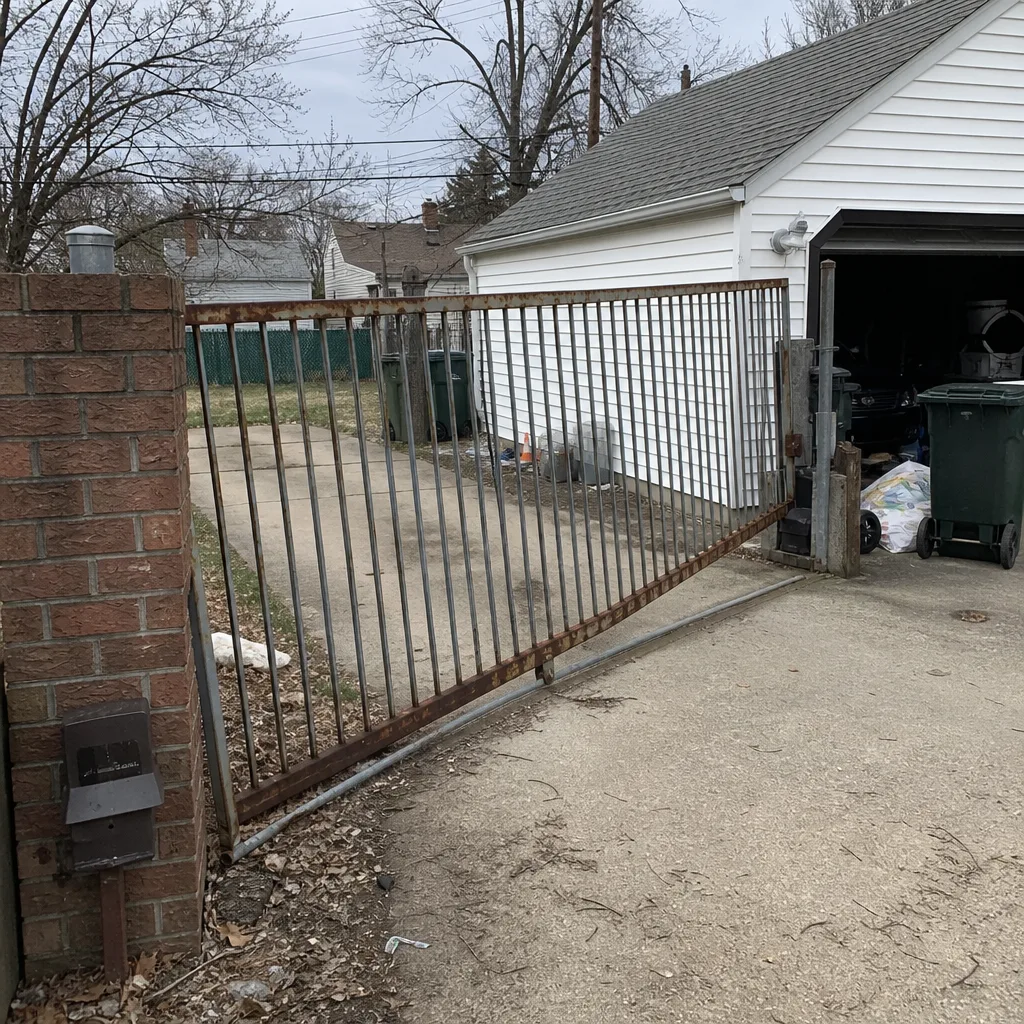 Before
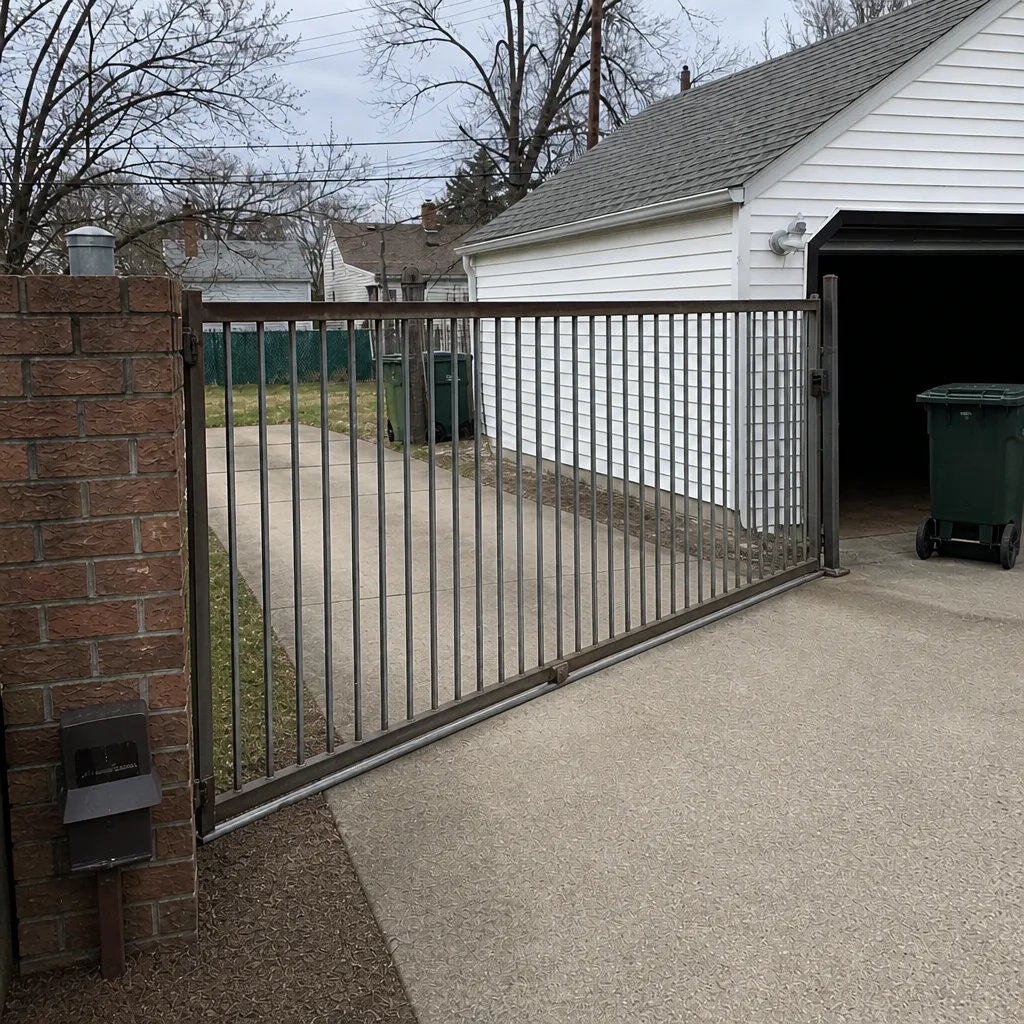 After
When to Call a Professional
Call a gate specialist the moment the problem involves electrical wiring, a heavy panel, a post footing, or a gate that has come off its track. Don’t wait to see if a stair-step or a shove fixes it, and don’t send a helper out with a wrench to a panel that can swing. Those are the repairs where the danger and the cost go up fast if the underlying cause isn’t found. The other good time to call is on your own schedule: a pre-winter inspection now, when the gate is still working, is a far simpler conversation than a gate that’s stuck at the end of the drive in January. If you’re a property or facilities manager, one annual professional visit, with the report kept with the log, keeps the whole gate system on record. Baltimore Gate Repair offers free estimates in Baltimore – call (855) 356-2557. We answer 24/7. Fast dispatch from 7am to 7pm, Sunday through Friday.
Frequently Asked Questions
Plan on four anchors a year: fall, mid-winter, spring and a summer check. Fall is the most important, because that’s when you prepare for the freeze. Monthly visual chores – clearing the track, cleaning the photo-eye, checking for wobble – fill the gaps, and everything gets logged so the record stays complete.
September and October, without question. That’s the pre-freeze window, and it’s when you find the problems before winter finds them for you. A marginal battery, a loose wire termination, or a hinge that’s about to give out is easy to solve in October. The same problem in January is a gate you can’t open.
Yes, for the safe half: clearing the track, cleaning photo-eye lenses, lubricating moving metal, tightening visible bolts, trimming plants, and the monthly walk-around. The electrical housing, the operator’s wiring, heavy panels and slide gates that have slipped their carrier are all professional work. Don’t open an enclosure or try to lift a panel back on yourself.
A light lithium or dry-film lubricant works well on hinges, latches and rollers through both our summers and winters. For a chain drive, use a proper chain lubricant and apply it thin. Avoid heavy grease in summer (it traps grit) and avoid thin oils that run off in heat. Recheck after the first hard freeze.
Because winter is when the electrical system is tested by the weather. The battery backup, the wiring terminations and the control board all face their hardest conditions during cold snaps. Finding a weak battery or a cracked conduit end in October means fixing it before the first freeze rather than after a failure.
Keep a single log with date, what was inspected and done, what was found, photos, and who did the work, including brand and model of any parts replaced. Add follow-up flags so the next check has a head start. Store it with your property records, and keep the technician’s written reports with it.
The Bottom Line
Baltimore gate maintenance is a year-round habit tuned to this climate, not a spring-and-fall to-do list. The anchors are fall (the pre-winter electrical and operational inspection), mid-winter (freeze, hinges and battery), spring (post-thaw recovery and re-lubrication) and summer (heat, humidity and control boards). You can safely handle clearing, cleaning, lubrication and the monthly walk-around. Wiring, heavy panels, footing work and operator repairs belong with a specialist. Log everything with dates and photos, and that record serves you for warranty and insurance. The gate that gets a September visit doesn’t surprise you in January. Electric or manual, we diagnose both sides of the problem, and we work on the brand you already have, including Linear, Viking, Ghost Controls and DoorKing. For a free estimate, call (855) 356-2557. We answer 24/7. Fast dispatch from 7am to 7pm, Sunday through Friday.
Written by the team at Baltimore Gate Repair, serving Baltimore since 2016.